Latest Reviews

Stay updated with our comprehensive analysis of the newest AI hardware and software releases.
September 3, 2026 Read Full Article • 7 min read

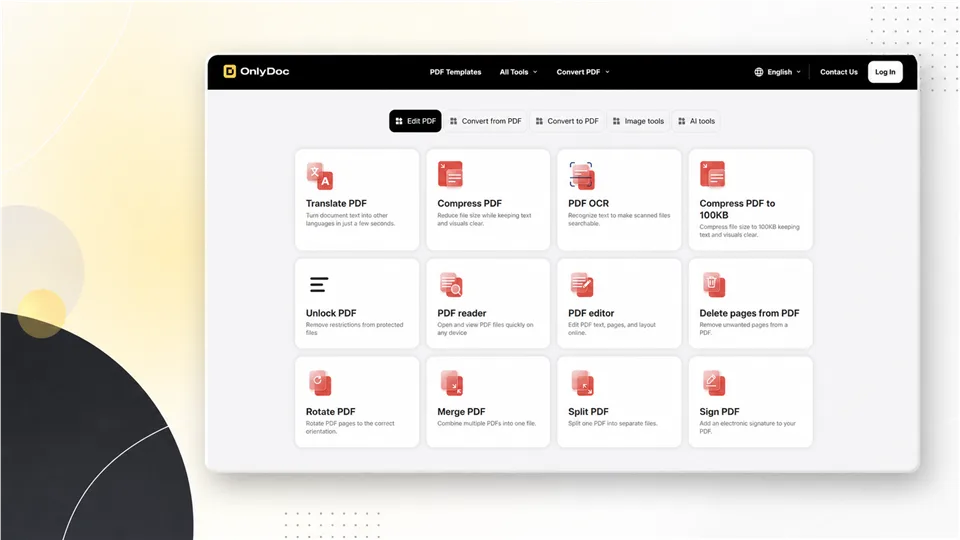
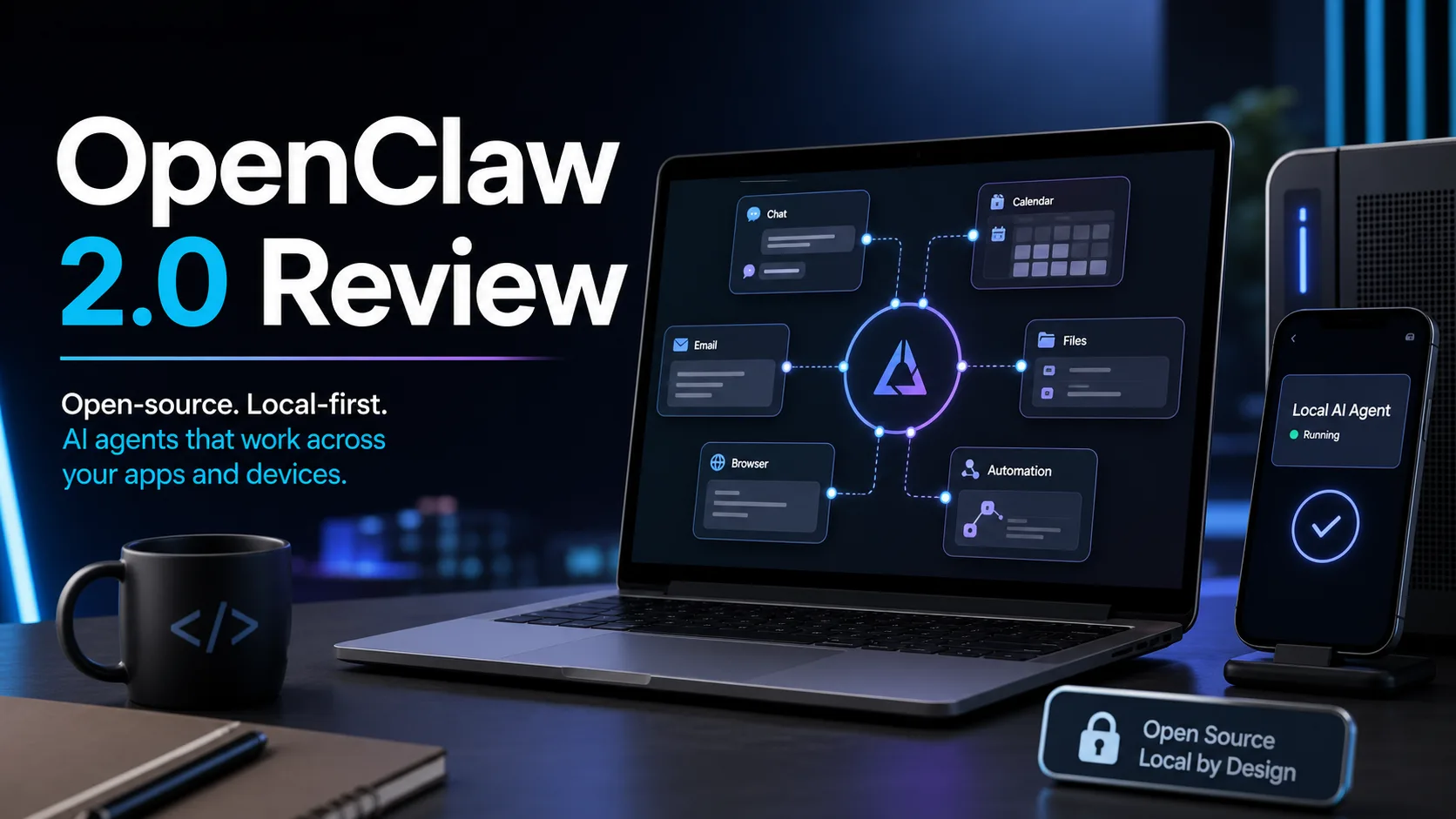
OnlyDoc Review: Is This Online PDF Tool Worth Using?

Discover whether OnlyDoc is worth using for PDF conversion, compression, OCR, translation, editing, and e-signatures. Explore its features, pros, cons, and best use cases.

AI News

Stay updated with the latest developments and breakthroughs in global artificial intelligence

Sep 4, 2026

The sameness problem behind those unappetizing AI-generated menus

Generative AI tools adopted by food delivery platforms and restaurants to automate menu descriptions and food photography are creating a homogenization crisis, making diverse culinary offerings look and sound identically unappealing. By replacing authentic, human-written descriptions and real photos with algorithmic templates, these tools strip independent eateries of their unique cultural identities and brand voices. The underlying cause is the reliance of AI models on standardized, mass-aggregated training data, which naturally prioritizes predictable patterns over creative distinctions. As a result, local diners face a sea of repetitive, overly sanitized, and sterile digital storefronts. This push for cost efficiency and automated optimization ultimately alienates customers, demonstrating that algorithmic uniformity cannot replicate the genuine human passion essential to culinary storytelling.

Tesla’s Make-or-Break Cybercab Had a Quiet Debut

Tesla's highly anticipated "We, Robot" event showcased the "Cybercab" robotaxi and a larger "Robovan," but disappointed investors due to a lack of concrete technical details and regulatory timelines. CEO Elon Musk announced that the autonomous, two-seater Cybercab would cost under $30,000, feature inductive wireless charging instead of a traditional plug, and begin production by 2026 or 2027. However, the presentation lacked critical information on how Tesla plans to transition from its current supervised Full Self-Driving (FSD) software to a fully autonomous, unsupervised ride-hailing network. Analysts and investors reacted coolly to the event's theater-like atmosphere, which took place on a Warner Bros. studio lot, leading to a significant drop in Tesla's stock price the following day. The lack of a concrete business model or immediate regulatory strategy remains a major hurdle for Tesla’s autonomous ambitions.

Nvidia’s Hugging Face deal is a bet on open models — and proof it’s no longer just a chip company

Nvidia has expanded its collaboration with Hugging Face to integrate its enterprise AI software and DGX Cloud infrastructure directly into the open-source platform, solidifying its transition from a hardware manufacturer into a full-stack AI systems provider. This strategic alliance allows millions of developers to seamlessly train, fine-tune, and deploy AI models using Nvidia's optimized software stacks directly within the Hugging Face ecosystem. By embedding its computing services and NIM (Nvidia Inference Microservices) into the world's largest repository of open AI models, Nvidia positions itself at the core of generative AI development. This move ensures that the rapidly growing open-source community, which increasingly drives enterprise AI adoption, remains deeply integrated with and reliant on Nvidia’s hardware and software ecosystem.

Nvidia PAIR makes it easy to create a household data center for running agentic AI tasks

Nvidia has launched PAIR (Personal Agent Integration Runtime), a breakthrough platform designed to simplify the creation of household data centers for running complex, autonomous agentic AI tasks. This new framework enables users to transform standard local PC setups and RTX-powered hardware into private, high-performance AI hubs capable of managing sophisticated, multi-step workflows without relying on external cloud infrastructure. The system excels at orchestrating diverse personal agents to handle tasks such as smart home automation, private financial planning, and localized data analysis while keeping sensitive information strictly within the user's home network. By combining local hardware efficiency with Nvidia's advanced AI agent coordination software, PAIR represents a major step forward in making decentralized, highly secure, and enterprise-grade artificial intelligence accessible to everyday consumers.

Upwind reels in $300M for its automated cloud security platform

Upwind Security has secured $300 million in a new funding round to scale its automated cloud security platform, which protects cloud infrastructure by analyzing runtime data. The platform leverages eBPF technology to gain deep visibility into running applications, allowing organizations to identify vulnerabilities, detect real-time threats, and automate response actions without degrading performance. The newly acquired capital will be used to accelerate product development, particularly in enhancing its AI-driven threat detection capabilities, and to expand its global go-to-market operations. By combining posture management with runtime protection, Upwind aims to help security teams prioritize risks based on actual runtime context rather than static analysis alone.

I thought ChatGPT’s new Stickers feature sounded like peak AI slop — then I made a pack I actually wanted to use

OpenAI's new custom sticker creation feature in ChatGPT, initially dismissed as low-quality "AI slop," proves to be a surprisingly functional and engaging tool for personalized digital expression. By leveraging ChatGPT’s DALL-E integration, the feature allows users to easily generate cohesive, themed sticker packs with transparent backgrounds designed for use in messaging platforms like WhatsApp and iMessage. During hands-on testing, the author created a highly usable "Moody Capybara" sticker pack. The experience revealed that the simplified, cartoonish style inherent to stickers effectively masks typical AI image generation flaws, such as distorted fine details. Ultimately, the tool successfully transitions ChatGPT from a purely productivity-focused assistant into a more playful, creative, and personalized companion.

Wikipedia Workers Vote on Whether to Unionize

Staff members at the Wikimedia Foundation, the nonprofit organization behind Wikipedia, have initiated a historic vote to form their first-ever labor union. Organizing under the Communications Workers of America (CWA), the workers are seeking collective bargaining rights to address mounting concerns over job security, organizational transparency, and shifting leadership priorities within the tech nonprofit. This unionization drive comes amid broader anxieties within the technology sector, particularly regarding recent layoffs and the rapid integration of generative artificial intelligence. Employees aim to secure a greater voice in decision-making processes, ensuring that Wikipedia's open-source ethos and human-curated content are preserved. By establishing a union, workers hope to protect their livelihoods while navigating how the foundation partners with commercial AI companies that use Wikipedia's vast data repository.

Crusoe reportedly raises $3B at a $30B valuation

Crusoe Energy Systems has reportedly secured $3 billion in a massive new funding round that values the company at $30 billion, driven by the explosive demand for AI data center infrastructure. This significant capital injection underscores the growing pressure on tech companies to find sustainable, clean-energy solutions capable of powering next-generation artificial intelligence workloads and large language models. Originally founded to leverage stranded energy—such as flared natural gas—for cryptocurrency mining, Crusoe has successfully transitioned into a major player in the AI cloud space. The company now specializes in providing eco-friendly GPU cloud computing services, utilizing renewable resources to mitigate the environmental impact of heavy computation. With this new funding, Crusoe plans to aggressively expand its global data center capacity, procure advanced AI hardware, and further integrate stranded energy assets to meet the computing needs of leading AI developers.

The remarkable Dyson CameraJet can brush and floss your teeth for AU$799 — these alternatives are just a fraction of the price

Dyson has introduced the Dyson CameraJet, a premium AU$799 oral care device that combines brushing and flossing with integrated camera technology to guide users through their dental hygiene routine. While this high-tech device offers an all-in-one luxury solution for dental care, its steep price tag makes it inaccessible for many budget-conscious consumers looking to upgrade their oral hygiene setups. To address this, several cost-effective alternatives are highlighted that deliver similar dual-action cleaning performance for a fraction of the cost. Notable options include the Waterpik Sonic-Fusion series, which seamlessly blends water flossing and sonic brushing, as well as affordable smart toothbrushes from brands like Philips Sonicare and Oral-B. These alternatives provide comprehensive plaque removal and gum care without the premium price tag, making advanced oral health technology more accessible.
Sep 3, 2026

Porting my 1993 Amiga game to Godot, with an LLM reading the 68000 assembly

Porting the 1993 Amiga game *Babylonian Twins* to the Godot engine was successfully achieved by leveraging a Large Language Model (LLM) to decipher and translate its original Motorola 68000 assembly code. Because the original assembly code was highly complex and deeply tied to the Amiga's custom hardware chips, manual reverse-engineering was historically a massive hurdle. By feeding segments of the assembly code into an LLM, the developer obtained accurate, plain-English explanations of the game's physics, math routines, and state machines, which were then rewritten in GDScript. This workflow demonstrates a highly effective modern approach to software preservation and retro-game porting. The LLM served as an interactive decompiler and translator, greatly accelerating the reconstruction of legacy game logic for modern platforms without requiring a complete manual rewrite from scratch.

Go grandmaster Shin defeats AI KataGo with a two-stone handicap

South Korean Go grandmaster Shin Jin-seo has achieved a historic victory against the advanced artificial intelligence Go program KataGo in a match played with a two-stone handicap, showcasing the enduring capability of elite human intellect. Shin, currently the world's top-ranked professional Go player, successfully navigated the highly complex game dynamics to exploit the AI's strategic limitations and secure the win. This landmark match underscores the evolving relationship between human players and artificial intelligence in complex board games. Although AI systems have largely dominated the professional Go scene since the era of AlphaGo, Shin's triumph demonstrates that human masters can still identify subtle blind spots in neural network algorithms. The event provides valuable insights into human cognitive adaptability and offers new benchmarks for evaluating AI decision-making processes under handicap constraints.

K2 Horizon: A connected fleet of six open models

IFM has launched K2 Horizon, a diverse and interconnected fleet of six open-weights AI models designed to deliver high-performance capabilities across various computational scales and specialized tasks. This suite represents a significant step forward in open-source artificial intelligence, offering developers a flexible and powerful alternative to proprietary closed-source systems. The fleet consists of six distinct models tailored for different deployment environments, ranging from highly efficient, low-latency edge models to larger, highly capable reasoning models. By characterizing them as a "connected fleet," IFM emphasizes the models' ability to work in tandem through intelligent routing and collaborative workflows, optimizing both performance and cost. This release aims to democratize access to frontier-class AI technology, fostering collaborative innovation and enabling developers to build more efficient, specialized, and secure AI applications.

UiPath beats on revenue but its stock tanks after-hours

UiPath Inc. outperformed financial expectations for its latest fiscal quarter, reporting revenue and earnings that beat Wall Street consensus estimates. Despite delivering strong top-line growth, the enterprise automation software maker saw its stock plunge in after-hours trading due to a disappointing revenue outlook for the upcoming quarter and full fiscal year, which fell short of analyst projections. The company highlighted its ongoing transition toward AI-driven automation, showcasing steady customer adoption of its new Agentic AI features and Autopilot tools designed to automate complex corporate workflows. While UiPath demonstrated solid growth in Annual Recurring Revenue (ARR) and improved operating margins, investors remain highly cautious about the company's near-term growth trajectory amidst a challenging macroeconomic spending environment. Management emphasized their commitment to long-term profitability through AI integration, though the conservative guidance ultimately overshadowed their current earnings beat.

OpenAI starts rolling out its next-generation GPT-6 Astra model

OpenAI has officially begun the rollout of its highly anticipated next-generation AI model, GPT-6, codenamed Astra, promising unprecedented advances in multimodal reasoning, computational efficiency, and real-time interactive capabilities. This new model represents a significant leap forward from its predecessors, integrating advanced voice, vision, and text processing natively to deliver near-zero latency in conversational interfaces and complex problem-solving scenarios. Astra's architecture is designed to handle sophisticated agentic workflows, allowing it to execute multi-step tasks, code autonomously, and interface seamlessly with external software environments. Early developer access indicates substantial improvements in factual accuracy and logical synthesis, positioning GPT-6 as a transformative tool for enterprise automation, scientific research, and personalized digital assistance. The rollout is expected to proceed in phases, starting with ChatGPT Plus subscribers and select enterprise API partners.

5 Best Video Doorbell Cameras (2026): Subscription-Free, Video, and More

Selecting the ideal video doorbell requires balancing video quality, installation ease, smart home ecosystem compatibility, and ongoing subscription costs. This guide identifies the top-performing video doorbell cameras, highlighting models that cater to diverse security needs, including premium wireless systems and highly capable subscription-free options. The Eufy Video Doorbell Dual stands out as the best subscription-free choice, utilizing dual cameras to monitor both faces and packages while storing footage locally without monthly fees. For integrated smart homes, the Google Nest Doorbell offers seamless Assistant integration and intelligent alerts, while the Logitech Circle View serves as the premier choice for Apple HomeKit users. Budget-conscious buyers can opt for affordable entry-point models from Ring or Blink, which deliver reliable essential security features.

Oura files to go public

Oura, the pioneer in the smart ring market, has confidentially filed for an initial public offering (IPO) in the United States, marking a major milestone for the wearable health technology sector. The Finnish health tech company, best known for its sleek sleep and activity tracking rings, has experienced robust growth driven by its subscription-based hardware model, high-profile celebrity endorsements, and strategic healthcare partnerships. This move to go public comes at a time of intensifying competition in the smart ring space, particularly following Samsung's entry with the Galaxy Ring and ongoing pressure from rivals like Ultrahuman. To maintain its market-leading position, Oura has increasingly integrated advanced machine learning and personalized AI-driven health insights, such as its AI wellness assistants, to deliver deeper biometrics. The IPO will provide Oura with the capital needed to accelerate its R&D and scale its enterprise health offerings.

OpenAI begins rolling out GPT-6 Astra

OpenAI has officially initiated the rollout of its highly anticipated next-generation artificial intelligence model, GPT-6 Astra, representing a major milestone in advanced cognitive computing. This new model introduces pioneering reasoning frameworks that significantly surpass previous iterations, allowing it to perform complex multi-step problem solving across scientific, mathematical, and coding domains with unprecedented autonomy. A key highlight of GPT-6 Astra is its advanced cybersecurity integration, designed to autonomously detect software vulnerabilities and defend digital infrastructure against emerging threats in real time. Furthermore, OpenAI has drastically reduced latency and computational costs, enabling highly efficient, natural multimodal interactions for enterprise users and developers worldwide.

Enterprise AI Startup Wonderful Now Valued at $5B

Enterprise generative AI startup Wonderful has secured a major new funding round that values the company at $5 billion, highlighting the intense investor demand for secure, business-focused artificial intelligence solutions. This milestone establishes Wonderful as a leading player in the rapidly growing enterprise AI sector, reflecting a broader market shift toward practical, high-value corporate applications. The newly acquired capital will be used to accelerate the development of Wonderful's proprietary large language models and expand its suite of customizable AI agents designed for specific industry workflows. Unlike consumer-facing platforms, Wonderful focuses on delivering high-security, compliance-ready AI tools that allow enterprises to safely synthesize data and automate complex processes. This enterprise-first strategy continues to attract significant enterprise clients and venture capital alike.

OpenAI officially launches GPT-6 Astra, a boundary-breaking new model

OpenAI has officially launched GPT-6 Astra, a boundary-breaking new artificial intelligence model engineered to redefine multimodal reasoning, speed, and safety standards across the industry. This next-generation model seamlessly unifies text, vision, and audio processing, enabling highly intuitive, real-time interactions that mimic human cognitive processing more closely than any predecessor. The release comes with a highly competitive pricing model aimed at developers and enterprise clients, significantly lowering the cost per million tokens to encourage widespread adoption and integration. In terms of safety, GPT-6 Astra boasts state-of-the-art alignment guardrails, scoring exceptionally high on benchmarks designed to prevent jailbreaks, misinformation, and harmful outputs. This launch cements OpenAI’s position at the forefront of the AI race, offering unprecedented agentic capabilities that promise to transform industries from software development to customer support.

Nobody Is Saying Why OpenAI and Anthropic Had Outages Today

Major generative AI platforms, including OpenAI’s ChatGPT, Anthropic’s Claude, and Perplexity, experienced significant and simultaneous outages, leaving millions of users temporarily without access to these widely used tools. While OpenAI reported a major outage that was resolved after several hours and Anthropic acknowledged issues with Claude, neither company provided detailed technical explanations for the synchronized disruptions. The simultaneous failures highlight the growing public reliance on AI services and expose vulnerabilities in their underlying cloud infrastructure. Industry observers speculated on potential causes ranging from distributed denial-of-service (DDoS) attacks to shared third-party infrastructure dependencies, though no definitive root cause was publicly confirmed by the providers.

Latest Tutorials

Stay updated with our newest guides and tutorials on AI tools and technologies

Sign In

OR

Create Account

Password must be 8-20 characters and contain letters and numbers

OR

Forgot Password

Password must be 8-20 characters and contain letters and numbers