Latest Reviews

Stay updated with our comprehensive analysis of the newest AI hardware and software releases.

September 4, 2026 Read Full Article • 17 min read

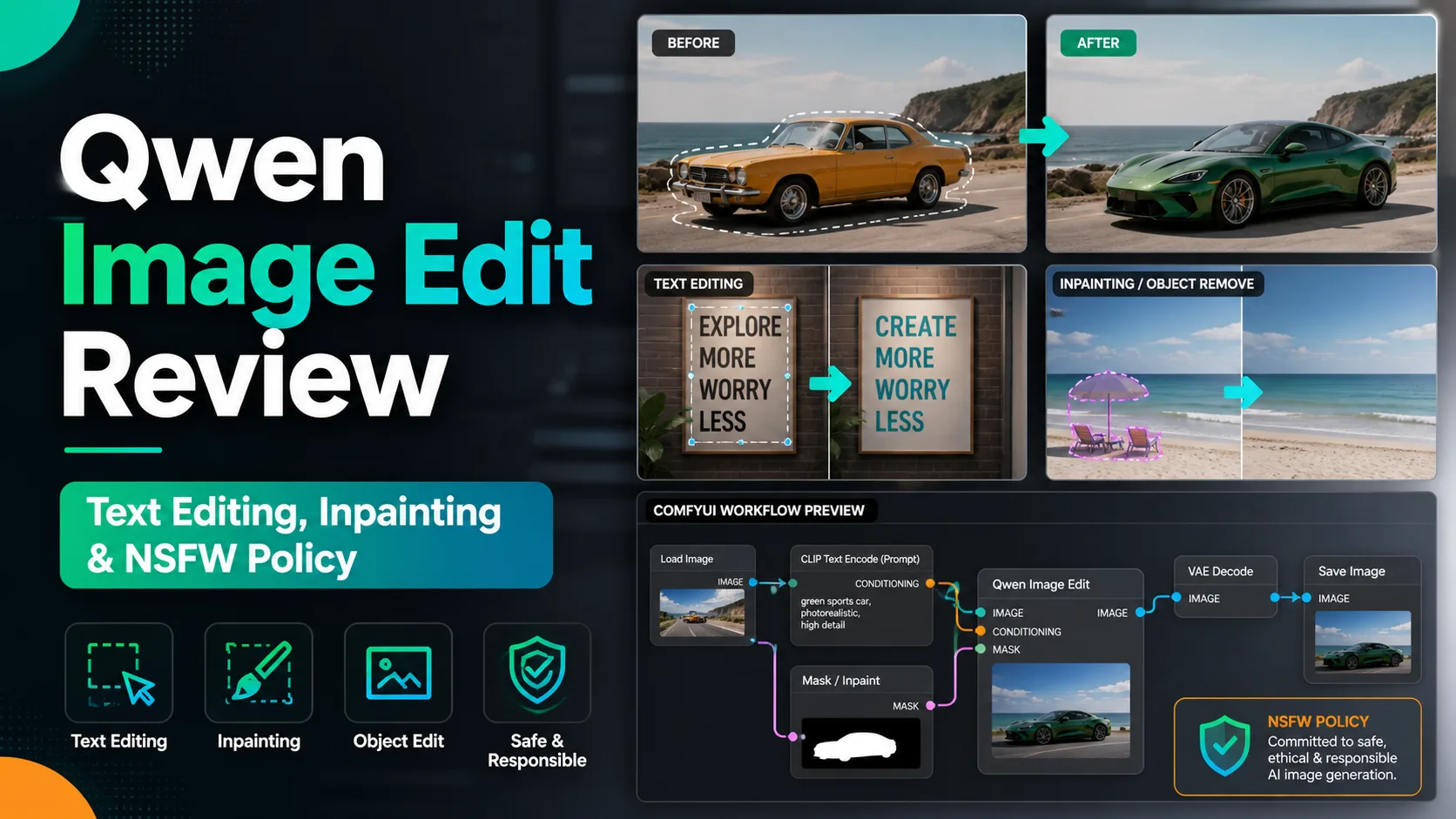
5 Best Online Photo Text Editors in 2026

Compare the five best conversational photo text editors in 2026. Upload an image and use natural-language prompts to replace, remove, translate, or add text.

AI News

Stay updated with the latest developments and breakthroughs in global artificial intelligence

Sep 8, 2026

Mistral raises €600m to make sovereign, open-weight AI the technology frontier

Mistral AI has successfully secured €600 million in its Series B funding round, dedicated to pioneering sovereign, open-weight artificial intelligence as the new technology frontier. Led by General Catalyst and supported by leading investors like Lightspeed Venture Partners, Andreessen Horowitz, Nvidia, and Samsung, this round positions the European AI startup as a formidable competitor in the global AI landscape. The newly acquired capital will be deployed to scale the company's computational capabilities, recruit elite research and development talent, and accelerate its international expansion, particularly in the United States. Mistral AI remains committed to delivering state-of-the-art open models and developer tools, ensuring that enterprises retain absolute control over their technology and proprietary data.

The Roborock Qrevo CurvX has dropped to its best-ever price at Amazon. Save $700 now.

Amazon has dropped the price of the Roborock Qrevo Curv robot vacuum to its lowest price ever, offering a massive $700 discount on this premium home cleaning device. This deal brings the high-end vacuum and mop combo down to a much more competitive price point, making automated home maintenance more accessible. The Roborock Qrevo Curv features an industry-leading 18,500 Pa suction power and an innovative AdaptiLift chassis system, which allows it to easily navigate over high thresholds and thick carpets. Additionally, its dual-comb anti-tangle system prevents hair from wrapping around the main brushes, making it highly effective for households with pets. The device is paired with a fully automated dock that washes the mop with 75°C hot water, self-empties the dustbin, and dries the cleaning pads with warm air. Powered by intelligent AI obstacle avoidance and LiDAR mapping, it delivers a hands-free, highly efficient cleaning experience.

A third of workers believe having an AI boss would make them more productive

Approximately one-third of employees believe that working under an artificial intelligence boss would boost their overall workplace productivity, highlighting a significant shift in attitudes toward automated leadership. According to research, many workers view AI managers as more objective, impartial, and efficient at handling administrative tasks, scheduling, and performance evaluations compared to their human counterparts. This openness to AI management is particularly strong among younger generations who are more accustomed to digital-first work environments. However, the study also emphasizes that human managers remain irreplaceable when it comes to emotional intelligence, empathy, and career mentorship. While AI can optimize task management and reduce bias, employees still seek human connection for professional growth and resolving interpersonal conflicts. Ultimately, the future of management likely lies in a hybrid model that combines AI's analytical efficiency with human leadership's emotional support.

Almost all AI tools are now running with no oversight from IT — putting companies in the firing line

Organizations are facing severe security and compliance risks as a staggering 92% of artificial intelligence tools currently used in the workplace are deployed without any IT department oversight or approval. This rampant rise of "shadow AI" is driven by employees seeking to boost their day-to-day productivity through generative AI platforms, entirely bypassing traditional IT procurement and safety vetting processes. This total lack of administrative visibility exposes companies to major hazards, including sensitive corporate data leaks, intellectual property theft, and regulatory non-compliance. While business leaders widely acknowledge the competitive advantages of rapid AI adoption, IT and security teams are struggling to establish effective governance frameworks, leaving organizations vulnerable to potential data exposure and compliance violations.

Eric Wu’s newest company, out of stealth since May, is going after construction’s labor crunch

Eric Wu, the co-founder and former CEO of Opendoor, has unveiled his latest startup aimed at tackling the severe labor shortages plaguing the construction industry through an innovative, tech-driven marketplace. Having quietly operated in stealth mode since May, the new venture focuses on optimizing workforce deployment and streamlining resource allocation for builders and contractors grappling with historic labor deficits. The platform utilizes sophisticated artificial intelligence algorithms to match general contractors with certified, high-quality subcontractors and skilled laborers in real-time. By integrating automated scheduling, compliance verification, and payroll management, the company reduces administrative friction and prevents costly project delays. This venture represents Wu's latest effort to disrupt legacy physical industries with scalable digital solutions, applying lessons from his scaling of Opendoor to the trillion-dollar construction sector.

OpenAI chief scientist argues for AI research slowdown

OpenAI's chief scientist has publicly advocated for a deliberate slowdown in advanced artificial intelligence research, emphasizing the urgent need to prioritize safety, alignment, and robust risk evaluation frameworks over rapid capabilities scaling. This stance highlights growing internal anxieties within leading labs regarding the unprecedented pace of frontier model development and its long-term societal implications. The proposal urges industry leaders and research institutions to establish collaborative benchmarks and safety thresholds before training or deploying next-generation systems. By shifting the focus from sheer computational scaling to deeply understanding AI behavior and control mechanisms, the scientific community can better mitigate existential risks and ensure that highly capable systems remain beneficial to humanity.

American data centers in just seven states are reportedly using more water than all the cities in California

Data centers located in just seven US states consume more water than all the commercial and residential municipal water systems in California combined, highlighting the severe environmental strain of the ongoing digital and artificial intelligence boom. This massive consumption is primarily driven by the need to cool power-hungry servers that run cloud computing and AI workloads, which generate immense heat. Virginia, Texas, California, Oregon, Illinois, Ohio, and Utah are home to the majority of these facilities. Researchers warn that as tech giants rapidly expand their data infrastructure to support generative AI models, local water grids will face unprecedented stress. AI queries are particularly resource-intensive, requiring significantly more water for evaporative cooling compared to traditional search engine queries.

Cathay Pacific tests Google AI that dramatically cuts airplane contrails — tiny altitude shifts slash environmental impact by 40% in early trials

Cathay Pacific has successfully trialed a Google-developed artificial intelligence system designed to mitigate the climate impact of aviation by significantly reducing the formation of warming contrails. The AI-powered tool analyzes massive datasets—including satellite imagery, weather conditions, and historic flight paths—to predict specific atmospheric zones where persistent contrails are highly likely to form. By making minor altitude adjustments of just a few thousand feet based on the AI's real-time recommendations, pilots can successfully bypass these high-humidity areas. Early trial results indicate that these slight flight path deviations managed to reduce the environmental impact of contrails by up to 40 percent, requiring only a negligible increase in fuel consumption. This technology offers a highly scalable and immediate software-based solution to address non-CO2 aviation emissions, which constitute a major portion of the industry's total climate impact.

‘If we don’t like it, we’ll kill it. If we love it, we’ll marry it’: We were dreaming about ChatGPT thousands of years before it existed — here's how ancient myths shaped the AI we’re building today

Ancient Greek myths and historical tales of artificial beings, such as the bronze giant Talos or Pandora, served as early conceptual blueprints for modern artificial intelligence and robotics long before the technology actually existed. These myths reveal that humanity's fascination with creating artificial life is not a modern phenomenon, but a deeply rooted historical impulse driven by both wonder and fear. Today's AI development, including large language models like ChatGPT, continues to be shaped by these ancient narratives. Humans tend to exhibit extreme reactions to artificial creations—either seeking to destroy them out of fear of replacement, or forming deep emotional and even romantic attachments to them. By examining these historical perspectives, we can better understand our current societal anxieties and expectations regarding AI, recognizing that our reactions to new technology are governed by age-old psychological patterns.
Sep 7, 2026

Robot co-workers could soon be a common sight, as Intel report claims workplace robotics are approaching a 'critical threshold'

Workplace robotics are approaching a critical threshold of adoption, driven by labor shortages, technological advancements, and the need for operational efficiency. According to an Intel report, robots are transitioning from isolated industrial machines to collaborative "cobots" that work alongside humans across various sectors, including retail, logistics, and healthcare. The integration of advanced technologies like AI, edge computing, and 5G is accelerating this shift, allowing robots to perform more complex, real-time tasks. While fears of job displacement persist, the report highlights that these robotic co-workers are primarily designed to handle repetitive, dangerous, or mundane tasks, thereby freeing human workers to focus on higher-value activities. Businesses must prepare for this transition by upskilling their workforce and investing in the necessary digital infrastructure to support human-robot collaboration.

This is what I'd put in my smart home of the future

A truly futuristic smart home shifts the focus from isolated, manually controlled gadgets to a fully cohesive, ambient ecosystem that anticipates and responds to human needs. This vision relies on highly integrated artificial intelligence that acts as a central brain, seamlessly managing everything from home security to optimal energy efficiency without requiring constant manual input. Key features of this dream setup include smart kitchen appliances that track inventory to reduce waste, advanced automated cleaning robots, and dynamic lighting systems that synchronize with circadian rhythms to improve sleep and productivity. Rather than overwhelming users with complex interfaces, the ultimate goal is to create a frictionless, intuitive living environment where technology quietly enhances daily life while maintaining strict data privacy.

The most mind-blowing IFA 2026 devices you need to see

IFA 2026 showcased a groundbreaking shift in consumer electronics, highlighting highly integrated artificial intelligence, rollable display technologies, and advanced smart home ecosystems that redefine daily convenience. Major tech brands debuted concepts that transition AI from a simple voice assistant into a proactive, context-aware companion embedded directly within household appliances and personal devices. Among the standout innovations were transparent micro-LED televisions that blend seamlessly into home decor when turned off, and next-generation laptops designed to optimize performance based on real-time user tasks. Additionally, modular smart kitchen hubs and robotic home assistants demonstrated unprecedented levels of automation, featuring self-cleaning mechanics and intuitive gesture controls. These advancements underscore a future where technology is both invisible and ubiquitously helpful.

6 data centers hit by lawsuits as Microsoft, xAI battle millions in damages — dozens of gas turbines bypassing dBA monitors plague two US states

Tech giants Microsoft and xAI are facing escalating legal challenges and community backlash over the severe environmental and noise impacts of their rapidly expanding data centers in Georgia and Tennessee. Local residents and environmental advocacy groups have filed lawsuits targeting at least six data center sites, alleging that the facilities deploy dozens of unpermitted gas turbines to meet their immense power demands. These turbines operate continuously, bypassing standard decibel (dBA) monitoring and creating persistent, disruptive noise pollution that plagues surrounding neighborhoods. The legal disputes highlight the growing tension between the massive energy requirements of artificial intelligence infrastructure and local environmental regulations. While xAI's Colossus supercomputer facility in Memphis relies heavily on gas combustion turbines to bypass grid capacity limitations, Microsoft's operations in Georgia face similar scrutiny over noise levels and emissions. Plaintiffs are seeking millions of dollars in damages and demanding stricter regulatory oversight to halt the unauthorized use of fossil-fuel generators.

Ryzen AI Max+ PRO 495 mini PCs with 192GB RAM emerge — Acemagic, GMKtek, Framework debut ultra-expensive 'supercomputers' that can handle 300B-parameter

AMD's powerful new Ryzen AI Max+ Pro 495 processors are debuting in ultra-high-end mini PCs from manufacturers like Acemagic, GMKtek, and Framework, offering unprecedented local AI processing capabilities in a compact form factor. Equipped with up to 16 Zen 5 CPU cores and massive RDNA 3.5 integrated GPUs featuring up to 40 compute units, these systems can support up to 192GB of high-speed LPDDR5X memory with a massive 256-bit memory bus. This immense memory bandwidth allows these small-form-factor PCs to run highly complex artificial intelligence models, including those with up to 300 billion parameters, entirely locally. These mini PCs effectively bridge the gap between traditional enterprise workstations and compact consumer desktops, targeting AI developers, data scientists, and creative professionals who require immense compute power without a massive physical footprint. Given their cutting-edge specifications and specialized hardware, these systems are expected to command premium prices, establishing themselves as ultra-expensive, localized "supercomputers" for advanced AI workloads.

Caltech Mathathon – first hackathon ever devoted to research level mathematics

The Caltech Mathathon represents a groundbreaking initiative as the world's first hackathon dedicated entirely to research-level mathematics, aiming to foster collaboration at the intersection of pure math, computer science, and digital technology. The event brings together a diverse group of mathematicians, students, and software engineers to collaborate on solving open mathematical problems and developing innovative computational approaches to complex proofs. Central to the hackathon's mission is the utilization of advanced technology, including interactive theorem provers like Lean and machine learning models, to automate and verify mathematical reasoning. By leveraging these modern artificial intelligence tools, participants work to formalize mathematical theories and create open-source resources, ultimately accelerating the pace of mathematical discovery and redefining how research is conducted in the field.

AMD at IFA 2026: A new era of personal and agentic AI

AMD has unveiled its vision for the future of personal computing at IFA 2026, showcasing next-generation Ryzen AI processors designed to power 'agentic AI'—autonomous digital assistants capable of executing complex workflows locally on personal devices. These new chips feature advanced Neural Processing Units (NPUs) delivering over 100 TOPS of AI performance, significantly reducing latency and enhancing privacy by processing sensitive data entirely on-device. The demonstration highlighted how these agentic AI systems transition from passive assistants to proactive partners, managing tasks such as real-time language translation, complex project scheduling, and automated content creation. By collaborating with major software developers, AMD aims to establish an open ecosystem that integrates these agentic capabilities seamlessly into everyday consumer applications.

Opaque recurrence, and other AI terms that you should probably know

Navigating the rapidly evolving landscape of artificial intelligence requires a clear understanding of its specialized vocabulary, which frequently expands with new technical concepts, industry jargon, and philosophical debates. This comprehensive guide demystifies essential AI terminology, helping readers grasp both the foundational ideas of machine learning and the emerging phenomena that define modern generative AI systems. Key concepts explained in detail include "hallucinations," where AI models confidently generate false or entirely fabricated information, and newer terms like "opaque recurrence," which describes complex, cyclical patterns in deep learning architectures that remain difficult for researchers to interpret. By breaking down these complex technical terms into accessible language, the guide enables developers, business leaders, and general technology enthusiasts to better navigate discussions surrounding AI capabilities, inherent limitations, and ethical implications.

Scientists develop ‘ultrafast magnetic-field pulses’ memory system that could cut AI data center energy use by 100x — and even get close to hitting thermodynamic limits

An innovative memory system utilizing ultrafast magnetic-field pulses could reduce the energy consumption of AI data centers by up to 100 times. Developed by an international team of physicists, this breakthrough technology approaches the Landauer limit, which represents the theoretical thermodynamic minimum energy required to write a single bit of digital information. The technology functions by using ultra-short, picosecond magnetic-field pulses to switch the magnetic state of a material, representing the "0" and "1" states in computer memory. This method operates at extreme speeds and generates almost zero heat compared to traditional electronic memory, which produces significant heat due to electrical resistance. By drastically cutting the energy required for data storage and retrieval, this development addresses one of the most critical challenges facing the expansion of artificial intelligence: the soaring energy and cooling demands of modern high-performance data centers.

Can an Nvidia RTX 5050 gaming laptop help you beat the memory crisis? As a laptop expert, here’s when I’d buy one — and when I wouldn’t

Nvidia's new RTX 5050 laptop GPU addresses a major pain point for budget gamers by upgrading its video memory (VRAM) to 8GB, up from the 6GB found on its predecessor, the RTX 4050. This increase helps alleviate the modern "VRAM crisis" where graphic-intensive games require more memory to run smoothly at standard resolutions. Despite this memory boost, the RTX 5050 remains an entry-level graphics card. It is highly recommended for casual gamers, esports players, or those playing older titles at 1080p, especially when utilizing Nvidia's AI-powered DLSS upscaling and frame generation technologies to enhance performance. However, for players wanting to run demanding AAA blockbusters at higher settings with true longevity, saving up for an RTX 5060 or higher is advisable. While the RTX 5050 provides a temporary reprieve from memory limitations, 8GB is rapidly becoming the absolute minimum baseline for modern PC gaming.

Another Rowhammer attack has been detected, and Nvidia workstation GPUs are firmly in the firing line

Security researchers have successfully demonstrated a new Rowhammer attack variant targeting Nvidia workstation GPUs, proving that high-speed graphics memory (VRAM) is highly vulnerable to bit-flipping exploits. By leveraging the high-bandwidth capabilities of modern GDDR6 memory, researchers from ETH Zurich triggered bit flips on Nvidia RTX A4000 graphics cards, effectively bypassing built-in hardware security mitigations. This breakthrough marks a critical shift in the threat landscape, as Rowhammer attacks—which rapidly access specific memory rows to induce electrical leakage and alter data—were historically confined to standard system DRAM. The ability to execute these exploits on GPUs, particularly through common programming interfaces like WebGL, poses a severe risk to cloud infrastructures and virtualized environments where GPU resources are shared among multiple tenants. Consequently, this discovery underscores an urgent need for hardware manufacturers to redesign memory protections for modern graphics processors.

Latest Tutorials

Stay updated with our newest guides and tutorials on AI tools and technologies

Sign In

OR

Create Account

Password must be 8-20 characters and contain letters and numbers

OR

Forgot Password

Password must be 8-20 characters and contain letters and numbers