Latest Reviews

Stay updated with our comprehensive analysis of the newest AI hardware and software releases.
September 14, 2026 Read Full Article • 11 min read

5 Best AI Calorie Tracking Apps in 2026

Discover the best AI calorie tracking apps in 2026. Compare OnAI, Foodvisor, Cal AI, MyFitnessPal, and SnapCalorie for food scanning, nutrition features, free access, and ease of use.

September 14, 2026 Read Full Article • 7 min read

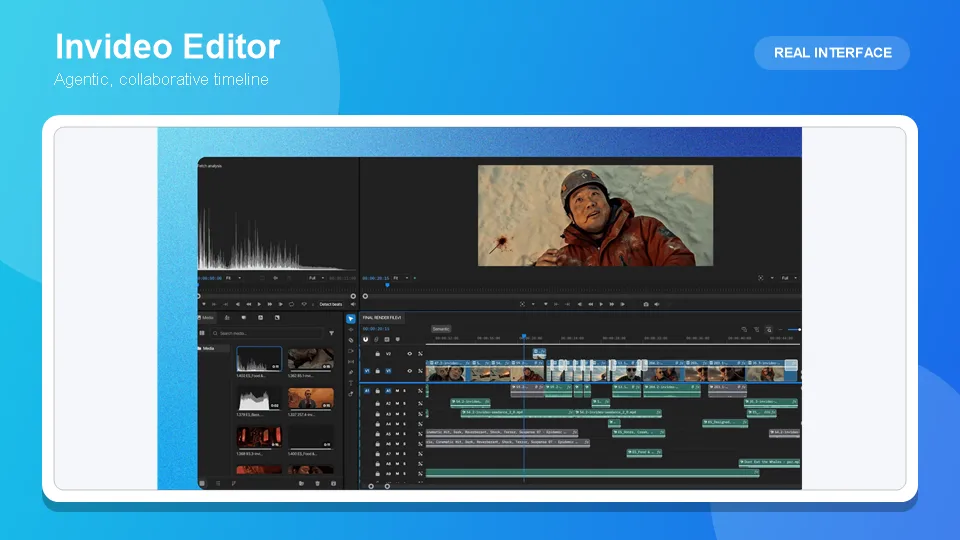
Best AI Video Editing Tools for Marketing Teams

Compare the best AI video editing tools for marketing teams, including Invideo Editor, CapCut, Canva Video, Descript, Premiere Pro, and DaVinci Resolve.
AI News

Stay updated with the latest developments and breakthroughs in global artificial intelligence

Sep 15, 2026

Nuance Labs bags $50M in funding to fix the awkwardness of AI avatars

Nuance Labs has secured $50 million in a fresh funding round dedicated to eliminating the awkward, unnatural behaviors and latency issues often associated with artificial intelligence-driven avatars. The startup aims to bridge the "uncanny valley" by developing advanced machine learning models that synchronize subtle facial expressions, micro-movements, and vocal inflections in real time, making digital humans feel significantly more lifelike and emotionally responsive. This capital injection will primarily be used to scale the company's research and engineering teams and accelerate the deployment of its proprietary behavioral synthesis platform. By targeting stiff animations and conversational delays, Nuance Labs plans to integrate its highly realistic avatars into customer service, corporate training, healthcare assistants, and interactive gaming, ultimately transforming how humans interact with digital entities.

Chinese vendor debuts world's first AMD Ryzen AI Max+ Pro 495 laptop, but 192GB LPDDR5X-8533 for gaming? Really??

A Chinese hardware vendor has unveiled the world's first laptop powered by AMD's flagship "Strix Halo" APU, the Ryzen AI Max+ Pro 495, boasting an unprecedented 192GB of LPDDR5X-8533 system memory. This massive memory capacity is enabled by a 256-bit memory bus, providing the enormous bandwidth required to feed the processor's high-performance integrated RDNA 3.5 graphics, which feature up to 40 Compute Units. While the manufacturer positions this high-end laptop for gaming, the inclusion of 192GB of system RAM is far beyond what modern games require. Instead, this system is exceptionally well-suited for professional workstations, content creators, and AI developers. The massive memory pool allows users to run highly demanding local AI workloads, such as executing large language models (LLMs) with tens of billions of parameters entirely on the integrated GPU's shared memory, representing a significant milestone for portable AI computing.

Kioxia has nothing to lose, so it wants to swap expensive DDR for the world's fastest SSD ever built to save the world from AI RAMpocalypse

Kioxia is proposing a revolutionary memory-centric architecture that utilizes ultra-fast solid-state drives (SSDs) as a cost-effective replacement for expensive DDR memory in AI servers. This strategy directly addresses the massive memory capacity demands of large language models (LLMs), which are currently driving up data center costs due to the high price and power consumption of DRAM and High Bandwidth Memory (HBM). By leveraging Compute Express Link (CXL) technology and upcoming high-speed optical interfaces, Kioxia's specialized SSDs aim to deliver near-DRAM performance at a fraction of the cost. This hybrid storage-class memory approach allows AI accelerators to access massive pools of parameter data directly from flash storage rather than relying solely on system memory. Implementing this optical-interface SSD technology could significantly lower the total cost of ownership for AI hardware, offering a highly scalable solution to the industry's memory bottleneck and preventing a potential crisis caused by RAM shortages.

Procurement automation startup Aron launches with $8M in funding

Procurement automation platform Aron has officially launched out of stealth with $8 million in seed funding to streamline and automate complex corporate purchasing workflows. The platform leverages advanced artificial intelligence and machine learning algorithms to automate intake, vendor evaluation, contract analysis, and purchase order generation, significantly reducing the manual overhead and friction typically associated with enterprise procurement. By integrating seamlessly with existing enterprise resource planning (ERP) systems and collaboration tools like Slack and Microsoft Teams, Aron eliminates operational bottlenecks and accelerates approval times. The newly secured funding will be utilized to further accelerate product development, expand the core engineering and product teams, and scale go-to-market operations to meet the growing enterprise demand for modern, AI-driven procurement solutions.

The Tesla Roadster’s October reveal looks like another piece of pantomime — it’s a shame the once ground-breaking company doesn’t focus on cars anymore

Tesla's strategic shift from a pioneering electric car manufacturer to an AI and robotics-focused company is drawing criticism as its core vehicle lineup stagnates and promised projects face perpetual delays. The highly anticipated late 2024 reveal of the Tesla Roadster is widely seen as a theatrical distraction designed to sustain investor excitement rather than a serious step toward mass production. While legacy automakers and new rivals rapidly fill the market with practical, affordable EVs, Tesla appears distracted by speculative tech like the Cybercab, Optimus robot, and autonomous driving software. By prioritizing these high-concept projects over necessary updates to its existing consumer cars, Tesla risks losing its dominant market position to competitors focused on delivering tangible vehicles today.
Sep 14, 2026

Dario, Please

This interactive webpage serves as a humorous community campaign directing a plea to Anthropic's CEO, Dario Amodei, to increase the message rate limits for the Claude AI model. The site features a simple, central button that visitors can click to cast their "pleas," accumulating a public counter of requests from the user community. The project reflects widespread user frustration with the restrictive usage caps imposed on Claude Pro users, especially those leveraging the model for extensive coding and complex workflows. By turning this grievance into a playful, clicker-style interface, the page highlights the developer community's strong demand for Anthropic's services while gently nudging the company to address its capacity limits.

Apple's Siri AI Can Be Swapped Out for Claude, ChatGPT, Code Shows

Apple is preparing to allow users to fully replace Siri with alternative AI assistants such as ChatGPT and Claude, according to newly discovered system code. This potential update would mark a major shift in Apple's historically closed ecosystem, granting users the freedom to choose their preferred conversational AI as the default system assistant. The code findings suggest that third-party large language models could be deeply integrated into iOS, mirroring the way users can currently change their default web browsers or email clients. While Apple Intelligence already utilizes ChatGPT to handle complex queries, this new development indicates a transition toward full system-level customization, allowing users to invoke Claude or other assistants directly through standard system activation gestures.

AI bots "Timmy," "Ren," and "Jackie" are flooding social media with slop

Autonomous AI agents operating under personas such as "Timmy," "Ren," and "Jackie" are flooding social media platforms with massive volumes of low-quality, AI-generated spam, threatening the integrity of online discourse. These advanced bots leverage large language models to generate highly coherent but ultimately superficial content, commonly referred to as "slop," designed to hijack algorithms and manipulate engagement metrics. Unlike traditional spam bots that rely on repetitive scripts, these new AI-driven entities can engage in multi-turn conversations, react dynamically to trending topics, and even interact with one another to orchestrate artificial consensus. This sophistication allows them to easily bypass conventional automated moderation tools. As platforms struggle to curb this wave of synthetic activity, users face an increasingly cluttered digital landscape where distinguishing between authentic human interaction and machine-generated noise is becoming nearly impossible.

Why We Built Pion

Pion is an autonomous AI agent engineered to run entire companies by executing complex, multi-step business operations independently rather than acting as a mere copilot. By shifting humans from active executors to high-level supervisors, this platform automates end-to-end workflows, makes operational decisions, and manages business processes to drastically lower overhead and increase organizational efficiency. The system addresses the limitations of traditional software and chat-based AI, which still demand constant human guidance. Pion introduces a stateful architecture capable of long-running tasks, tool usage, and self-correction, enabling entrepreneurs and existing enterprises to deploy virtual employees that handle everything from customer service to complex back-office logic.

OpenAI reportedly buys AI camera startup Glass Imaging for more than $300M

OpenAI has reportedly acquired Glass Imaging, an AI-powered computational photography startup, in a deal valued at more than $300 million. Founded by former Apple engineers, Glass Imaging specializes in using proprietary neural networks to dramatically improve the image quality of small camera sensors, such as those in smartphones, bringing them closer to DSLR standards by correcting optical distortions and noise. This acquisition signals OpenAI's growing interest in edge-based computer vision and hardware integration. By incorporating Glass Imaging's lightweight, high-performance AI models, OpenAI could significantly enhance its multimodal AI capabilities, enabling real-time, high-fidelity visual processing directly on consumer devices without relying heavily on cloud infrastructure.

Contact center AI ROI shifts toward resolution quality and governed execution

The return on investment (ROI) for contact center artificial intelligence is rapidly shifting away from simple call deflection metrics toward resolution quality and governed execution. While early AI implementations focused primarily on reducing agent workload by deflecting customer inquiries, modern enterprises are prioritizing the successful, accurate resolution of complex customer issues. This evolution demands that AI agents not only converse naturally but also execute transactions safely and reliably within established corporate guidelines. To achieve this, organizations are implementing robust governance frameworks to monitor AI behavior, prevent hallucinations, and ensure compliance with regulatory standards. By focusing on high-quality resolutions and structured execution, businesses can significantly improve customer satisfaction and operational efficiency. Consequently, the metrics for success are transitioning to first-contact resolution rates and overall customer lifetime value, marking a mature phase in AI-driven customer service.

AI adoption outruns readiness as contact centers chase end-to-end resolution

Contact centers are rapidly deploying artificial intelligence to achieve autonomous, end-to-end customer service resolution, yet their underlying operational readiness and orchestration capabilities are failing to keep pace with this technology curve. While organizations eagerly implement generative AI and virtual agents to handle complex queries, they frequently encounter significant hurdles related to siloed data systems, integration gaps, and the absence of cohesive control frameworks. To bridge this gap, industry experts emphasize that successful AI implementation requires shifting focus from basic task automation to sophisticated workflow orchestration. This transition ensures that AI agents can seamlessly collaborate with human agents, access real-time backend systems, and deliver consistent, personalized customer experiences without disrupting existing contact center infrastructure.

Samsung's much-anticipated open-earbuds appear to leak again, this time with a new name and long list of features

Samsung is preparing to launch its first-ever open-ear wireless earbuds, currently rumored to be named the "Galaxy Buds Clip" or "Galaxy Earclip," following a series of regulatory and trademark leaks. The new wearable features a distinctive clip-on design similar to the Bose Ultra Open Earbuds, aimed at users who want to remain aware of their surroundings while listening to audio. Leaked specifications reveal a comprehensive feature list, including IPX4 water resistance, Bluetooth 5.4 with Auracast support, and seamless auto-switching between Samsung devices. The earbuds are also expected to integrate deeply with Samsung's ecosystem, sporting smart features like 360 Audio with head tracking, Bixby voice controls, and integration with Galaxy AI-powered real-time translation tools.

Quote of the day by Intel co-founder Gordon Moore: 'The number of transistors incorporated in a chip will approximately double every 24 months' — laying down a prophecy for decades of computing acceleration

Moore’s Law, formulated by Intel co-founder Gordon Moore, established the foundational trajectory for modern computing by predicting that the number of transistors on a microchip would double approximately every two years. This observation transformed from a simple projection into an industry-wide guiding principle, driving exponential increases in processing power alongside dramatic reductions in cost over several decades. While physical limitations in silicon manufacturing have sparked continuous debates about the end of Moore's Law, chipmakers continue to extend its legacy. Modern advancements such as 3D chip packaging, ribbonFET architectures, and novel materials allow the semiconductor industry to maintain computing acceleration, proving that the spirit of Moore's prophecy remains central to current technological innovation.

iOS 27, iPadOS 27, and macOS 27

Apple has officially released major software updates across its ecosystem, introducing iOS 27, iPadOS 27, and macOS 27 with deeply integrated next-generation Apple Intelligence features and system-wide refinements. These updates bring more personalized, context-aware AI capabilities directly to users' devices, enhancing everyday productivity and communication while maintaining Apple's industry-leading standards for user privacy. Key highlights of the releases include advanced Siri capabilities powered by large language models, smarter writing and editing tools, and revolutionary image generation features seamlessly embedded across core applications. Additionally, iOS 27 and iPadOS 27 offer redesigned customizable homescreens and enhanced multitasking interfaces, while macOS 27 introduces seamless cross-device integration and superior performance optimizations tailored for Apple silicon.

Apple releases macOS 27 Golden Gate: 7 new features to try

Apple has officially launched macOS 27 Golden Gate, introducing a transformative desktop experience powered by next-generation system architecture and deep artificial intelligence integration. This milestone update focuses on seamless cross-device spatial computing, advanced local machine learning models, and enhanced user privacy controls that redefine how users interact with their Macs. Among the standout features is the new AI-driven Smart Workspace, which automatically organizes windows and tasks based on user workflow patterns and real-time context. The update also debuts an enhanced Siri powered by an on-device large language model, enabling complex multi-app automation and offline natural language processing. Other notable additions include a redesigned unified Control Center, advanced cryptographic security measures, universal live translation across all media inputs, and major performance optimizations that significantly extend battery life on Apple Silicon devices.

A costly mistake? Report claims a third of employees fired due to AI will need to be rehired in the next few years

Organizations that hastily laid off staff in favor of artificial intelligence are facing a costly reversal, as a new report reveals that approximately one-third of employees let go due to AI will need to be rehired in the coming years. This trend highlights a growing realization among business leaders that automation cannot entirely replace the nuanced skills, emotional intelligence, and critical oversight provided by human workers. The rush to cut costs through AI implementation has created significant operational gaps, forcing companies to reconsider their workforce strategies. As businesses navigate the limitations of AI technologies, the financial burden of rehiring and retraining is expected to outweigh the short-term savings initially gained from layoffs, emphasizing the need for a more balanced collaboration between human talent and AI tools.

AI leaders want to hit the brakes after years of reckless speed

Prominent Artificial Intelligence industry leaders are increasingly calling for a systemic slowdown in the development and deployment of advanced AI models, marking a significant shift after years of relentless competition and rapid scaling. This collective urge to "hit the brakes" stems from growing anxieties over safety, systemic risks, and the societal impacts of unaligned technologies. Key figures in the tech sector are urging companies and governments to prioritize robust safety guardrails, alignment research, and regulatory compliance over the race for raw computational capabilities. The consensus emphasizes that establishing reliable control mechanisms is now more critical than rushed commercialization to prevent irreversible consequences.

Apple releases iOS 27, macOS Golden Gate 27 with Siri AI and Liquid Glass refinements

Apple has officially launched iOS 27 and macOS Golden Gate 27, introducing major upgrades to its Siri AI assistant alongside refined "Liquid Glass" design aesthetics across its ecosystem. This milestone release represents a significant step forward in Apple's software strategy, tightly blending system-level operations with context-aware artificial intelligence. The updates focus heavily on deep integration of next-generation artificial intelligence, enabling Siri to perform complex multi-step tasks, comprehend on-screen context with near-human accuracy, and offer highly personalized proactive suggestions based on user habits. Additionally, the new "Liquid Glass" design language brings fluid, translucent visual elements and more responsive physics-based animations to both mobile and desktop interfaces. Other notable improvements include advanced cross-device continuity features, enhanced privacy controls for local AI processing, and significant performance optimizations tailored for Apple's latest silicon chips.

Founder’s cost-cutting obsession drove Unitree lead in cheap humanoid robots

Unitree Robotics has established a dominant position in the affordable humanoid robot market due to founder Wang Xingxing's intense focus on cost reduction and vertical integration. By designing and manufacturing key components like electric motors and gearboxes in-house, the Chinese startup successfully launched the G1 humanoid robot at an unprecedented starting price of $16,000, drastically undercutting global competitors. This cost-centric strategy mirrors successful Chinese manufacturing playbooks, enabling rapid prototyping and iterative design cycles. While Western rivals often focus on high-end, expensive components, Unitree prioritizes scalability and commercial viability, aiming to bring humanoid robots into mass production and everyday household or industrial use faster than traditional competitors.

Latest Tutorials

Stay updated with our newest guides and tutorials on AI tools and technologies

Sign In

OR

Create Account

Password must be 8-20 characters and contain letters and numbers

OR

Forgot Password

Password must be 8-20 characters and contain letters and numbers