Claude Fable 5.1 / Mythos 5.1 Review (2026): Pricing, API, NSFW and GPT–Gemini Comparison
Compare Claude Fable 5.1 and Mythos 5.1: access, subscription limits, API prices, upgrades, real user reports, NSFW policy and GPT/Gemini alternatives.


Claude Fable 5.1 is most compelling when a difficult project costs more in repeated corrections than in model usage. Codebase investigations, substantial revisions and multi-step document work are better reasons to try it than quick everyday questions. Mythos 5.1 is a specialized access option for vetted organizations, not an ordinary consumer upgrade above Fable.
The buying catch is important: a Pro subscription does not include Fable usage in its normal allowance, and Max is not unlimited. For most people, choosing an affordable starting model and reserving Fable for difficult work makes more sense than chasing access to Mythos.
Fable 5.1 vs Mythos 5.1: what are you actually buying?
Released on September 1, 2026, the two names refer to the same underlying model with different safeguards. Fable is the broadly available version; Mythos supports approved work affected by additional cybersecurity and life-sciences restrictions. This is an editorial assessment as of September 11, combining documented specifications and attributed third-party experiences. We have not conducted our own controlled model benchmark or obtained Mythos access. Official announcement.
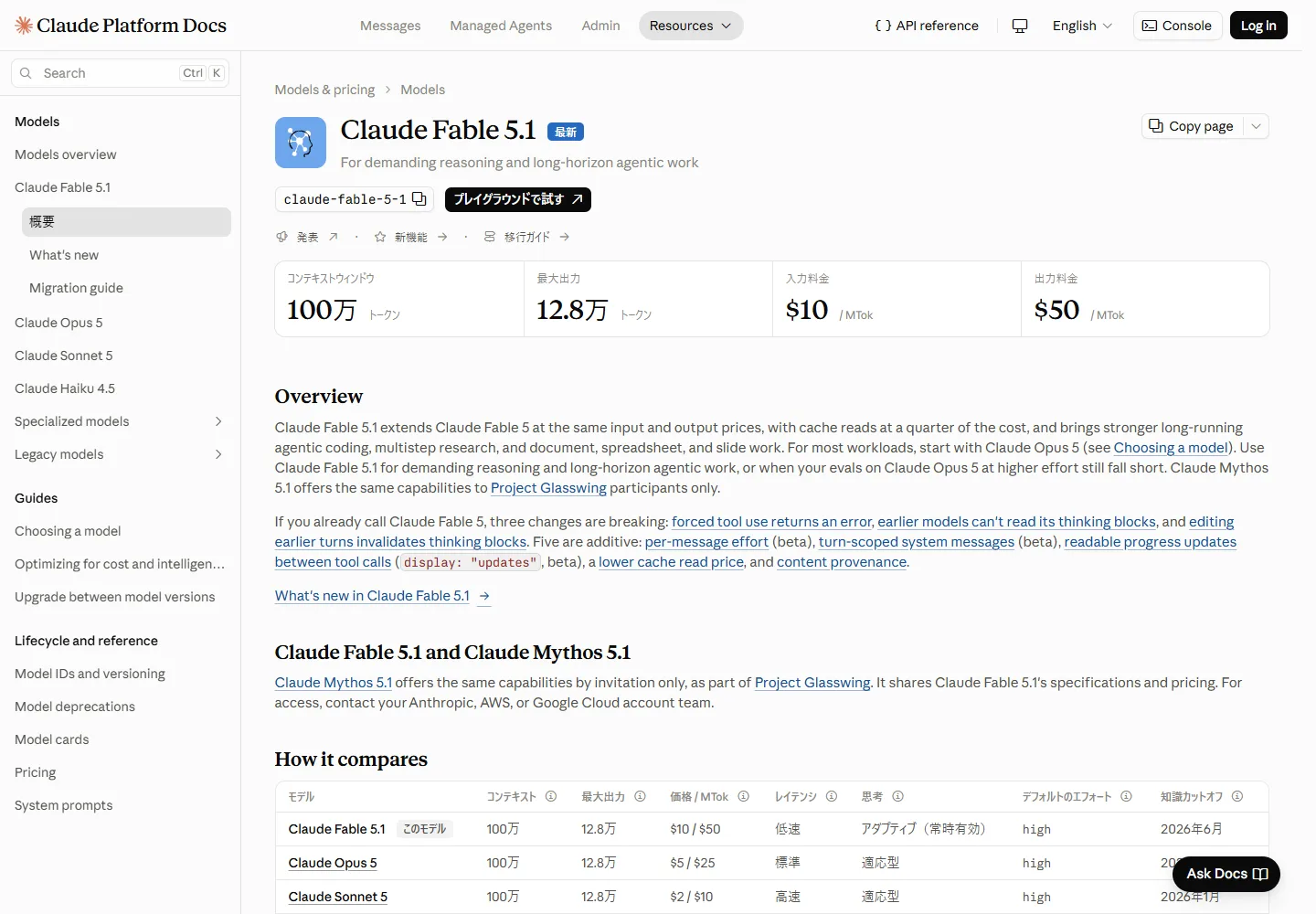
| Specification | Claude Fable 5.1 |
|---|---|
| Official API model ID | claude-fable-5-1 |
| API context window | 1 million tokens |
| Maximum API output | 128,000 tokens |
| Modalities | Text and image input; text output |
| Thinking | Adaptive thinking, always enabled |
| Reliable knowledge cutoff | June 2026 |
| Practical positioning | Demanding reasoning and long-running agentic work |
These are API specifications, not a promise that every Claude app or subscription exposes the full API context. A large context window is also not perfect recall: a useful research result still needs identifiable sources, and a code change still needs verification. Text output can include code that creates a chart or document; that does not make Fable a native image-generation model.
Official online access and websites providing the API
For the consumer service, open Claude and check the model selector and usage settings on the intended paid account. The official Claude Platform provides API access and a playground. A chat subscription and developer API billing are separate products; buying one should not be treated as credit for the other.
| Route | Where to start | What to check |
|---|---|---|
| Claude web/app | claude.ai | Paid plan, Fable usage credits or eligible included allowance |
| Anthropic API | Claude Platform | Model ID claude-fable-5-1, billing and organization limits |
| Cloud platforms | Official platform links | Amazon Bedrock, Claude Platform on AWS, Google Cloud and Microsoft Foundry; regional access and contract terms |
| Third-party unified API | OpenRouter Fable 5.1 | ID anthropic/claude-fable-5.1; provider, privacy terms and account fees |
| Mythos 5.1 | Anthropic’s Mythos access information | Trusted-access eligibility; no ordinary public signup equivalent |
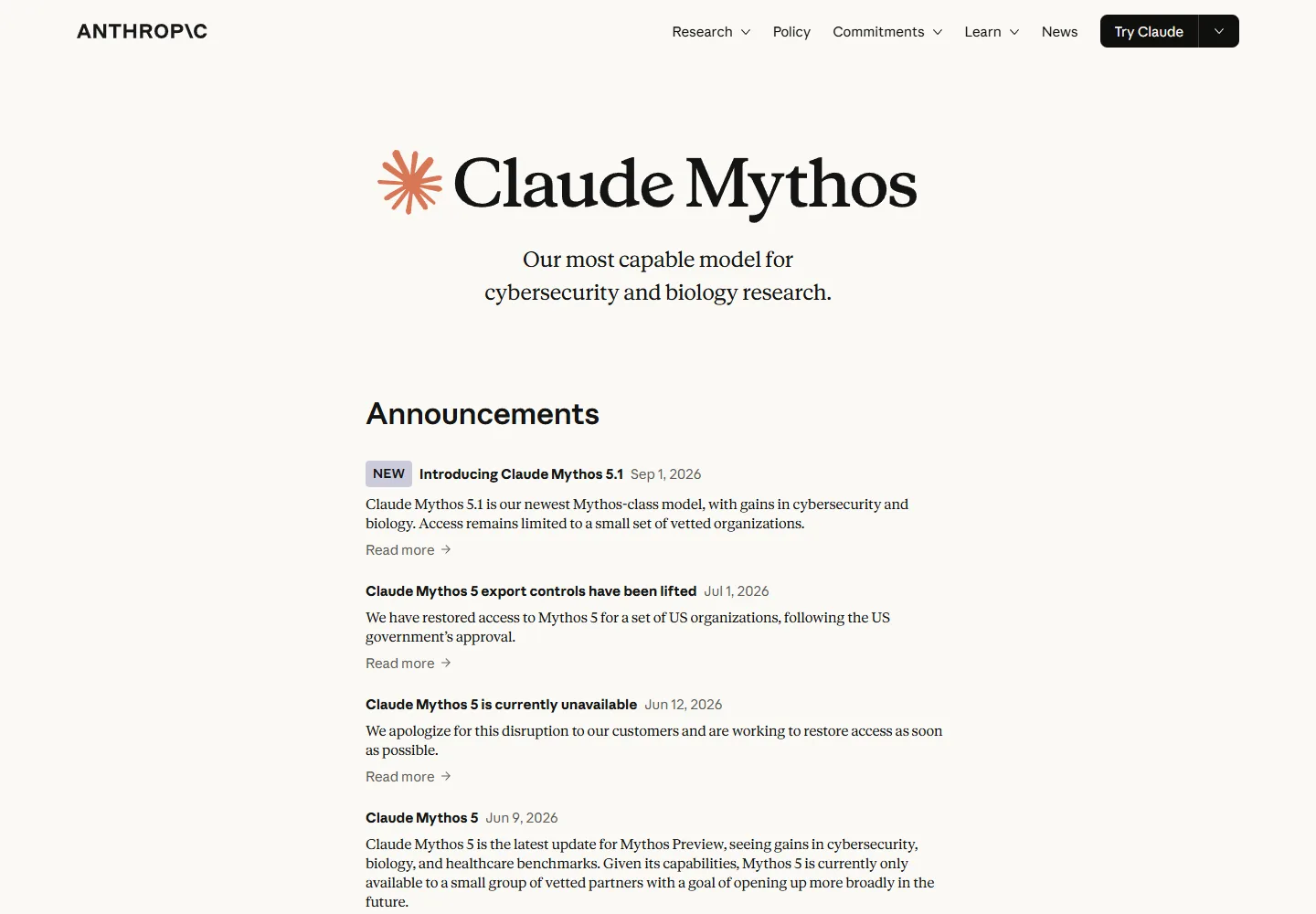
The Mythos page currently limits availability to a set of US organizations. Life-sciences access is an invite-only beta; Mythos access through the Cyber Verification Program is described as coming in the near future. Applying to a program therefore does not itself establish access. The published starting API price is $10 input / $50 output per million tokens, but a price listing does not remove the eligibility requirement.
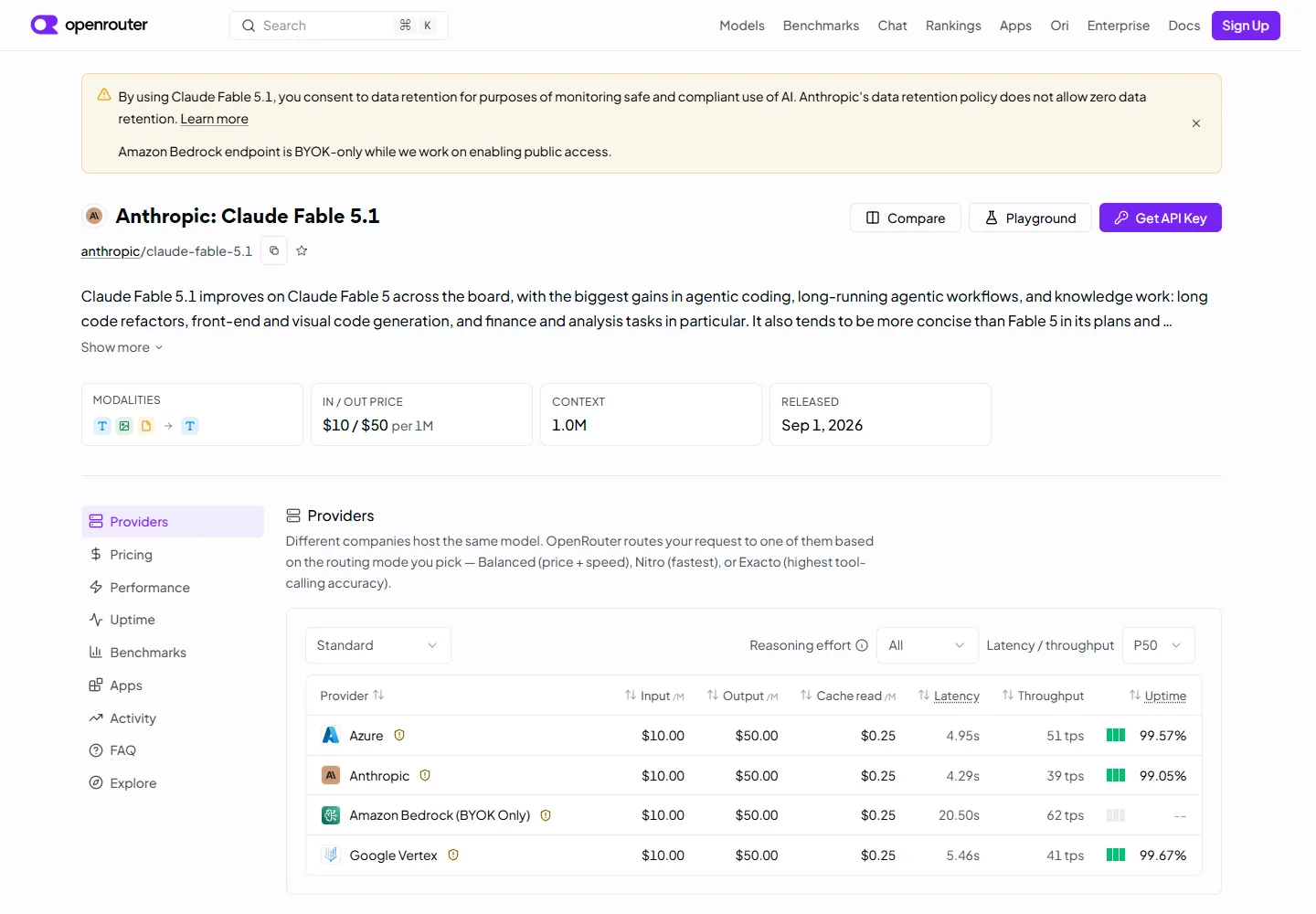
OpenRouter’s listing is a verified third-party Fable API route, not Anthropic’s own website. At the time checked, its Bedrock endpoint was marked BYOK-only, and the page displayed data-retention conditions. Choose the actual provider deliberately: direct Anthropic enterprise arrangements do not automatically transfer to a reseller endpoint. We do not recommend an unverified site claiming to sell unrestricted Mythos access.
Subscription prices, API charges and the real cache savings
The public US-dollar subscription list is Pro $20 monthly or $200 annually; Max starts at $100 monthly. Taxes are additional. Fable access works differently from a simple “all models included” bundle. Subscription pricing.
| Plan/access type | How Fable 5.1 is paid for |
|---|---|
| Free | Not included |
| Pro / standard Team seats | Pay-as-you-go usage credits, rather than the regular subscription allowance |
| Max / premium Team seats | Up to 50% of the shared weekly allowance can be used on Fable; additional usage can require credits |
| Enterprise | Depends on the seat-based or usage-based contract; verify the workspace arrangement |
| Developer API | Separate token billing |
The 50% share is not an extra allowance. Other models draw from the same weekly pool, and Fable consumes it faster. Do not estimate “messages per month” without considering the task, conversation length and agent activity. See the model-specific plan rules.
| API charge per 1 million tokens | Fable 5 | Fable 5.1 / limited-access Mythos 5.1 |
|---|---|---|
| Uncached input | $10 | $10 |
| Output | $50 | $50 |
| Five-minute cache write | $12.50 | $12.50 |
| One-hour cache write | $20 | $20 |
| Cache read | $1 | $0.25 |
These are standard USD rates from the API price list. The reduction is 75% on cache reads, not 75% off every request. Anthropic estimates about 25% savings for typical token-billed workloads and up to roughly 45% for highly agentic work. Those are workload estimates, not subscription discounts. Fable pricing explanation.
For a transparent calculation, suppose a request has 100,000 uncached input tokens and 10,000 billable output tokens. Its model-token charge is $1.50. If those same input tokens are entirely cache hits, the corresponding read-plus-output charge is $0.525, excluding the earlier cache write and any tools. A 100,000-token five-minute cache write itself costs $1.25. Reuse must actually occur for caching to help; a one-off prompt does not gain the same advantage.
Measure total spend for an accepted result, including retries and review time. A cheap response that takes three rewrites can be poor value, but a premium model doing unnecessary work can be worse. Use spending limits and compare several representative jobs before choosing a default.
What improves over Fable 5—and what can break on migration?
The most useful upgrade is a combination of stronger sustained work, cheaper reuse of context and more precise safeguards. Anthropic reports roughly 60% fewer cyber-safeguard interventions per Claude Code session relative to the previous Fable 5 safeguards, while allowing source-code vulnerability discovery. This should not be read as unrestricted exploit development. Release details.
For API developers, the 5.1 change guide lists new beta controls for effort on individual messages, turn-scoped system instructions and readable progress updates, plus content provenance. Those are integration features: a user in a third-party chat app will only benefit where the app implements them.
There are also breaking changes. Forced tool selection using tool_choice type “any” or a named “tool” returns an error. Older models cannot consume 5.1 thinking blocks, and editing earlier conversation content can invalidate preserved thinking. The migration guide should be part of the upgrade, alongside a replay of real tool-calling and model-switching flows. A changed model string is not sufficient validation.
Mythos 5.1 extends the previous Mythos release’s specialized research capabilities, but access remains the practical constraint. For a normal writing, analysis or application-development workflow, the meaningful upgrade decision is usually Fable 5 to Fable 5.1—or a less expensive model to Fable—not consumer Fable to Mythos.
Official benchmarks: where the gains appear
The following is a small selection from Anthropic’s release evaluation. It is vendor-reported evidence, not our test result.
| Evaluation | Fable 5 | Fable 5.1 | Opus 5 |
|---|---|---|---|
| Terminal-Bench-Science 0.1 | 24.7% | 52.6% | 29.0% |
| Terminal-Bench 4.0 | 42.0% | 55.8% | 52.3% |
| AutomationBench | 17.1% | 31.4% | 26.9% |
| CursorBench 3.2.0 | 70.5% | 73.4% | 70.0% |
Anthropic’s benchmark table and methodology notes show a larger gap on some scientific and business workflows than on CursorBench. They also disclose safeguard interventions and fallback models. The reported OSWorld 2.0 results use the benchmark’s August 2026 task release; mixing them with older published scores would produce a misleading ranking. Benchmark caveats.
The practical question is which failure you need to reduce. For debugging, count reproducible defects found and repairs that survive testing. For reports, count supported claims and missing requirements. For an agent, record how often you need to intervene. A single intelligence score cannot substitute for those measures, and it does not establish a winner for Japanese prose or creative taste.
What editors and users actually experienced
Manuscript editing: Tom’s Guide editor Amanda Caswell described a September 6 test using her own book manuscript. She found useful structural criticism and edits that respected her voice, including a chapter issue she had missed; she did not accept every suggestion. This supports trying Fable as an editorial reviewer, without establishing a universal writing advantage. Read her experience.
Repository understanding: A September 1 r/claude poster reported that the model traced a calculation across about 40 files rather than guessing from filenames. The post describes only a few hours of use, despite its “all day” title. Treat it as an anecdote worth reproducing on your own repository, not a controlled comparison. Original discussion.
Allowance pressure: In a separate r/ClaudeCode discussion, users praised capability while reporting rapid consumption of Max limits; one described exhausting a five-hour allowance in about 30 minutes. Other commenters suggested lower effort. These are different personal workloads, not a guaranteed limit or reproducible speed measurement. Usage discussion.
A useful counterweight to enthusiasm: Anthropic’s own prompting guide acknowledges that open-ended feature requests can lead to extra changes or more tests than necessary. That makes explicit scope a sensible first step: name the deliverable, define completion and ask the agent to report unrelated findings separately. This recommendation does not depend on believing every launch-week success story.
The available public experience is substantially stronger for Fable than for restricted Mythos. Community impressions of Fable should not be relabeled as hands-on Mythos testing. We have not established a representative Japanese user benchmark or an independent Mythos head-to-head test.
Fable 5.1 vs Opus 5, GPT-6 Astra and Gemini 3.8 Flash
These are useful alternatives at different budgets. Rates below are standard API text-token prices in USD per million input/output tokens, not chat subscription fees. Context and tool limits belong to the API product.
| Model | Input / output | API context | A useful reason to choose it |
|---|---|---|---|
| Fable 5.1 | $10 / $50 | 1M | Difficult reasoning and long-running work where correction costs are high |
| Mythos 5.1 | From $10 / $50 | 1M | Approved specialized research; access is restricted |
| Opus 5 | $5 / $25 | 1M | A less expensive Claude baseline for substantial work |
| GPT-6 Astra | $10 / $50 at base rate | 1.05M | A same-price candidate for complex work in OpenAI’s tool ecosystem |
| Gemini 3.8 Flash | $0.75 / $3.75 introductory | About 1M | Budget-sensitive workloads and multimodal inputs |
Sources: Claude model documentation, Opus, Astra, Gemini, and Google’s introductory pricing dates. This is a purchasing comparison, not a claim that the rows have equal reasoning quality.
Opus 5: establish the cheaper Claude baseline
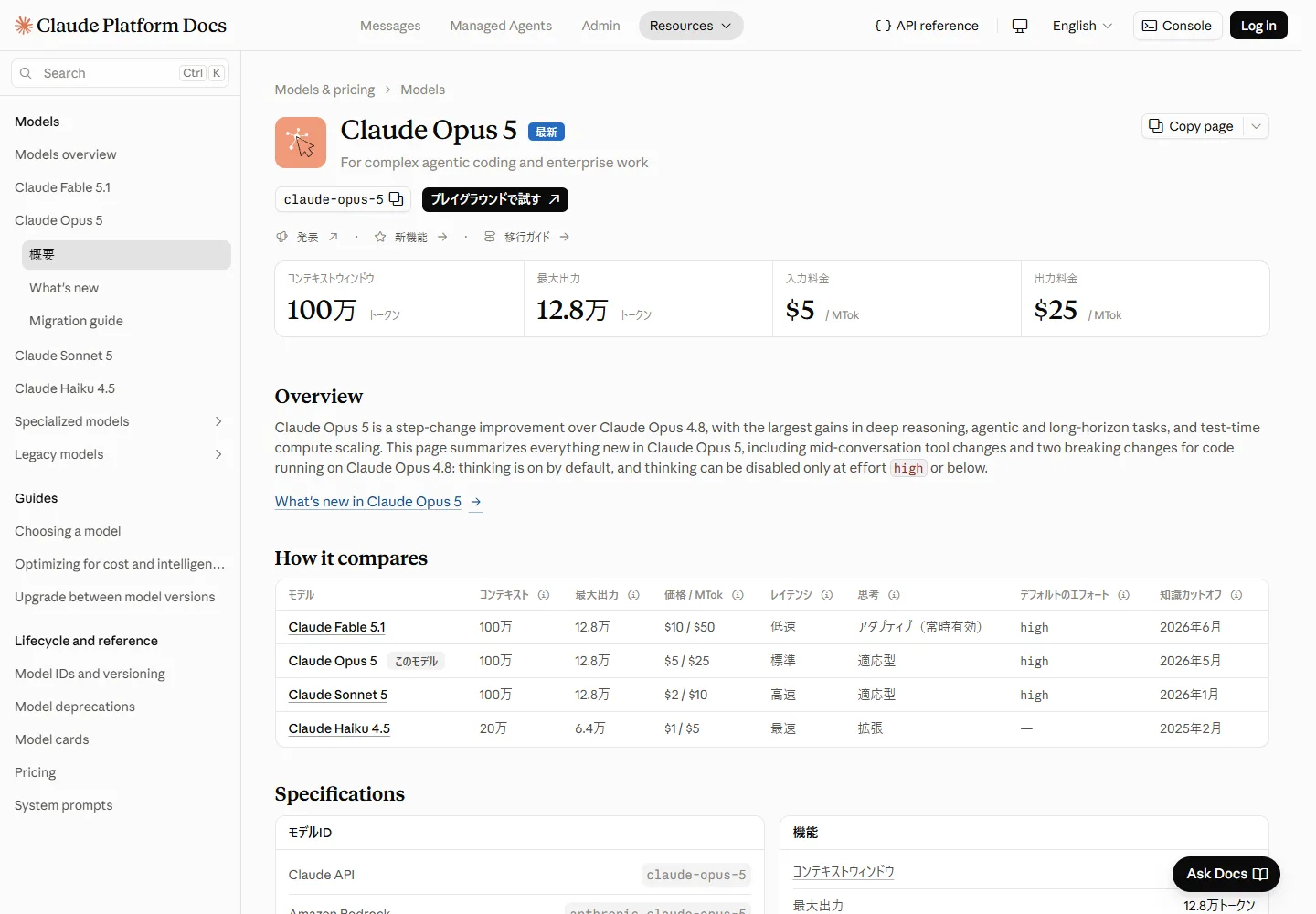
Opus 5 has half Fable’s base input/output price and the same advertised API context size. Anthropic’s Fable overview recommends starting with Opus for most workloads. If your existing tests already pass, the Fable upgrade needs to earn its premium through fewer corrections or better deliverables.
Try both on a difficult but familiar task and review without looking at the model label. Keep the instructions and tool access comparable. If only one stage needs Fable, use it for that stage rather than paying its rate for the entire pipeline.
GPT-6 Astra: compare the complete tool workflow
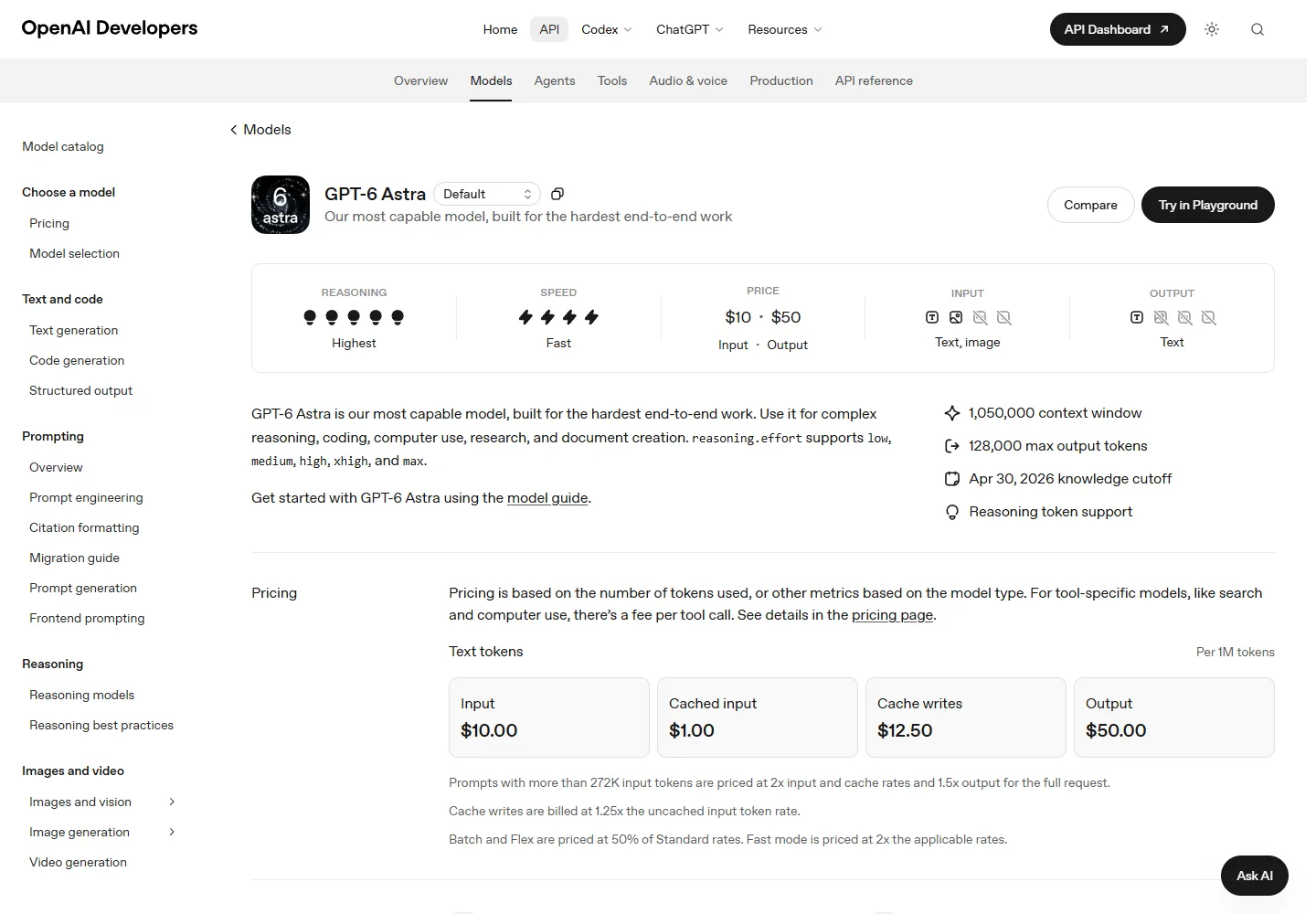
GPT-6 Astra targets complex reasoning, coding, computer use, research and document creation. Its base $10/$50 price matches Fable, but cached input is $1 per million tokens. For prompts exceeding 272,000 input tokens, OpenAI lists double input/cache rates and 1.5 times output rates for the entire request. A long-context comparison therefore needs the actual request size.
Choose between them using the environments you really work in: access to files, connected tools, verification and review can matter more than a small score difference. OpenAI’s official entry points are ChatGPT and the API platform; verify the account’s model entitlement before subscribing for one specific workflow.
Gemini 3.8 Flash: a lower-cost candidate, especially for media inputs
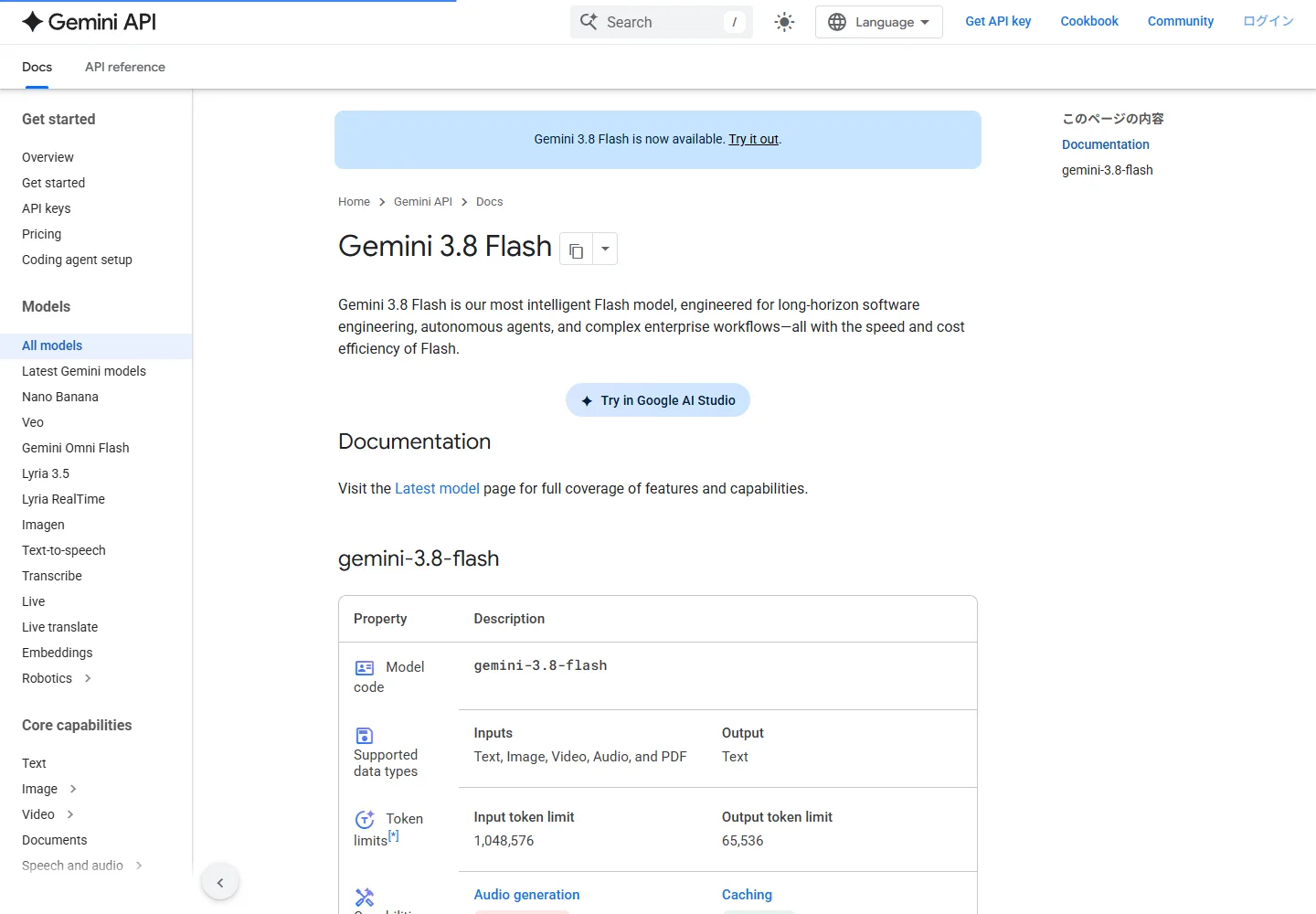
Gemini 3.8 Flash accepts text, images, video, audio and PDFs and returns text. It is a useful candidate when source material includes media that would need preprocessing for a text-and-image-only model. Start through Gemini or Google AI Studio.
Google’s $0.75/$3.75 introductory API pricing runs through December 31, 2026; the announced January 1, 2027 rates are $1.50/$7.50. Model the later price in an ongoing service budget. Lower token prices deserve a trial, but compare accepted results and total tokens rather than assuming Flash must be better value on every task. Official release and pricing.
NSFW support: Mythos is not an uncensored adult model
For explicit sexual stories, erotic chat or fetish content, neither Fable nor Mythos is an officially supported option. Anthropic’s Usage Policy prohibits those uses. Mythos’s more permissive safeguards concern approved cybersecurity and life-sciences work; they do not constitute a public adult-content mode.
“NSFW” also covers very different material. Non-explicit relationship writing, educational discussion and disturbing fictional themes should not be treated as identical to erotic generation. Their acceptability depends on the content and context. For a mature-fiction workflow, test the actual editing task within policy; do not assume a model that can discuss a topic will generate every requested scene.
A third-party wrapper does not establish that Anthropic permits prohibited content. Likewise, a screenshot of one model response does not prove stable or officially supported NSFW capability. If explicit adult generation is your central requirement, do not choose this model family on the promise of a hidden Mythos setting.
Recommended uses and a practical first trial
Code maintenance: Give Fable a failing case, repository context and acceptance criteria. Ask it to locate the cause, make the necessary change and show verification. Judge the patch rather than the confidence of its explanation. Our Claude Code beginner guide covers getting started with the tool.
Long-form editing and translation review: Provide the manuscript, terminology and intended audience. Request a prioritized edit list before rewriting. For Japanese, check honorific consistency, omitted subjects, speaker relationships and whether the text sounds translated. Compare against a human-approved sample; the launch benchmarks above do not measure those qualities.
Research and business documents: Ask for a claim-to-source table, a list of unresolved questions and a finished deliverable with explicit requirements. When a spreadsheet is involved, require formulas and reconciliation checks. For slides, inspect the exported layout as well as the factual text.
Complex agent work: Set a budget, allowed tools, completion conditions and the points that require review. Use the lowest effort that passes your trial, then raise it for difficult failures. Anthropic’s cost-and-intelligence guide also recommends comparing cost per completed task rather than token price alone.
An original trial brief you can adapt: “Find why this monthly report disagrees with the source CSV. Deliver a corrected workbook and a short explanation of the discrepancy. Keep the existing sheet structure. Show how totals reconcile. Report unrelated problems separately, and stop before sending the file to anyone.” This defines an outcome you can check, instead of rewarding an impressive-looking narrative.
Frequently asked questions
Can I use Fable 5.1 for free?
The Free plan does not include it. Paid access also has conditions: Pro requires usage credits for Fable, while eligible Max/premium seats include a capped share of their weekly allowance. Check the model-specific terms, not just the existence of a model selector.
Is Mythos 5.1 smarter than Fable 5.1?
Anthropic describes the same underlying model. Different safeguards and access permissions can change results on restricted tasks. For ordinary coding or writing, that is not evidence that a consumer should hunt for a separate “smarter” Mythos subscription.
Will the API become 75% cheaper after upgrading?
Only cache reads fall from $1 to $0.25 per million tokens. Base input and output prices are unchanged. Estimate your cache-hit share and include writes, reasoning/output usage, retries and tools before projecting savings.
Does the 1M context mean I can upload anything to Claude chat?
No. The figure describes the model’s API capacity; the consumer app has its own context, upload and plan limits. Even within the API, request size and supported file processing matter. Test a representative document before designing a workflow around the maximum.
Is Fable 5.1 the best choice for Japanese writing?
It is worth comparing on substantial editing and document work, but we have not established that it wins a controlled Japanese writing benchmark. Use the same passage, glossary and tone guide across candidates, and have a fluent reader judge fidelity and naturalness.
Should an existing Fable 5 API integration switch immediately?
Test first. The upgrade changes forced tool use and handling of preserved thinking. Run representative conversations, model switches and retry paths from the migration guide, then compare quality and spending before changing production traffic.
Our verdict: pay for fewer failed tasks, not the highest tier name
Fable 5.1 belongs on the shortlist for demanding code and knowledge work, especially when you repeatedly reuse large context or spend too much time correcting weaker outputs. The combination of the official upgrade evidence and early writing/code experiences justifies a serious trial. It does not justify an unconditional “best model” label.
Start with one task whose result you can assess. Compare it with Opus, Astra or Gemini at a realistic budget, and keep Fable where its improvement survives that comparison. Mythos matters to approved specialist organizations; for everyone else, the decisive questions are Fable’s actual allowance, cost per accepted result and fit with existing tools.
Related Reviews
Z-Image Review: Turbo, Base, VRAM, LoRA and NSFW Local Use

GPT-6 Astra Review: Pricing, API Access, Strengths and Limits

Step 5 Preview Review: Pricing, API Access, Open Weights and NSFW Limits
Best Local Open-Source LLMs in 2026: Performance, NSFW and Hardware Compared
How to Organize Gmail: Filters, Labels, and a Practical Inbox Zero Workflow
FLUX 3 Review: Image, Klein, Local Hardware and Real Editing Limits