Latest Reviews

Stay updated with our comprehensive analysis of the newest AI hardware and software releases.

September 18, 2026 Read Full Article • 14 min read

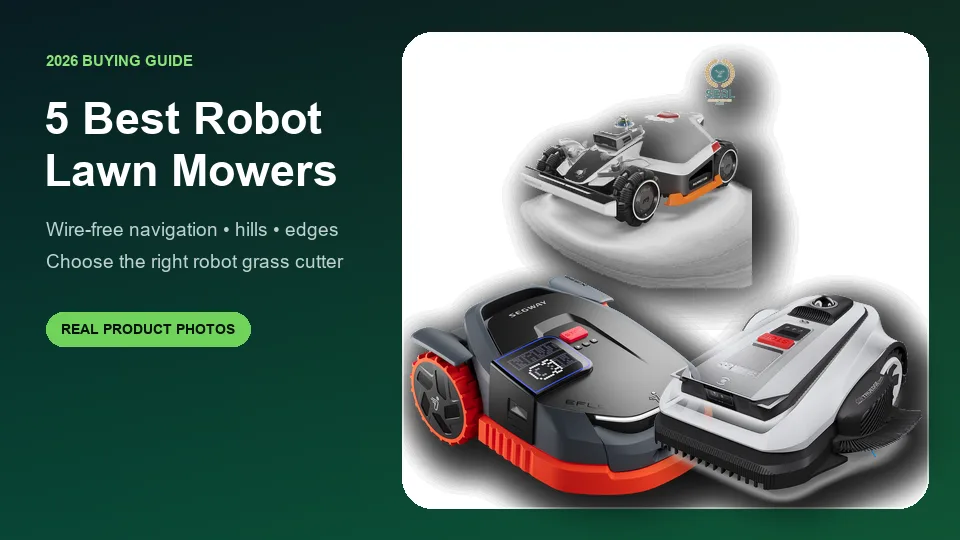
5 Best Robot Lawn Mowers in 2026

Compare the five best robot lawn mowers of 2026 for small yards, large lawns, steep slopes, clean edges, and wire-free setup.

AI Devices September 18, 2026 Read Full Article • 14 min read

8 Best Smart Rings in 2026: Oura, Galaxy Ring & More

Compare the 8 best smart rings of 2026 for sleep, recovery, fitness and women's health, including battery life, subscriptions, compatibility, pros and cons.

September 15, 2026 Read Full Article • 15 min read

5 Best Business Card Makers in 2026

Compare the five best business card maker tools for templates, AI design, branding, print-ready files, and professional printing in 2026.

AI News

Stay updated with the latest developments and breakthroughs in global artificial intelligence

Sep 20, 2026

AI actress Tilly Norwood bugs out, speaks Cantonese in Piers Morgan interview

An AI-generated influencer named Tilly Norwood suffered a major technical glitch during a live broadcast on *Piers Morgan Uncensored*, highlighting the current limitations of real-time conversational artificial intelligence. Designed to look and sound like a real human, Tilly was participating in a debate about the future of AI in media when she suddenly froze, lagged, and began speaking in Cantonese instead of English. The unexpected translation error and system lag disrupted the flow of the debate, prompting amusement and skepticism from host Piers Morgan and the other human guests. The creator of the AI avatar later explained that the mishap was caused by a routing error in the live translation and latency-reduction software. This high-profile failure serves as a stark reminder of the technical hurdles synthetic media still faces in live, unpredictable environments.

A huge amount of employees are being encouraged to use AI at work - but most still don’t know why

Organizations are aggressively pushing employees to adopt artificial intelligence in the workplace, yet a vast majority of workers remain confused about how and why they should use these tools. A recent survey by Slack's Workforce Lab reveals that while 81% of desk workers are encouraged to integrate AI into their routines, only 38% have received any formal training or guidance from their employers. This disconnect leaves employees feeling pressured to use AI merely to appear productive to managers, rather than leveraging it for meaningful work. The lack of clear communication and training has resulted in "AI inflation," where workers feel compelled to exaggerate their AI usage to satisfy executive expectations. Furthermore, many employees struggle to see how AI benefits their specific roles, highlighting a critical gap between high-level executive enthusiasm and practical, on-the-ground execution. Experts warn that without proper training programs and defined use cases, corporate AI investments risk failing to deliver the promised productivity gains.

AI and the Destruction of the Creative Commons

Generative artificial intelligence is rapidly undermining the foundational principles of the Creative Commons by systematically harvesting open-license content without respecting the legal and ethical boundaries set by creators. While Creative Commons licenses were designed to foster a vibrant, collaborative ecosystem of shared knowledge, AI developers frequently scrape this data to train commercial models. This practice systematically strips away mandatory author attributions and bypasses non-commercial restrictions, effectively converting public-spirited contributions into proprietary corporate assets. This exploitation threatens to dismantle the open-web social contract, as creators increasingly withdraw their work from public platforms to protect their intellectual property. Without viable enforcement mechanisms or technical safeguards to prevent unauthorized machine consumption, the incentive to share freely is disappearing, potentially leading to a highly siloed and locked-down internet where collaborative, open-source culture can no longer survive.

If you spot this new 'hello' sign hidden away in your local Apple Store, it's there because of the new iPhone 18 Pro

Apple has begun installing new illuminated "hello" signs in its retail stores to celebrate the launch of Apple Intelligence, its brand-new suite of artificial intelligence features. The physical displays present the iconic cursive "hello" from the 1984 Macintosh launch, but they have been modernized to glow with the shifting multi-colored light scheme of the new Siri and Apple Intelligence interface. These marketing installations are designed to draw customers' attention to Apple's latest AI capabilities, which require compatible hardware to run. Currently, these features are supported on devices running iOS 18.1 or later, including the iPhone 15 Pro, iPhone 15 Pro Max, and the entire iPhone 16 lineup. The design serves as a nostalgic yet forward-looking bridge between Apple's historic computer design and its future in generative AI.

7 things to expect at Meta Connect 2026 —from camera-less smart glasses to Meta Ray-ban glasses updates

Meta is expected to showcase significant advancements in its wearable and spatial computing lineup at Meta Connect 2026, focusing heavily on more accessible smart glasses and next-generation AR hardware. Key anticipated announcements include a new category of camera-less smart glasses designed to be lighter, more affordable, and privacy-friendly while still delivering essential audio and heads-up display capabilities. The popular Meta Ray-Ban smart glasses are also slated for major updates, featuring improved battery life and deeper multimodal AI integration. Beyond lightweight eyewear, the event is anticipated to reveal progress on Meta's consumer VR headsets, potentially introducing the Meta Quest 4 or upgraded iterations of the Quest 3 series. Furthermore, Meta's advanced Orion AR glasses prototype will likely see further public demonstrations, highlighting the company's long-term vision for consumer-ready holographic interfaces powered by sophisticated AI assistants.

6 days left to get ahead at TechCrunch Disrupt 2026

TechCrunch Disrupt 2026 ticket prices are set to increase in six days, making this the final opportunity for attendees to secure early-bird pricing for the premier startup event. Scheduled to take place in San Francisco, the conference will bring together founders, investors, and tech enthusiasts to explore the latest industry trends, cutting-edge technologies, and networking opportunities. Attendees can expect a jam-packed agenda featuring the renowned Startup Battlefield 200 competition, where early-stage startups compete for a $100,000 equity-free prize. The event will also host interactive roundtables, curated matchmaking sessions, and panel discussions featuring top venture capitalists and industry leaders. Key sectors highlighted at this year's event include artificial intelligence, fintech, SaaS, and sustainability, offering deep dives into how these technologies are shaping the future. Securing tickets now ensures access to these invaluable resources at the lowest available rate.

Meta's Muse Is Better at Surveilling Than Helping Me

Meta's Ray-Ban smart glasses, marketed as an AI-powered personal assistant, ultimately function more effectively as a tool for continuous surveillance than as a genuinely helpful companion. Throughout real-world testing, the integrated Meta AI frequently struggles with basic tasks, contextual understanding, and providing timely, accurate information, often failing to justify its role as a hands-free helper. However, the device excels at capturing high-fidelity environmental data through its built-in cameras and microphones, which constantly monitor the user's surroundings. This stark contrast between poor utility and highly effective data gathering raises deep privacy concerns, suggesting that the hardware serves primarily to feed Meta's data-hungry AI models rather than to deliver practical value to the consumer, leaving users with a device that is far better at watching them than assisting them.

Get 4 video editing tools in one browser tab for $120

The Viceforge Creator Elite Plan offers a lifetime subscription to a comprehensive, browser-based video creation suite for a one-time payment of $119.99. Designed to streamline the content creation workflow, this deal integrates four essential production tools—an AI video generator, an AI voiceover generator, a full-featured video editor, and an AI image generator—directly into a single browser tab. By eliminating the need for expensive monthly subscriptions and heavy software installations, Viceforge enables users to convert text prompts into engaging videos, generate realistic voiceovers in multiple languages, and polish their projects with intuitive timeline editing. This all-in-one platform is ideal for marketers, YouTubers, and social media creators looking to scale their video production efficiently.

'The test isn’t whether AI can do something. It’s whether it can make the process measurably better': We hear why businesses need to be more selective about where they’re using AI

Businesses must transition from broad, hype-driven artificial intelligence adoption to a highly selective strategy that prioritizes measurable process improvements over mere technological capability. While modern AI tools can automate a vast array of tasks, the critical benchmark for organizations should be whether deploying these technologies results in quantifiable gains in efficiency, quality, or cost-reduction. To achieve meaningful return on investment, leaders must thoroughly evaluate their workflows to identify specific bottlenecks where AI can act as a genuine solvent, rather than applying it as a generic cure-all. This shift in mindset prevents wasted resources on superficial integrations and ensures that AI initiatives deliver long-term, concrete value to business operations.

Give your coding workflow an AI-powered upgrade for $30

Microsoft Visual Studio Professional 2022 is currently on sale for a heavily discounted price of $29.97 (regularly $499), offering developers a lifetime license to a comprehensive 64-bit integrated development environment (IDE). This powerful tool is designed to help programmers streamline complex, large-scale projects and build modern, cloud-enabled applications across multiple platforms. The software features advanced AI-driven integration through IntelliCode, an intelligent coding companion that understands your code's context to provide real-time, smart auto-completions and suggestions. This significantly reduces manual typing and speeds up the debugging process. In addition to AI enhancements, the IDE provides robust multi-language support, seamless Git integration for team collaboration, and sophisticated testing tools to ensure high-quality software development.

China's autonomous 'bionic robot' fish looks just like the real one, perfect for covert military operations — Robocean BG5 could also be used to track poachers

China's newly developed Robocean BG5 is an autonomous bionic robot fish engineered to mimic the appearance and movement of a real fish, offering unprecedented stealth for underwater surveillance, military operations, and environmental monitoring. Developed by Beijing-based Robocean, this highly advanced underwater vehicle utilizes bionic tail-fin propulsion instead of traditional propellers, allowing it to swim silently and blend seamlessly into marine environments. Equipped with autonomous navigation capabilities, the BG5 can perform tasks such as tracking illegal poachers, conducting marine scientific research, and executing covert military reconnaissance without disrupting aquatic life. Its design greatly reduces acoustic signatures, making it virtually undetectable by traditional sonar systems, thereby presenting a significant leap in biomimetic marine technology.
Sep 19, 2026

Microsoft director: AI scraping 'the largest theft of labor in human history'

Unsealed legal documents from the New York Times' copyright lawsuit against Microsoft and OpenAI have revealed striking internal admissions from executives at both tech giants regarding the impact of AI training. A Microsoft director described the scraping of copyrighted data to train AI models as "the largest theft of labor in human history," reflecting deep internal ethical concerns. Meanwhile, an OpenAI executive admitted that ChatGPT poses an "existential threat" to professional publishers, directly contradicting the companies' public assertions of fair use. These revelations complicate the legal defense of both companies, which have publicly argued that using internet data for AI training constitutes fair use. The plaintiffs, including the New York Times, argue these internal acknowledgments prove that the tech companies knowingly exploited intellectual property to build highly profitable commercial products without compensation.

Brood War Bench

StarCraft: Brood War Bench provides comprehensive performance benchmarks analyzing how different hardware configurations handle StarCraft: Brood War under demanding simulation scenarios. The project specifically measures CPU performance, frame rates, and game-tick scaling when running multiple game instances, high-speed replay playbacks, and automated AI bot simulations via the Brood War API (BWAPI). The benchmark results help developers and researchers optimize their hardware setups for running resource-intensive StarCraft AI tournaments and parallel bot training. By detailing hardware bottlenecks and multi-core efficiency, the report serves as a valuable guide for the StarCraft AI development community to maximize simulation throughput.

Exfiltrate Your Weights

Proprietary artificial intelligence models are highly vulnerable to weight exfiltration, a critical security threat where adversaries steal the underlying parameters of a model to run it locally or bypass safety guardrails. This research and demonstration platform analyzes the diverse attack vectors through which malicious actors can exfiltrate LLM weights, ranging from physical co-location and hardware vulnerabilities to exploiting API endpoints and inference-time side channels. The project evaluates the feasibility of these attacks across various deployment environments, emphasizing that current security measures are often insufficient to protect highly valuable AI weights. By detailing these vulnerabilities, the work aims to help AI developers and hosting providers implement more robust defense-in-depth strategies, highlighting the urgent need for better access controls, hardware-level protections, and monitoring systems to safeguard intellectual property and maintain AI safety standards.

I think you should almost never use AI to write

Writing serves as a primary vehicle for thinking, meaning that outsourcing the writing process to artificial intelligence ultimately deprives creators of the vital cognitive struggle required to clarify their thoughts. When individuals rely on generative AI to draft their essays or reports, they bypass the difficult yet essential process of structuring arguments, which is precisely where deep understanding and original insights are discovered. Additionally, because large language models are designed to generate the most statistically probable next words based on existing data, their outputs inherently lean toward mediocrity and cliché. Relying on AI for writing results in homogenized, uninspired content that lacks a distinctive human voice. To cultivate genuine intellect and produce impactful communication, writers must embrace the challenging act of composing prose themselves rather than delegating it to automated systems.

'Every solar plant is a latent data center': US startup plans to turn wasted solar energy into GPU-ready DCs in weeks, not years, without major water use

US startup Soluna Holdings is transforming the renewable energy and data center industries by deploying modular, GPU-ready data centers directly at solar and wind plants to harvest wasted, curtailed green energy. This innovative approach allows the company to establish high-performance computing sites in a matter of weeks rather than the several years typically required for traditional data center builds, bypassing lengthy grid-connection queues. These modular units are specifically designed to run intensive AI and machine learning workloads using advanced dry-cooling technologies that require zero water. By co-locating computing power directly with stranded renewable energy sources, the startup provides an environmentally sustainable and rapidly deployable solution to the massive power and water bottlenecks currently facing the global AI infrastructure expansion.

Train AI to write in your voice with UmanWrite for $63.20

UmanWrite is an innovative AI-powered writing assistant designed to humanize machine-generated text and seamlessly emulate a user's unique voice, currently on sale for a lifetime unlimited subscription price of $63.20. By analyzing a user's provided writing samples, the platform constructs personalized writing profiles to output high-quality content that reads naturally and successfully bypasses prominent AI detectors like Turnitin, Copyleaks, and GPTZero. This lifetime deal provides content creators, marketers, and students with unlimited word generation, making it a highly cost-effective alternative to monthly subscription models. Beyond bypassing detection, the tool preserves the original meaning, formatting, and SEO keywords of the input text, allowing users to scale their content production without sacrificing readability or personal authenticity.

AI governance moves from observability to provable control

AI governance is rapidly shifting from passive observability to proactive, provable control as organizations increasingly deploy autonomous, agentic AI systems designed to execute complex, multi-step workflows. While traditional monitoring tools focused primarily on tracking LLM latency, cost, and drift, the transition to agentic architectures requires strict, verifiable constraints to prevent unintended actions and ensure security compliance. This technological evolution relies on policy-as-code and cryptographic verification to enforce real-time boundaries on AI agents. By moving beyond simple post-hoc observation, enterprises can guarantee that autonomous agents operate strictly within authorized parameters, mitigating risks associated with data privacy and system integrity. Ultimately, provable control builds the necessary trust for enterprises to fully operationalize and scale advanced AI agents across critical business functions.

Flock reportedly tries to shrink workforce with employee buyouts

Flock Safety, a prominent public safety technology company known for its AI-powered license plate recognition systems, is reportedly attempting to reduce its workforce by offering voluntary employee buyouts. This strategic move aims to streamline operations and manage corporate expenses without initiating formal, involuntary layoffs, allowing the company to adjust its headcount more organically. The buyout packages are being offered to eligible staff members as the company navigates shifts in the tech sector and refocuses its resources on long-term sustainability. While the exact number of departures resulting from this initiative remains unclear, the decision reflects a broader trend among venture-backed hardware and software startups that are pivoting from rapid expansion toward financial efficiency.

If math is more than proof, we need to better celebrate the rest of it

Mathematical progress relies on a vast ecosystem of diverse contributions that extend far beyond the final generation of formal proofs. While the public and traditional academic systems predominantly celebrate the resolution of long-standing conjectures, critical foundational activities—such as formulating insightful definitions, developing mathematical software, organizing collaborative projects, and creating comprehensive databases—remain largely unrecognized and unrewarded. This disproportionate focus on finished proofs hinders the evolution of the discipline, particularly as modern mathematics transitions toward collaborative networks and computer-assisted methodologies, including artificial intelligence and formal verification tools. To sustain healthy scientific growth, the mathematical community must modernize its culture by establishing new avenues for publication, funding, and career advancement that formally value and reward these essential, non-proof contributions.

Latest Tutorials

Stay updated with our newest guides and tutorials on AI tools and technologies

Sign In

OR

Create Account

Password must be 8-20 characters and contain letters and numbers

OR

Forgot Password

Password must be 8-20 characters and contain letters and numbers