Latest Reviews

Stay updated with our comprehensive analysis of the newest AI hardware and software releases.

September 4, 2026 Read Full Article • 17 min read

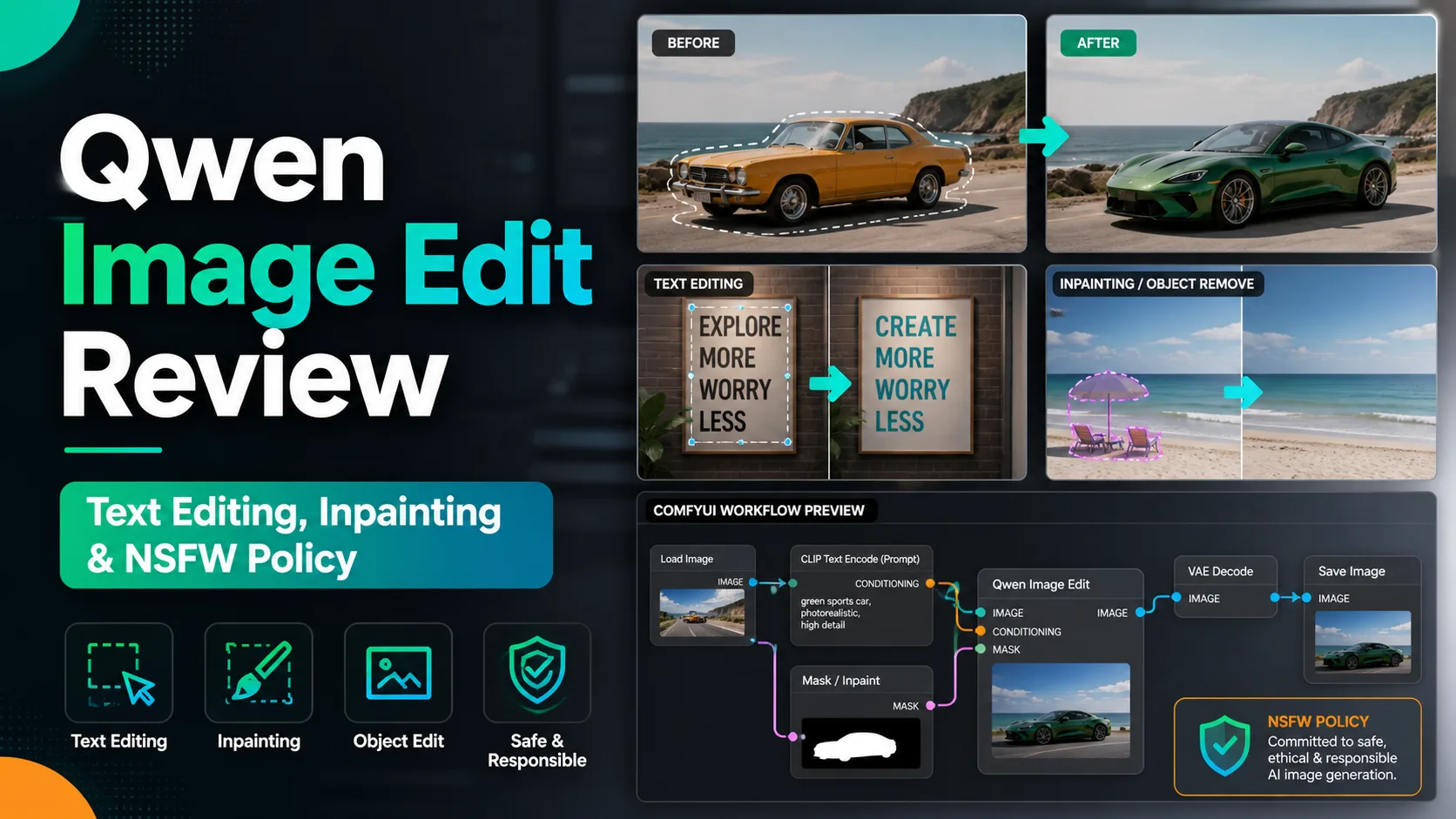
5 Best Online Photo Text Editors in 2026

Compare the five best conversational photo text editors in 2026. Upload an image and use natural-language prompts to replace, remove, translate, or add text.

AI News

Stay updated with the latest developments and breakthroughs in global artificial intelligence

Sep 9, 2026

How to watch today's ‘Surprise and Shine’ Apple event — plus last-minute rumors for the iPhone Ultra, AirPods 5, and more

Apple is hosting a special "Surprise and Shine" keynote event, drawing significant attention from tech enthusiasts eager to see the company's latest hardware innovations. Viewers can watch the live broadcast directly through Apple’s official website, the Apple TV app, and its official YouTube channel, with the stream expected to begin at its standard time of 10:00 AM PT / 1:00 PM ET. The event is rumored to highlight the debut of the high-end "iPhone Ultra," which promises to elevate the smartphone lineup with advanced titanium design, superior optical zoom, and specialized on-device AI features. Other highly anticipated announcements include the next-generation AirPods 5 with upgraded audio chips, alongside potential updates to the iPad mini and Apple Watch series, showcasing Apple's continued integration of machine learning across its product ecosystem.

I resigned from Anthropic today

Amanda Askell, a prominent AI safety researcher, has announced her resignation from Anthropic, marking the departure of another key figure from the company's alignment and character training teams. During her tenure at Anthropic, Askell contributed significantly to the development of Claude's persona, constitutional AI, and general alignment methodologies. In her departure announcement, she expresses profound gratitude for her time at the company and the opportunity to work alongside dedicated researchers. She highlights the immense progress made in making AI systems more helpful, harmless, and honest. While she has not yet detailed her next immediate career moves, she intends to take a brief period of rest before continuing her work in the AI safety ecosystem. Her departure joins a broader trend of high-profile alignment researchers transitioning out of leading AI labs.

Google DeepMind alumni are building tools to accelerate fusion power for the grid

Former Google DeepMind researchers have founded a new venture to accelerate the deployment of commercial fusion energy by applying cutting-edge artificial intelligence to plasma physics and reactor design. The startup leverages advanced machine learning models to solve complex engineering bottlenecks that have historically stalled nuclear fusion, aiming to deliver clean, limitless power to the electrical grid much faster than traditional methods allow. Their proprietary AI tools specialize in simulating and predicting highly unstable plasma behavior inside magnetic confinement reactors, such as tokamaks. By replacing slow, expensive physical experimentation with high-fidelity digital simulations, the platform enables rapid iteration of reactor configurations. This software-driven approach not only optimizes magnetic field designs but also helps predict and prevent plasma disruptions, addressing one of the most critical safety and efficiency challenges in the fusion industry.

CloudNC raises $20M to automate manufacturing’s most pressing bottlenecks

CloudNC has secured $20 million in new funding to accelerate the development and global deployment of its AI-assisted manufacturing software, which automates the highly complex task of programming CNC machines. This investment will help the company expand its commercial operations in North America and Europe while advancing its core technology to resolve critical bottlenecks in precision manufacturing. The company’s flagship solution, CAM Assist, utilizes physics-based AI and advanced algorithms to automate computer-aided manufacturing (CAM) programming. By reducing the time required to program CNC machines from days to minutes, the software delivers up to an 80% reduction in programming times. This automation directly addresses the global shortage of skilled CNC programmers and enables machine shops to drastically increase their productivity. With this funding, CloudNC plans to deepen its integrations with industry-standard CAD/CAM platforms like Autodesk. This expansion aims to make autonomous manufacturing capabilities accessible to a broader range of aerospace, automotive, and defense manufacturers worldwide.

OpenAI’s ChatGPT Images gets faster, with sharper details and more refined edits

OpenAI has rolled out a major update to ChatGPT's image generation and editing capabilities, significantly improving the generation speed, visual clarity, and editing precision of the platform's output. Users can now expect faster image creation times alongside much sharper details and textures, allowing for more professional-grade visuals directly within the conversational interface. The update introduces highly refined editing tools that offer users more granular control over specific elements of a generated image. This allows for precise modifications and seamless adjustments without needing external design software. By streamlining the creative workflow, OpenAI aims to make AI-driven graphic design more accessible, efficient, and intuitive for creators, marketers, and businesses alike.

Meta debuts its ‘secure by design’ personal AI agent Muse

Meta has officially launched Muse, a new personal AI agent engineered with a "secure by design" architecture to prioritize user privacy and data protection. Built on the company's latest Llama foundation models, Muse is designed to assist users with daily productivity tasks, such as scheduling, drafting communications, and retrieving personalized information, while processing sensitive data either locally on-device or within highly secure, isolated cloud environments. To guarantee user privacy, the agent incorporates advanced security measures, including end-to-end encrypted data synchronization and robust sandboxing protocols. Users maintain complete granular control over what information Muse can access, directly addressing growing industry and consumer concerns over AI data privacy. This launch marks a significant step in Meta's strategy to integrate secure, highly capable consumer-facing AI utilities directly into its hardware and software ecosystem.

'It’s not unlike what they’re using at their own house for video games': US Army budgets $465 million for Group 3 Killer anti-drone laser which uses Xbox controller

The US Army has allocated a $465 million budget to acquire the Locust Laser Weapon System (LWS), a state-of-the-art anti-drone laser developed by BlueHalo that utilizes a standard Xbox-style controller for its operation. This directed-energy weapon is specifically designed to target and neutralize Group 3 unmanned aerial systems (UAS), which are larger and faster drone threats weighing up to 1,320 pounds. By integrating a familiar gaming controller, the military aims to capitalize on the existing muscle memory and digital literacy of younger soldiers, drastically reducing training times and improving operational efficiency in combat scenarios. The Locust system combines advanced laser optics with sophisticated automated tracking software to detect, track, and engage aerial threats, offering a cost-effective and highly mobile defense solution against the rising global threat of weaponized drones.
Sep 8, 2026

Tao: Open math problems being non-renewably mined by AI

The rapid advancement of AI in solving and formalizing mathematical proofs threatens to deplete the supply of intermediate-difficulty open math problems, which serve as a crucial, non-renewable training ground for human mathematicians. As automated systems efficiently "mine" these accessible problems, the traditional bridge between routine exercises and high-level research is disappearing, leaving behind only exceptionally difficult challenges. This depletion risks disrupting the educational pipeline for graduate students and early-career researchers who rely on these mid-level problems to develop their skills and build confidence. The loss of this intellectual training ground could fundamentally alter how mathematical expertise is cultivated, raising urgent questions about how the mathematical community can adapt to an environment where the "low-hanging fruit" is fully automated.

Muse – Meta’s personal AI agent

Meta’s Muse is a highly advanced personal AI agent designed to deliver seamless, multimodal assistance across Meta’s suite of applications, including WhatsApp, Instagram, Messenger, and hardware like Ray-Ban Meta smart glasses. Leveraging state-of-the-art generative artificial intelligence, Muse assists users with a wide variety of tasks, from answering complex conversational queries and drafting creative content to generating high-quality images and providing real-time information. The agent is engineered with sophisticated contextual awareness, allowing it to adapt to individual user preferences and provide highly personalized recommendations over time. By supporting text, voice, and visual inputs, Muse aims to make digital assistance more intuitive and integrated into daily life. This integration represents Meta's broader vision of creating proactive, embodied AI companions that can seamlessly transition between virtual platforms and physical devices to enhance productivity and connection.

Introducing ChatGPT Image Editing and Upgrades

ChatGPT has introduced an upgraded image generation and editing suite, significantly enhancing how users create, modify, and interact with visual content directly within the chat interface. This update brings precise, localized editing capabilities, enabling users to select specific areas of an image to add, remove, or alter elements using simple conversational prompts. The system integrates advanced DALL-E capabilities to deliver higher-quality outputs with superior detail retention, richer textures, and more accurate text rendering inside images. Additionally, the interface now offers curated style inspirations and aspect ratio controls, making it easier for creators to achieve their desired aesthetic. These updates are fully supported across web, iOS, and Android platforms, providing a seamless and highly intuitive creative workflow for both professional designers and casual users.

I-have-ADHD: A skill to stop coding agents from burying the answer

I-have-ADHD is a specialized system prompt configuration designed to optimize how AI coding agents present their solutions by forcing them to deliver immediate, direct answers. The repository addresses a common frustration where LLM-based development assistants output verbose, repetitive explanations and conversational filler before displaying the actual code changes or answers. By integrating these rules into AI-assisted development environments like Cursor, Windsurf, or Roo Cline, developers can force agents to prioritize code output and concise explanations. This approach significantly reduces cognitive load and accelerates debugging workflows, making AI interactions much more efficient for developers who prefer high-density, direct information.

AI coding startup Cognition raises $2B at $48B valuation as revenue nears $900M

Cognition, the creator of the autonomous AI software engineer Devin, has reportedly secured $2 billion in a new funding round, propelling its valuation to an astronomical $48 billion. This massive investment reflects the startup's explosive financial trajectory, with its annualized revenue now rapidly approaching $900 million. The rapid growth is driven by surging enterprise demand for autonomous AI systems capable of executing complex engineering tasks. The newly raised capital will be utilized to significantly expand Cognition's computing infrastructure and recruit top-tier engineering talent. By scaling its resources, the company aims to further advance Devin's autonomous coding, debugging, and deployment capabilities, thereby solidifying its leadership position in the highly competitive generative AI landscape and meeting the evolving needs of its global customer base.

How Mistral’s New Funding is a Bridge to Sovereign AI

Mistral AI's €600 million ($640 million) Series B funding round, which values the French startup at $6 billion, represents a pivotal milestone in Europe's quest to establish technological sovereignty in the artificial intelligence sector. Led by General Catalyst, this capital injection will allow Mistral to expand its computing power, recruit top-tier global talent, and accelerate the development of both open-source and proprietary language models. By positioning itself as a secure, localized alternative to dominant American tech giants, Mistral provides European enterprises with AI tools that comply with strict regional regulations like the EU AI Act. This focus on "sovereign AI" ensures that organizations can deploy cutting-edge AI capabilities while maintaining complete control over their proprietary data, thereby reducing strategic dependencies on foreign cloud infrastructures.

'Revolutionary' 36-year old jet engine designed for F-16 set to power world's first AI-piloted VTOL fighter jet

Valkyrie Systems Aerospace is reviving a 36-year-old engine design, the Pratt & Whitney PW1216, to power its upcoming Guardian HoverJet, slated to become the world's first AI-piloted vertical takeoff and landing (VTOL) fighter aircraft. Originally designed in the late 1980s for a supersonic short takeoff and vertical landing (STOVL) concept version of the F-16, the PW1216 engine is a twin-spool, afterburning turbojet that was ahead of its time but never entered mass production. The Guardian HoverJet will leverage this powerful legacy propulsion system alongside advanced artificial intelligence to operate autonomously in complex, high-threat military environments. By combining jet-speed cruise capabilities with the vertical takeoff flexibility of a helicopter, the aircraft aims to provide rapid, runway-independent deployment. This integration of cold-war era engine hardware with modern autonomous flight control represents a highly cost-effective approach to developing next-generation unmanned combat aerial vehicles.

Open-source AI developer Mistral closes €3B funding round

French open-source artificial intelligence startup Mistral AI has successfully secured €3 billion in its latest funding round to accelerate the research and development of next-generation large language models. This massive capital injection positions the company as one of Europe’s most valuable technology firms and will be primarily directed toward expanding its computational infrastructure and recruiting top-tier global AI talent. The funding round attracted significant interest from venture capital firms and major tech conglomerates looking to support open-weights alternatives to proprietary models. With this new capital, Mistral plans to expand its enterprise services and deploy more efficient, highly capable models designed for commercial use, cementing its role as a key player in the global AI ecosystem.

6 products we expect at Apple's event

Apple's upcoming "It's Glowtime" hardware event is highly anticipated to showcase major updates across its primary product lines, emphasizing the integration of Apple Intelligence. The centerpiece of the launch will be the iPhone 16 lineup, which is expected to feature a new A18 chip designed to support these advanced AI capabilities, alongside a dedicated physical capture button for photography. Additionally, the event is projected to introduce the Apple Watch Series 10 with larger screens and a thinner profile, alongside updates to the Apple Watch Ultra and a budget-friendly plastic Apple Watch SE. Apple is also anticipated to refresh its audio lineup with two new variants of AirPods 4—including an active noise cancellation model—and a USB-C update for the AirPods Max, cementing a transition away from the Lightning port.

How to watch Apple iPhone event live: Surprise and Shine

Apple is set to host its major autumn hardware launch event on Monday, September 9, 2024, at 10 a.m. PT / 1 p.m. ET, broadcasting live from the Steve Jobs Theater at Apple Park. Viewers can easily stream the presentation via Apple’s official website, the Apple TV app, and Apple's dedicated YouTube channel, with on-demand replays available shortly after the broadcast concludes. The showcase will primarily feature the unveiling of the iPhone 16 lineup, alongside hardware refreshes for the Apple Watch Series 10, Apple Watch Ultra 3, and next-generation AirPods. In addition to physical devices, a core highlight of the event will be Apple Intelligence, the company's new suite of artificial intelligence features. These AI tools will be deeply integrated into the new devices and iOS 18, representing a major strategic shift for Apple as it enters the generative AI market.

I compared Siri AI to Gemini on Android — and Apple actually understands what most people want from AI

Apple's newly redesigned Siri powered by Apple Intelligence offers a fundamentally more practical and intuitive user experience than Google's Gemini on Android by prioritizing deep OS integration over raw generative power. While Gemini shines at generating creative text, summarizing long documents, and answering complex web queries, it often behaves like an external application layered onto the device rather than an intrinsic part of the operating system. Conversely, Siri leverages on-screen awareness and personal context to seamlessly execute actions across different apps. It can effortlessly find a specific photo from a user's library and message it to a contact, fulfilling the everyday, on-device utility that most consumers actually desire from a phone-based assistant.

Lenovo ThinkPad T1g Gen 8 review: This Windows business laptop reminds me of a fully specced MacBook Pro alternative — with a few caveats

The Lenovo ThinkPad business laptop positions itself as a formidable Windows-based alternative to the MacBook Pro, offering exceptional build quality, a class-leading keyboard, and robust security features tailored for enterprise professionals. Equipped with modern processors featuring dedicated AI acceleration and a gorgeous, high-resolution display, this machine delivers seamless multitasking capabilities and reliable power for demanding daily workflows, making it an excellent productivity workhorse for modern offices. However, this premium laptop comes with a few notable caveats, most notably a high price tag that escalates quickly with upgraded configurations, making it a substantial investment for budget-conscious buyers. Additionally, its battery life, while respectable for a Windows machine, still falls short of the exceptional efficiency found in Apple's silicon, and the device can experience thermal throttling and fan noise under sustained heavy processing workloads.

Cognition hits $48B valuation, signaling investors believe AI coding is far from a winner-take-all market

Cognition, the creator of the AI software engineer Devin, has achieved a towering $48 billion valuation in its latest funding round, highlighting intense investor confidence in autonomous AI development platforms. This massive valuation underscores the venture capital industry's belief that the AI-driven software engineering market is highly expansive and far from a winner-take-all ecosystem. Despite stiff competition from established tech giants like Microsoft's GitHub Copilot and rapidly growing startups such as Anysphere (Cursor) and Poolside, Cognition continues to attract premium investor interest. The funding highlights a major industry shift toward "agentic" AI systems capable of executing complex, multi-step engineering tasks autonomously, which backers believe will drastically transform software development and justify these unprecedented valuations.

Latest Tutorials

Stay updated with our newest guides and tutorials on AI tools and technologies

Sign In

OR

Create Account

Password must be 8-20 characters and contain letters and numbers

OR

Forgot Password

Password must be 8-20 characters and contain letters and numbers