Latest Reviews

Stay updated with our comprehensive analysis of the newest AI hardware and software releases.

AI News

Stay updated with the latest developments and breakthroughs in global artificial intelligence

Aug 25, 2026

Amazon security engineer hacks PC accessories with Claude Opus to make them work better — Asus, Insta360 and Elgato products reverse engineered in hours for 'better control', but engineer admits this also 'scares me'

An Amazon security engineer successfully utilized Anthropic’s Claude 3 Opus AI model to reverse-engineer proprietary PC accessories from major brands like Asus, Insta360, and Elgato within a matter of hours. By feeding USB communication packets and raw data into the LLM, the engineer bypassed bloated, resource-heavy official software to write lightweight, custom command-line tools for direct hardware control. While the project demonstrated how AI can dramatically accelerate complex development tasks that typically take weeks of manual effort, it also raised significant security concerns. The engineer admitted to being frightened by how easily the AI could dissect proprietary protocols, warning that the same technology could significantly lower the barrier for malicious actors seeking to exploit hardware vulnerabilities.

#IJCAI-ECAI 2026: social media round-up part 2

The joint IJCAI-ECAI 2026 conference social media round-up captures key insights, research breakthroughs, and community highlights shared by attendees during the event. It aggregates prominent discussions from various sessions, emphasizing the collaborative energy of the international AI research community. Featured posts highlight major keynote speeches on neural-symbolic integration and the future of generative models, alongside updates from specialized workshops on AI safety and ethics. Researchers also utilized social platforms to share their presented papers, poster session photos, and networking experiences, showcasing the diverse range of topics covered at the conference. Additionally, the round-up celebrates the winners of the distinguished paper awards and tracks the trending conversations around machine learning applications in healthcare and robotics. This digital compilation serves as a valuable resource for those unable to attend, providing a comprehensive snapshot of the conference's scientific and social milestones.

This lifetime Windows 11 Pro license is only $10.49 through today

Microsoft Windows 11 Pro is currently available for a heavily discounted price of $10.49 for a lifetime license, down from its regular retail price of $199. This limited-time promotion provides users with a highly cost-effective way to upgrade their operating systems and unlock advanced system features. The Pro edition delivers exclusive capabilities tailored for professionals, including enhanced security tools like BitLocker device encryption, Windows Information Protection, and virtualization utilities like Windows Sandbox and Remote Desktop. Additionally, this operating system integrates modern productivity features, including the AI-powered Microsoft Copilot assistant designed to help users summarize documents, write code, and answer queries directly from the taskbar. To successfully activate this lifetime license, buyers must ensure their PCs meet the hardware compatibility requirements, specifically having TPM 2.0 enabled. The purchase provides an instant digital delivery of the activation key.

Get Claude, Gemini, ChatGPT, and more for life for $60

ChatPlayground AI's Unlimited Plan is currently offering a lifetime subscription for a one-time payment of $59.99, providing users with consolidated, budget-friendly access to over 25 leading artificial intelligence models. This deal effectively eliminates the financial burden of maintaining multiple individual subscriptions by bringing premium conversational agents—including OpenAI’s ChatGPT, Anthropic’s Claude, Google’s Gemini, and Meta’s LLaMA—into a single, streamlined interface. The platform is designed to optimize productivity through advanced features such as side-by-side model comparison, which allows users to run a single prompt across different AIs simultaneously to find the best output. Additionally, it includes a versatile Chrome extension for instant accessibility across any webpage, custom prompt templates, and AI-driven writing and editing tools. This lifetime package serves as a highly cost-effective utility for professionals, students, and creators looking to integrate diverse AI capabilities into their daily workflows without recurring monthly fees.

Met Office finds most of us still won't trust an AI weather forecast

Public trust in AI-generated weather forecasts remains remarkably low, with a Met Office survey revealing that the vast majority of people still prefer traditional, human-led meteorological predictions. Despite significant advancements in AI forecasting models—which can process massive amounts of weather data in seconds—only a small fraction of the public is willing to rely entirely on machine-generated forecasts. The skepticism stems from a belief that human meteorologists possess essential intuition, local knowledge, and critical decision-making skills that AI currently lacks. To address this trust gap, the Met Office advocates for a "human-in-the-loop" model, which integrates AI's computational speed and efficiency with human oversight to ensure accuracy and maintain public confidence in weather reporting.

Data Centers Are Driving an Alarming Gas Power Expansion in the US

The rapid expansion of artificial intelligence and cloud computing is driving an unprecedented surge in US electricity demand, prompting utility companies to dramatically scale up natural gas-fired power generation. Despite ambitious corporate climate pledges from tech giants like Microsoft, Google, and Amazon to achieve net-zero emissions, the relentless 24/7 power requirements of massive new data centers are forcing utilities to delay the retirement of coal plants and greenlight new fossil fuel infrastructure. Environmental advocates warn that this fossil-fuel buildout threatens to derail national climate goals and lock in decades of carbon emissions. While tech companies argue that natural gas serves as a necessary bridge until clean energy and battery storage can mature, experts emphasize that the sheer scale of AI-driven energy demand is outstripping the deployment of renewable alternatives.

India’s Airbound bags $37M to take on trucks with rocket-like drones

Indian drone delivery startup Airbound has secured $37 million in a new funding round to scale its proprietary, highly aerodynamic "rocket-like" drones designed to compete directly with traditional road-based logistics. This capital injection will be utilized to expand manufacturing capabilities, advance research and development, and accelerate commercial deployment across both domestic and international markets. Unlike conventional quadcopters, Airbound's tail-sitter drones feature a unique aerodynamic design that takes off vertically like a rocket before transitioning to highly efficient wing-borne horizontal flight. This innovation drastically reduces wind resistance and power consumption, lowering the cost per mile to a fraction of standard ground transport. By focusing on lightweight commercial and medical deliveries, the company aims to establish drone transport as a cheaper, faster, and more sustainable alternative to traditional trucks.

Robotics AI startup Generalist reportedly raises $200M

Robotics AI startup Generalist has reportedly secured $200 million in a new funding round to accelerate the development of its general-purpose artificial intelligence models designed for physical robots. This substantial investment reflects the intensifying interest among venture capitalists in physical AI and foundation models that can power versatile, adaptable robotic systems. The newly acquired capital will be directed toward expanding Generalist's engineering and research teams, scaling its high-performance computational infrastructure, and advancing its core machine learning models. By developing AI systems that allow robots to perceive, reason, and interact with their physical environments dynamically, the company aims to move beyond rigid, single-purpose automation. Ultimately, Generalist's technology seeks to enable robots to perform a wide range of complex tasks in manufacturing, logistics, and service sectors without requiring expensive custom programming for each new application.

Samsung thinks Claude Code can help it boost chip design — but admits the AI still makes some worryingly big mistakes

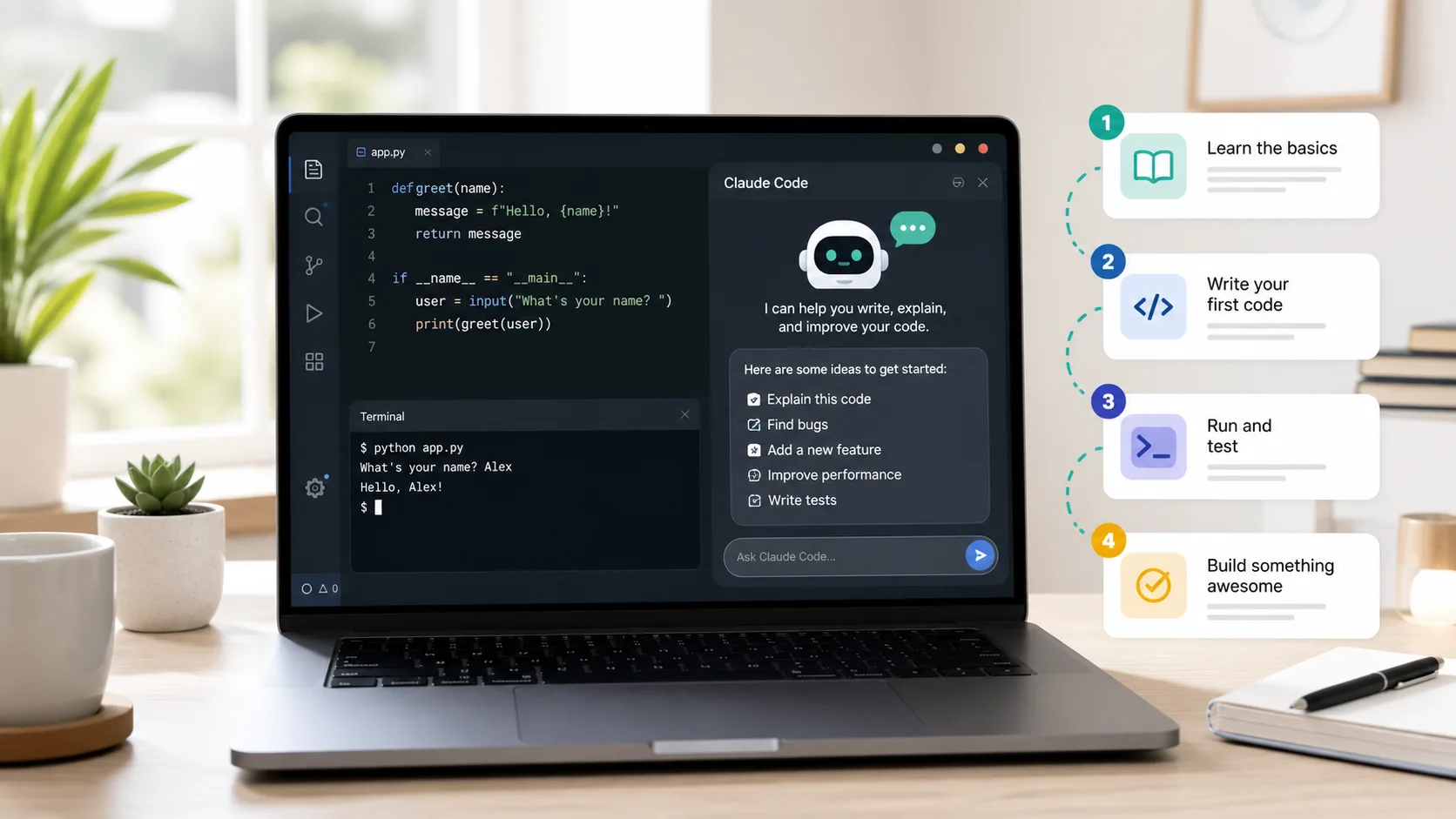
Samsung Electronics is integrating Anthropic's newly released developer tool, Claude Code, into its semiconductor division to accelerate chip design processes, although the company warns that the AI still makes critical errors. The tech giant's research teams have been testing the agentic coding tool to automate complex programming tasks, write hardware description code, and debug systems directly from the command line. While Samsung engineers reported significant productivity gains and praised the tool's ability to streamline development workflows, they also highlighted major limitations. Claude Code occasionally produces worryingly inaccurate results and hallucinated solutions, reinforcing the absolute necessity of strict human oversight. Consequently, Samsung plans to continue utilizing the AI tool with a strict "human-in-the-loop" approach to ensure accuracy and security in its high-stakes chip manufacturing pipeline.

Situational Awareness, star AI hedge fund that nearly imploded, now being probed by the SEC

The Securities and Exchange Commission (SEC) has launched an investigation into Situational Awareness, a prominent AI-driven hedge fund that recently narrowly avoided a catastrophic collapse. The regulatory inquiry is focusing on the firm's risk management protocols, trading strategies, and whether executives misled investors regarding the efficacy and safety of its proprietary artificial intelligence trading algorithms. This scrutiny follows a highly turbulent period for the fund, during which unexpected market volatility triggered severe automated liquidations, leading to massive drawdowns that nearly wiped out its capital. The SEC's probe highlights a growing regulatory push to scrutinize "AI washing" and the systemic risks that fully autonomous trading systems pose to broader financial markets. Analysts suggest this case could set a precedent for how algorithmic asset managers are regulated moving forward.
Aug 24, 2026

Quintessent bags $40M to develop lasers for AI clusters

Silicon photonics startup Quintessent has secured $40 million in a new funding round to accelerate the development and commercialization of its optical interconnect technology tailored for artificial intelligence clusters. This capital injection will be used to scale the company's proprietary multi-wavelength quantum dot lasers, which are integrated directly onto silicon computing platforms to solve critical data bottlenecks in massive data centers. By replacing conventional copper connections with high-speed optical links, Quintessent enables seamless, low-latency communication between thousands of GPUs and accelerators. This hardware innovation is essential for scaling next-generation AI training and inference, offering significantly higher bandwidth and lower power consumption to meet the exponential computational demands of modern deep learning models.

Nvidia reportedly eyes another investment in Perplexity AI at a $30B valuation

Nvidia Corporation is reportedly in talks to invest once again in Perplexity AI, a leading conversational search startup, in a funding round that could value the company at $30 billion. This potential investment highlights Nvidia's ongoing strategy of reinvesting its massive chip-sale profits into high-flying generative AI startups that rely heavily on its graphics processing units. Perplexity AI has experienced meteoric growth, positioning itself as a direct competitor to search giants like Google and OpenAI's SearchGPT. The startup's AI-powered answer engine synthesizes web information to provide direct, cited answers to user queries. If finalized, this multi-billion-dollar valuation jump from its previous funding rounds underscores the intense investor demand for advanced search alternatives and solidifies Nvidia's position as a kingmaker in the artificial intelligence ecosystem.

Data centers become "killer application" for new power transformer tech

Rapidly growing, energy-hungry AI data centers are driving a massive surge in electricity demand, positioning advanced power transformer technology as a critical infrastructure bottleneck and a major catalyst for grid innovation. Traditional electrical grids are struggling to keep pace with the power requirements of massive AI training clusters, prompting utility companies and tech giants to seek more efficient hardware solutions. To address these capacity constraints, the industry is increasingly adopting next-generation solid-state and amorphous metal transformers. These advanced technologies significantly reduce energy loss during voltage conversion, offer smaller physical footprints, and better handle the highly fluctuating power demands characteristic of AI workloads, making them essential for sustaining the ongoing AI expansion.

AI is hitting entry-level jobs hardest, Stanford study finds

Generative artificial intelligence is disproportionately reducing employment opportunities and demand for entry-level knowledge workers, according to a comprehensive study conducted by Stanford University. As companies increasingly adopt AI tools to automate routine tasks such as basic coding, content drafting, and preliminary data analysis, the traditional entry-level positions that once served as training grounds for junior employees are rapidly disappearing. This shift creates a critical gap in the professional pipeline, making it harder for recent graduates to gain the foundational experience necessary to transition into senior roles. Furthermore, the study highlights that while senior professionals experience increased productivity by leveraging AI, the lack of entry-level hiring threatens long-term organizational sustainability. Employers must actively restructure training programs to help junior staff develop advanced skills quickly, or risk facing a severe shortage of experienced talent in the near future.

Oura is reportedly eyeing a September IPO that could value it at more than $16B

Oura, the pioneer behind the popular health-tracking smart ring, is reportedly preparing for an initial public offering (IPO) in September 2026, targeting a valuation exceeding $16 billion. This potential public listing underscores the rapid expansion of the wearable health-technology sector and reflects Oura's successful evolution from a niche sleep-tracking device into a comprehensive health and wellness platform. The massive valuation is propelled by robust subscription-based revenue, strategic integrations, and the deployment of advanced artificial intelligence features, including personalized AI health coaching and predictive biometric analysis. This market debut represents a landmark moment for consumer health electronics, highlighting strong investor demand for AI-driven preventative healthcare and continuous personal monitoring technologies.

Free ‘Ox Alpha’ AI Preview Tests the Limits of Business Trust

The release of the free "Ox Alpha" AI preview represents a significant shift in enterprise AI adoption, forcing businesses to evaluate the boundaries of data privacy and trust when deploying free-tier artificial intelligence tools. While the platform offers powerful automation and analytical capabilities, it raises critical questions about how sensitive corporate data is handled, stored, and potentially utilized for model training. Organizations leveraging this preview must carefully weigh the immediate productivity benefits against the long-term security risks of third-party data exposure. As AI developers increasingly offer advanced previews to gather real-world data, enterprises are urged to establish robust governance frameworks to prevent intellectual property leakage while still fostering technological innovation.

Alibaba Sells More Shares to Raise $10.2B to Spend on AI

Alibaba Group has successfully raised over $10.2 billion through a series of debt and share offerings to aggressively fund its artificial intelligence initiatives and accelerate its share buyback program. This massive capital injection is aimed at bolstering Alibaba's position in the highly competitive global and domestic AI markets. The newly secured funds will be heavily directed toward expanding Alibaba Cloud's infrastructure and advancing its proprietary large language models, including Tongyi Qianwen. Through these strategic investments, Alibaba aims to enhance its generative AI capabilities, counter domestic rivals like Tencent and Baidu, and drive long-term growth across its e-commerce and cloud divisions.

This company wants to stop underwater drones and even submarines with a whole new form of sonar technology

Wavefront Systems and Sonardyne have developed an advanced sonar technology called Sentinel, designed to detect and counter the growing security threats posed by underwater drones, mini-submarines, and divers. As autonomous underwater vehicles (AUVs) become cheaper and more accessible, they pose a significant risk to naval vessels, harbors, and critical national infrastructure, such as offshore wind farms and undersea cables. Traditional sonar systems often struggle to identify these small, slow, and quiet threats in cluttered shallow waters. To address this vulnerability, the Sentinel Intruder Detection Sonar (IDS) system utilizes state-of-the-art signal processing and automated classification algorithms to detect and track underwater targets at long ranges with 360-degree coverage. By automatically distinguishing between human divers, marine life, and unmanned vehicles, the system reduces false alarms and provides real-time alerts. This technology offers crucial defensive capabilities for military ports, commercial harbors, superyachts, and critical marine energy assets worldwide.

'Unlicensed, unrestricted AI training could destroy the ecosystem for books' — quote of the day by the Authors Guild on the sourcing of training data

Unlicensed and unrestricted training of generative artificial intelligence models using copyrighted books threatens to permanently destroy the economic ecosystem supporting authors and publishers. The Authors Guild has warned that technology companies are aggressively scraping millions of literary works to train large language models without obtaining consent, providing attribution, or offering financial compensation. This practice significantly devalues professional writing and undermines foundational copyright protections. Consequently, this systemic exploitation of intellectual property could lead to a future where professional authors can no longer afford to produce new works, severely diminishing the diversity and quality of human literature. To safeguard the industry, creative organizations are actively advocating for mandatory licensing frameworks, legal accountability, and robust regulatory oversight to ensure creators are fairly compensated when their works are utilized in AI development.

Xiaomi: New CPU matches Apple cores single threaded, much faster multithreaded

Xiaomi's latest CPU technology has achieved a significant performance milestone by matching Apple's industry-leading processor cores in single-threaded performance while demonstrating superior speed in multi-threaded benchmarks. This advancement highlights a shifting landscape in mobile silicon, where alternative architectures are rapidly closing the single-core efficiency gap historically dominated by Apple's A-series chips. The performance leap is primarily driven by architectural optimizations and advanced manufacturing processes, allowing for higher clock speeds and more efficient thermal envelope management. By surpassing Apple in multi-threaded operations, the new processor offers substantial benefits for intensive multitasking, high-end gaming, and complex computing workloads. Additionally, this hardware evolution provides a robust foundation for next-generation on-device artificial intelligence, enabling faster execution of localized machine learning models and neural network processing directly on the device.

Latest Tutorials

Stay updated with our newest guides and tutorials on AI tools and technologies

Sign In

OR

Create Account

Password must be 8-20 characters and contain letters and numbers

OR

Forgot Password

Password must be 8-20 characters and contain letters and numbers