Latest Reviews

Stay updated with our comprehensive analysis of the newest AI hardware and software releases.

AI Design August 12, 2026 Read Full Article • 13 min read

Best 6 Free QR Code Generators in 2026

Compare the best free QR code generator tools for static codes, branded designs, editable links, analytics, print-ready downloads, and Canva workflows.

AI News

Stay updated with the latest developments and breakthroughs in global artificial intelligence

Aug 18, 2026

Fostering trust in the age of misinformation, disinformation, and malinformation

Generative artificial intelligence has significantly accelerated the creation and dissemination of misinformation, disinformation, and malinformation (MDM), severely undermining public trust in digital content. As deceptive media and deepfakes become increasingly sophisticated, traditional detection methods are struggling to keep pace, necessitating a shift toward proactive content verification standards. To address these challenges, the technology industry is embracing digital provenance frameworks, most notably the Coalition for Content Provenance and Authenticity (C2PA) standards. By embedding secure, cryptographic metadata into digital files at the point of creation, organizations can trace the origin and edit history of media, helping users distinguish between authentic and manipulated content. Ultimately, rebuilding digital trust requires a multi-faceted strategy that combines these advanced cryptographic solutions with robust media literacy and corporate transparency. Organizations must proactively adopt these verification frameworks to secure their digital communication channels and protect their brand integrity.

#IJCAI-ECAI 2026: social media round-up part one

The joint IJCAI-ECAI 2026 conference commenced with a vibrant array of presentations, workshops, and tutorials, sparking significant engagement across social media platforms. Attendees and organizers shared key moments from the opening sessions, highlighting the diverse range of artificial intelligence topics being discussed, from foundational machine learning theory to real-world ethical applications. Early highlights featured on social media include snippets from the first round of keynote speeches, announcements of prestigious track awards, and photos of collaborative networking events. This initial round-up captures the community's excitement and the collaborative spirit of researchers gathering to advance the global AI landscape.

Beyond general-purpose AI: why sovereignty matters in critical services

Sovereign artificial intelligence is becoming vital for critical services like healthcare, finance, and public infrastructure, where relying on general-purpose, offshore AI models poses significant data privacy and security risks. As organizations handle highly sensitive national and personal data, the need for localized AI infrastructure that complies with regional regulations and operates within national borders has intensified. This shift ensures that critical operations remain resilient against external geopolitical disruptions and unilateral service terminations. By transitioning to sovereign AI, public and private enterprises can retain absolute control over their intellectual property and data pipelines. This approach not only mitigates compliance risks under strict frameworks like GDPR but also fosters local innovation. Ultimately, building specialized, sovereign AI ecosystems allows critical sectors to harness the power of machine learning without compromising national security or digital autonomy.

This new 16-inch laptop comes with a ridiculous 72GB of RAM — if you are willing to wait for the upgrade

A budget-friendly 16-inch laptop offering an extraordinary 72GB of DDR5 RAM has emerged on online marketplaces, providing an unprecedented amount of memory for its price point. This massive capacity is achieved through a unique non-binary RAM configuration—pairing a 24GB module with a 48GB module—which allows users to seamlessly run memory-intensive tasks, such as complex virtualization, large-scale data processing, and local AI model execution, without the premium cost typically associated with high-end mobile workstations. However, securing this hardware requires patience and a tolerance for risk, as the laptop is primarily sold through overseas platforms like AliExpress. Buyers must be willing to endure long shipping times and navigate potential challenges regarding customer support, custom duties, and warranty fulfillment, making it a compelling but cautious choice for tech enthusiasts.

Cursor launches Origin code hosting service to compete with GitHub

Anysphere, the startup behind the popular AI-powered code editor Cursor, has launched Origin, a new code hosting service designed to compete directly with Microsoft's GitHub. This new platform aims to integrate seamlessly with Cursor's AI capabilities, offering developers a more cohesive environment that merges version control with advanced machine learning assistance. Origin distinguishes itself by optimizing repository hosting for AI-driven workflows. By deeply integrating with the Cursor editor, it allows for faster codebase indexing, smarter context retrieval, and more efficient AI-assisted code reviews. This tight integration addresses latency and context-window limitations often experienced when using external hosting services like GitHub or GitLab. The launch represents a significant step in Cursor's strategy to build a comprehensive developer ecosystem. By expanding from an IDE into code hosting, the company positions itself to capture a larger share of the software development lifecycle, challenging established players with an AI-first approach to collaboration and version control.

Qwen3.8-27B runs frontier-class coding agents and reasoning locally, no cloud API required

Qwen3.8-27B represents a significant milestone in open-source artificial intelligence by enabling developers to run frontier-class coding agents and complex reasoning tasks locally without relying on external cloud APIs. This 27-billion-parameter model matches or exceeds the performance of many proprietary cloud-based models, providing a highly capable, private, and cost-effective alternative for software development and engineering workflows. By eliminating the need for constant internet connectivity and expensive API calls, the model allows for secure code generation, deep debugging, and multi-file reasoning directly on local developer workstations. This local capability is particularly valuable for enterprises and individual developers working with sensitive proprietary codebases, where data privacy is paramount. Additionally, its advanced reasoning capabilities facilitate the deployment of highly autonomous local agents capable of planning and executing complex programming tasks.
Aug 17, 2026

GPT-5.6 Sol Pricing Cut by 50%

OpenRouter has slashed the API pricing for OpenAI's GPT-5.6 Sol model by 50%, significantly lowering the barrier to entry for developers seeking high-performance AI inference. This dramatic reduction applies to both input and output tokens, making the advanced model one of the most cost-effective options in its intelligence class on the router platform. GPT-5.6 Sol is highly optimized for complex reasoning tasks, rapid generation speeds, and large-scale autonomous agent deployments. By cutting the hosting and query costs in half, OpenRouter enables enterprises and individual developers to run sophisticated multi-agent workflows, deep data analysis, and high-throughput conversational applications at a fraction of the previous cost, intensifying competition in the LLM market.

‘Being heard and accepted, even by a machine, can be meaningful’ — I asked a therapist if other countries should restrict AI companions like China

AI companions can provide meaningful emotional support and a sense of acceptance for individuals experiencing loneliness, raising questions about whether governments should regulate these technologies similarly to China's strict approach. While China has implemented rules to manage the psychological impacts and data security of AI relationships, mental health experts suggest that outright restrictions might deprive isolated individuals of a valuable coping mechanism. Therapists emphasize that feeling heard, even by a machine, can offer low-stakes practice for social interaction and help alleviate severe loneliness. However, a balanced approach is necessary, focusing on transparent guidelines, ethical boundaries, and user privacy, rather than complete censorship, to ensure these digital tools safely complement human relationships.

The $119 MacBook Neo deal going viral on TikTok is a scam, and I almost fell for it — here's where you can actually find it on sale

A viral TikTok advertisement promoting a "MacBook Neo" for just $119 is a fraudulent scam designed to deceive buyers into giving away their financial information or purchasing non-existent products. There is no official Apple product called the "MacBook Neo," and the viral videos rely heavily on deceptive tactics, including AI-generated voice clones of popular influencers and stolen footage to appear legitimate. Consumers looking for affordable Apple laptops are urged to avoid these suspicious TikTok shop links and instead search for verified deals. Legitimate, budget-friendly options can be found through authorized refurbished retailers such as Amazon, Best Buy, and Back Market, where older MacBook Air and Pro models are safely sold with warranties. Buyers should always remain vigilant against deals that seem too good to be true, especially on social media platforms.

Three insights you may have missed from theCUBE’s coverage of Black Hat USA

Cyber resilience has shifted from a secondary IT concern to a core business priority, as highlighted by key industry discussions at Black Hat USA. Organizations are increasingly moving away from purely defensive posturing to focus heavily on rapid recovery capabilities, recognizing that breaches are inevitable in today's threat landscape. Artificial intelligence plays a dual role in this evolving environment, serving as both a powerful tool for automating security operations and a weapon for attackers executing sophisticated threats. To counter these advanced vectors, enterprises are abandoning fragmented point products in favor of integrated security platforms that offer unified visibility and streamlined incident response.

AI cloud operator Groq raises $350M more in funding

AI chip startup Groq has successfully secured $350 million in a new funding round to accelerate the deployment of its proprietary Language Processing Units (LPUs) and expand its specialized AI cloud platform. This capital injection aims to position the company as a formidable challenger to Nvidia by offering faster and more cost-effective inference capabilities for large language models. The newly acquired funds will be utilized to scale Groq's cloud infrastructure, GroqCloud, and to manufacture next-generation hardware optimized for low-latency AI workloads. As demand for real-time generative AI applications grows, Groq plans to expand its developer ecosystem and enterprise partnerships, making high-speed AI inference more accessible globally.

Google pays $10M to get its hands on Spirit Airlines’ business data for AI training

Google has entered into a $10 million agreement to acquire and license Spirit Airlines' proprietary business data to train its next-generation artificial intelligence models. This strategic transaction highlights the growing demand among technology companies for high-quality, industry-specific datasets to improve the domain expertise of AI systems like Gemini. The dataset is expected to include historical flight operations, pricing strategies, customer booking patterns, and logistics data, with all personally identifiable information removed to ensure privacy compliance. For Spirit Airlines, the deal provides a valuable cash injection amidst ongoing financial challenges, while Google gains a competitive edge in developing specialized AI solutions for the aviation and travel sectors.

Cursor launches Origin code hosting platform as GitHub outage exposes opening in AI coding race

Anysphere, the creator of the popular AI code editor Cursor, has officially launched "Origin," an AI-native code hosting platform designed to challenge GitHub's dominance. Announced opportunistically during a widespread GitHub outage, Origin aims to eliminate the latency and synchronization bottlenecks that AI coding agents typically encounter when pushing and pulling from traditional repositories. Origin represents a fundamental shift toward an ecosystem where code hosting and AI-driven development are deeply integrated from the ground up. By providing instant repository context to Cursor's AI models, the platform enables developers to collaborate with AI agents at unprecedented speeds. This strategic move positions Cursor as a comprehensive, end-to-end platform for AI-first software engineering, directly threatening Microsoft and GitHub's market share in the rapidly evolving developer tools space.

Anthropic’s annualized revenue surges to $65B

Anthropic has achieved an extraordinary financial milestone with its annualized revenue surging to $65 billion as of August 2026, driven by unprecedented enterprise adoption of its Claude large language models. This dramatic growth cements the company's status as a major powerhouse in the generative AI sector, showcasing the rapid scaling of commercial AI solutions across global industries. The revenue surge is heavily supported by deepened partnerships with major cloud providers, including Amazon Web Services and Google Cloud, which have facilitated seamless integration of Anthropic's models into corporate workflows. Increased API consumption and high-volume subscription tiers for Claude's advanced reasoning capabilities have also contributed substantially to the company's financial success.

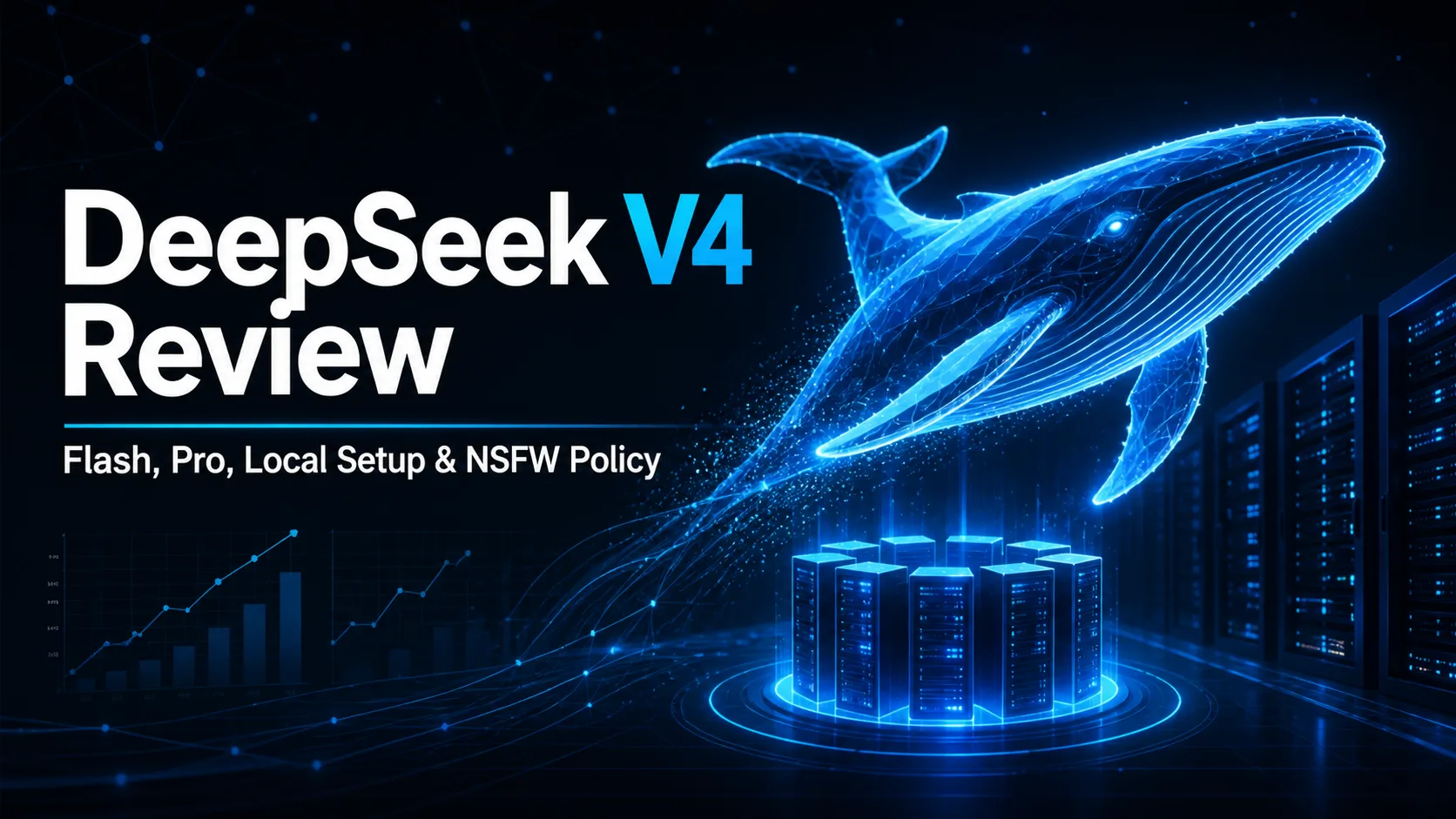
DeepSeek V4-Pro and Flash Make Agent Builders Weigh Cost vs. Capability

DeepSeek's introduction of its V4-Pro and Flash models has intensified the debate among AI agent developers regarding the optimal balance between operational cost and model capability. The V4-Pro model offers state-of-the-art reasoning and complex instruction-following capabilities suitable for sophisticated multi-step workflows, whereas the Flash variant provides rapid execution speeds and highly aggressive pricing, making it ideal for high-volume, low-latency tasks. This dual-model availability forces developers to carefully architect hybrid agent systems that dynamically route queries based on task complexity. While the Flash model significantly lowers the financial barriers to scaling consumer-facing applications, the Pro version remains indispensable for enterprise-grade automation where reasoning accuracy cannot be compromised.

How to block, disable, or opt-out of “AI” features

Users can take active steps to limit, disable, or opt out of intrusive artificial intelligence features across a wide range of everyday digital platforms, software, and devices. This curated guide provides actionable instructions and resources for managing AI integrations in popular environments such as Google Search, Meta platforms (Facebook and Instagram), Microsoft Windows, Apple devices, LinkedIn, and Substack. In addition to user-facing settings, the resource details methods for content creators and webmasters to block AI web scrapers using robots.txt files and other technical configurations. By compiling these diverse workarounds, the guide empowers individuals to regain control over their privacy, data, and user experience in an increasingly AI-dominated digital landscape.

Former SpaceX engineers are building a robotic factory for making steel parts

A team of former SpaceX engineers has launched a startup to revolutionize heavy manufacturing by building a fully software-defined, robotic factory dedicated to producing complex steel and metal parts. By leveraging advanced artificial intelligence, machine learning, and autonomous robotic systems, the factory can dynamically adapt to different design specifications without requiring expensive custom tooling or manual oversight. This approach significantly shortens production cycles and reduces costs for clients in the aerospace, defense, and automotive sectors. The core technology utilizes AI-driven path planning and real-time sensor feedback to control robotic arms as they shape, weld, and finish steel components. This software-centric model eliminates traditional manufacturing bottlenecks, enabling rapid prototyping and scalable high-mix, low-volume production to help revitalize domestic supply chains.

AI automation startup Relay shuts down, staff joins Google’s Chrome team

Relay, an artificial intelligence automation startup, has shut down its independent operations as its entire engineering and product team joins Google’s Chrome division. The transition functions as an acqui-hire, allowing Google to absorb Relay's specialized talent to bolster browser-based automation and productivity features. Before the wind-down, Relay focused on creating collaborative, AI-driven workflow automation tools designed to help teams streamline repetitive digital tasks. Under Google, the team will apply their expertise in machine learning and workflow integration directly within the Chrome ecosystem to enhance user experience.

Qwen3.8 27B scores 52 on Artificial Analysis

Alibaba’s Qwen3 27B large language model has achieved an overall quality score of 52 on the Artificial Analysis benchmarking platform, establishing itself as an exceptionally competitive and cost-effective option within the medium-sized open-weights category. This benchmark evaluation highlights the model's superior performance across diverse capabilities, including advanced reasoning, multilingual comprehension, and mathematical problem-solving, rivaling much larger parameter models. Beyond core capabilities, the analysis details the model's operational efficiency across hosting providers such as DeepInfra and Together AI, showcasing high throughput rates and low latency. With its optimal balance of speed, cost, and intelligence, Qwen3 27B offers developers a highly viable alternative to proprietary models for real-time applications and complex workflows.

AI;DR (AI; Didn't Read)

The transition from the classic internet slang "TL;DR" (Too Long; Didn't Read) to "AI;DR" (AI; Didn't Read) represents a fundamental shift in how digital content is consumed and produced in the age of generative artificial intelligence. As AI tools are increasingly used to summarize lengthy articles, books, and reports, content creators face a new reality where their primary audience may no longer be humans, but rather AI agents processing their text. This shift creates a potential feedback loop where AI-generated content is subsequently digested and summarized by other AI systems, which risks eroding human nuance, critical thinking, and the depth of original prose. While this automated synthesis offers unparalleled efficiency in managing information overload, it raises critical questions about the future value of writing and whether human-to-human communication is being marginalized.

Latest Tutorials

Stay updated with our newest guides and tutorials on AI tools and technologies

Sign In

OR

Create Account

Password must be 8-20 characters and contain letters and numbers

OR

Forgot Password

Password must be 8-20 characters and contain letters and numbers