Wan 3.0 Review: 30s AI Video, Open Source Status and NSFW Limits
Wan 3.0 is Alibaba’s latest AI video generation model in the Wan family. After its August 2026 public beta, wan3.0-video has now been listed as…
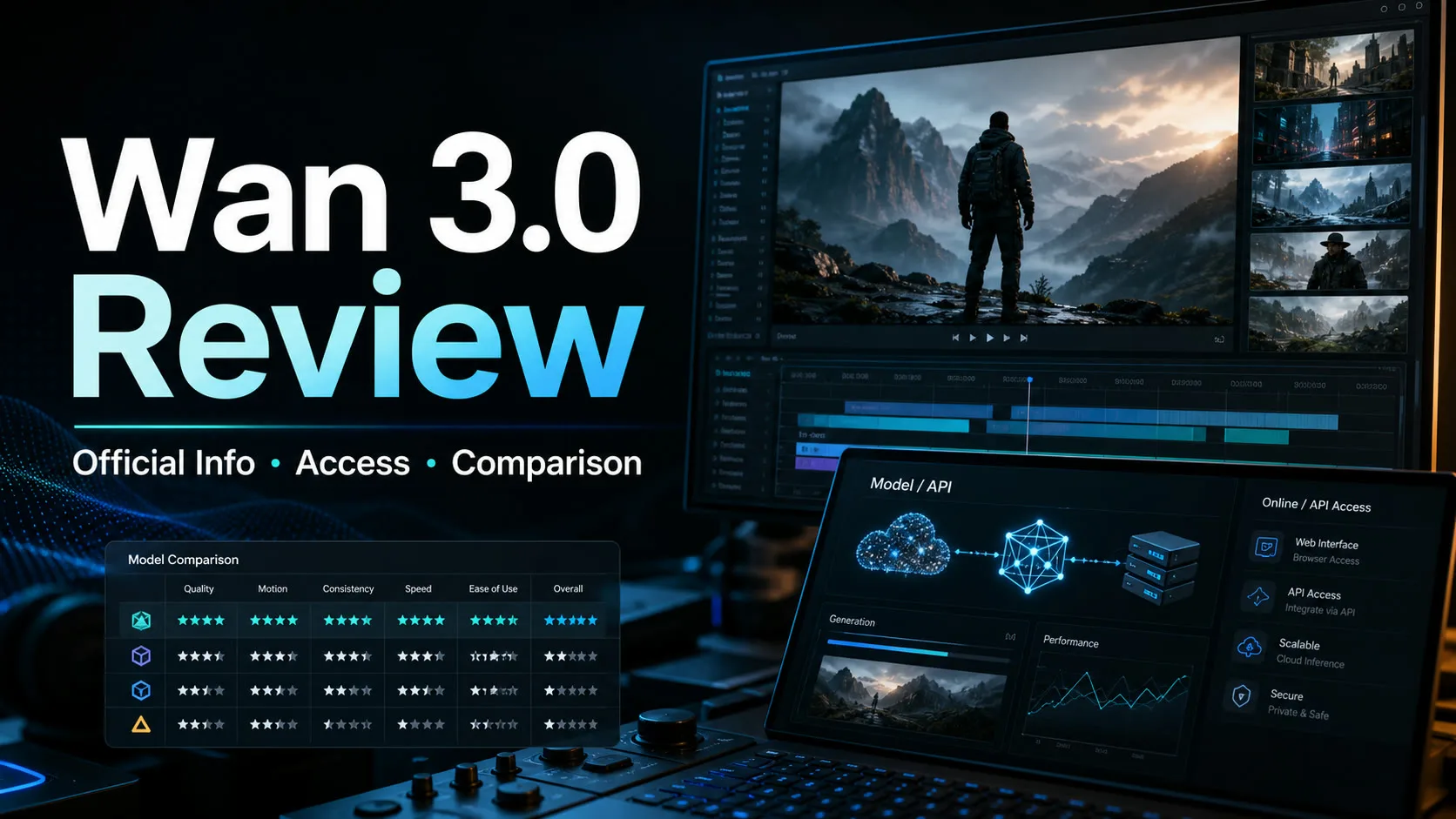

Wan 3.0 is Alibaba’s latest AI video generation model in the Wan family. After its August 2026 public beta, wan3.0-video has now been listed as a publicly released model, with a faster wan3.0-video-prime variant added for speed-focused generation. The headline features are native 30-second video, document-aware Omni-Reference input, 1080p output, audio generation, and API access.
This review explains Wan 3.0’s official information, where to use it online, API specs, open-source status, local hardware reality, NSFW limitations, and how it compares with Seedance 2.5, Veo, Kling, Runway, Luma, Pika, and open-weight video models.
Contents
What Is Wan 3.0?
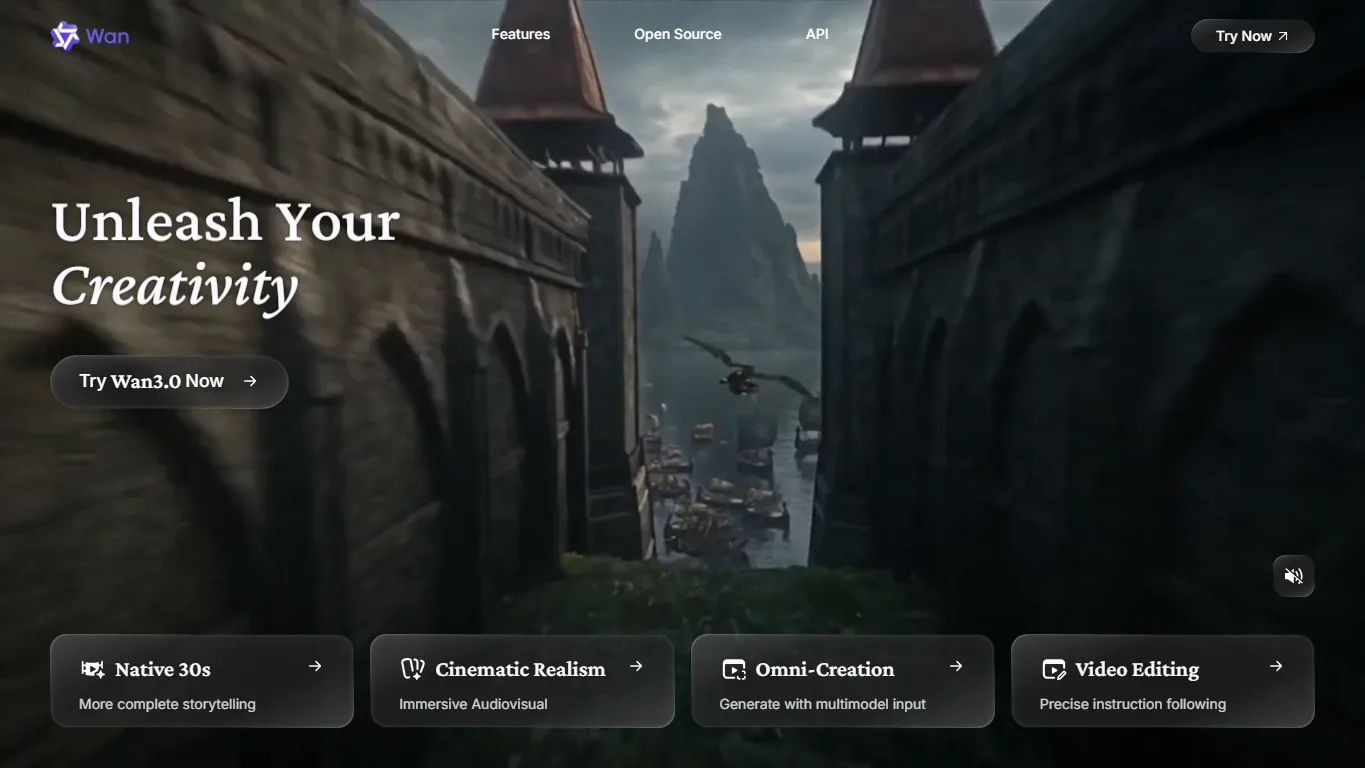
Wan 3.0 is the newest video model in Alibaba’s Wan ecosystem. It goes beyond standard text-to-video and image-to-video generation by accepting richer reference inputs such as documents, spreadsheets, slides, web pages, audio, and videos.
That makes Wan 3.0 especially interesting for practical video production. A team can start from a sales deck, product sheet, training document, or report, then turn that material into a structured video draft instead of rewriting everything into prompts manually.
Confirmed Official Release Information
Qwen’s model update page lists wan3.0-video as publicly released on August 24, 2026 and adds wan3.0-video-prime as a faster variant. Alibaba Cloud’s official materials describe 30-second generation, reality-grade rendering, Omni-Reference input, document support, and API access through Model Studio.
Earlier media coverage described the beta rollout around August 6, 2026. The important update now is that the article should no longer treat Wan 3.0 as merely a rumor or unconfirmed name. The model exists as an official cloud/API model, although availability can still vary by account, region, and platform.
Where to Use Wan 3.0 Online
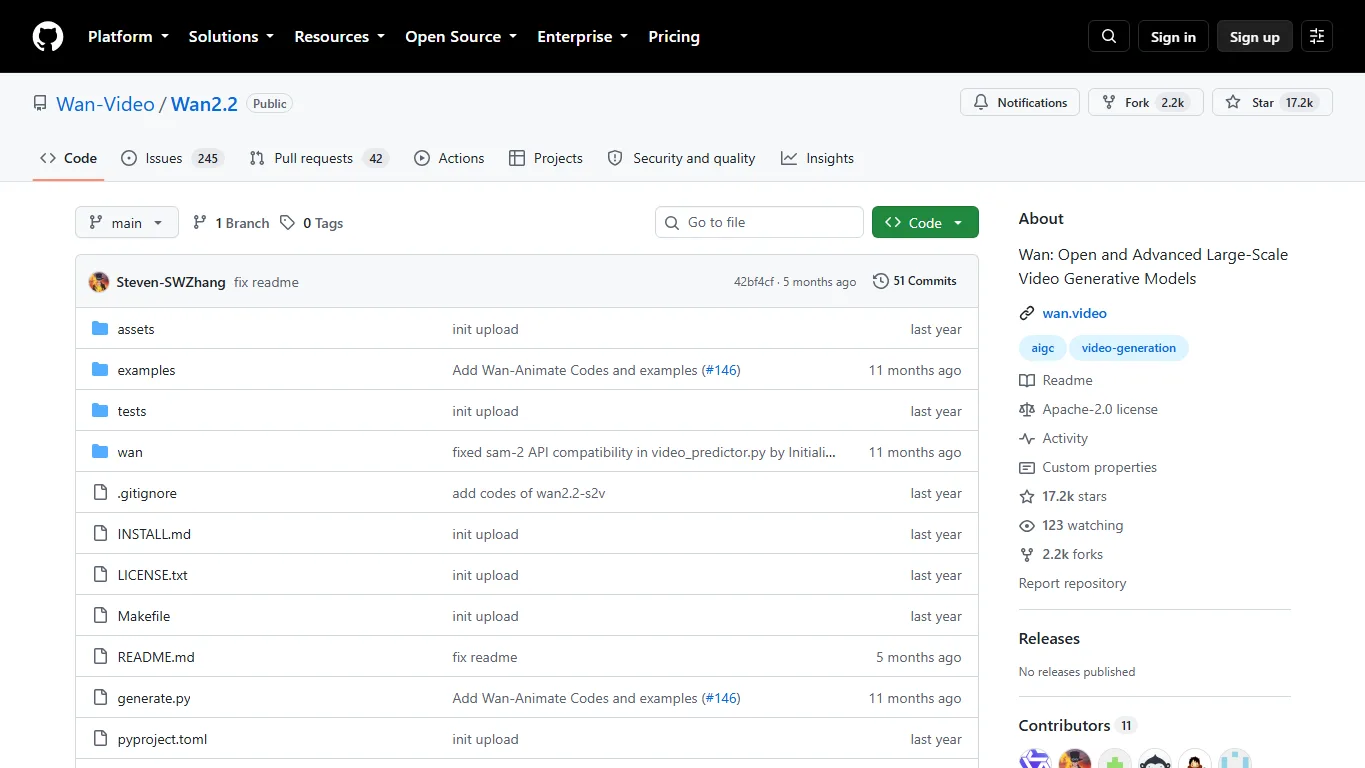
The most reliable access routes are Alibaba Cloud Model Studio, Qwen Cloud, Qianwen Creative, Tongyi Wanxiang, and related Alibaba creative tools such as Yike AI. Developers should check Model Studio / Bailian for the current availability of wan3.0-video and wan3.0-video-prime.
Third-party services are also starting to list Wan 3.0. Kie AI, for example, presents Wan 3.0 as an API and online video model. These services can be convenient, but pricing, moderation, NSFW checks, commercial terms, and rate limits may differ from Alibaba’s official routes.
Key Features and API Specs
| Item | Wan 3.0 Information | Practical Meaning |
|---|---|---|
| Model names | wan3.0-video / wan3.0-video-prime | Prime is positioned for faster generation |
| Duration | 2 to 30 seconds | Useful for short ads, explainers, and social videos |
| Resolution | 480p / 720p / 1080p | Plan around 1080p, not unconfirmed 4K claims |
| Inputs | Text, image, audio, video, documents, spreadsheets, slides, web pages | Strong fit for business and training materials |
| Audio | Audio generation is supported | Good for drafts; still verify sync and quality |
| Limits | Documents, images, and video references have size/count/page limits | Clean source files before generation |
Pricing depends on region and account terms. Public materials show resolution-based pricing for the standard model and higher per-second pricing for the Prime model. For production work, it is usually smarter to test structure at 480p or 720p, then generate final versions at 1080p only after the draft works.
Open Source Status and Local Hardware
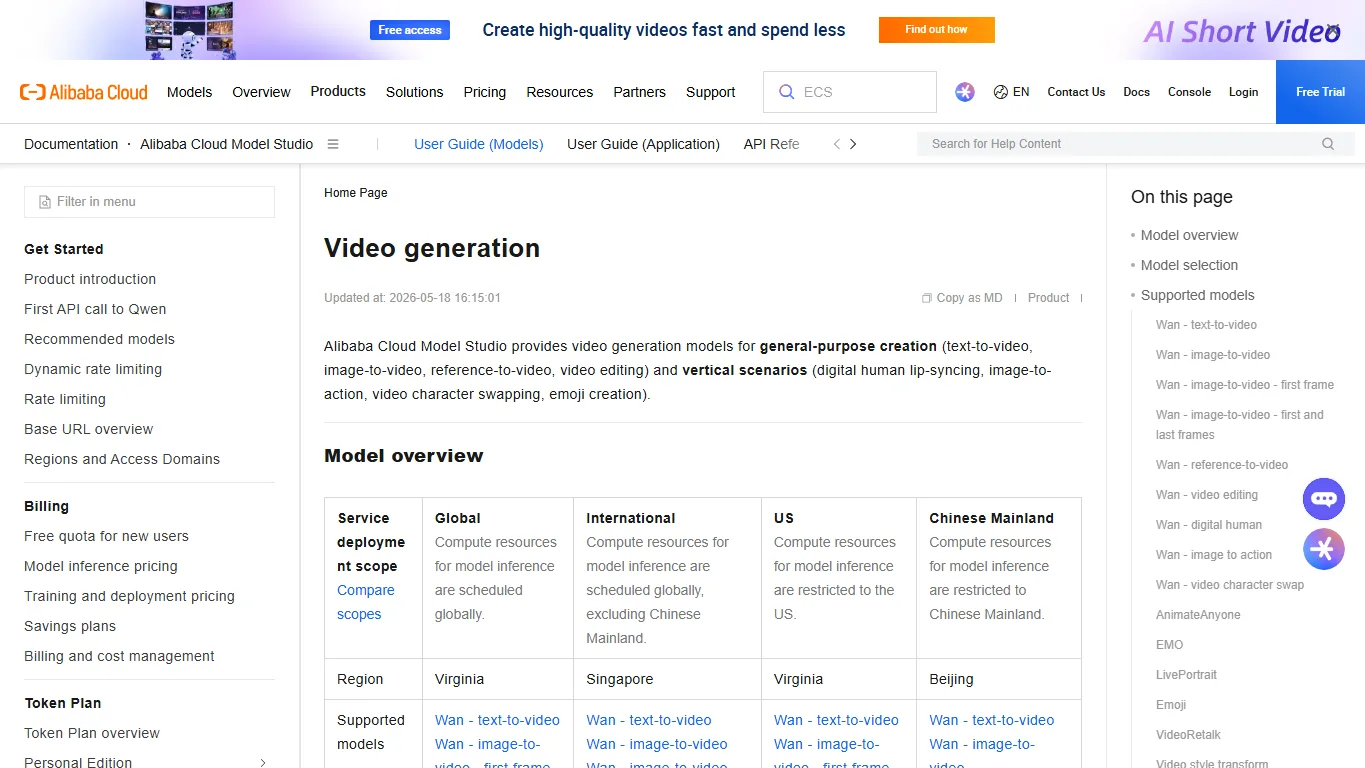
Wan 3.0 has an AlibabaCloud-Official GitHub repository, but it should not be treated like Gemma 4, Qwen 3.8, or other downloadable open-weight models. As of this update, the practical way to use Wan 3.0 is through online products or APIs, not by downloading model weights and running it locally.
That means there is no reliable local VRAM table, ComfyUI local workflow, or consumer-GPU setup guide for Wan 3.0 itself. If you need a local/open-weight Wan-family reference, Wan2.2 is still the more relevant technical baseline. For Wan 3.0, evaluate cloud access, API pricing, latency, content policy, and output quality instead of local hardware specs.
NSFW Support and Safety Limits
Wan 3.0 is not an uncensored NSFW video model. It is a cloud/API product, so users should expect content safety policies, moderation, and platform-level restrictions on explicit sexual content, sensitive real-person content, violence, and other prohibited categories.
This also matters because Wan 3.0 is not currently an open-weight local model. Unlike local uncensored models, there is no normal path to remove filters, bypass moderation, or fine-tune it for adult generation. If NSFW flexibility is a core requirement, Wan 3.0 is the wrong category of tool. Use it for legitimate commercial, educational, marketing, entertainment, and document-to-video workflows within the provider’s terms.
Real-World Use Cases
Wan 3.0 is strongest when the source material already exists. Sales decks, onboarding slides, tourism documents, product sheets, training manuals, financial summaries, and ecommerce briefs are all good candidates. The model can reduce the work of turning static information into a video structure.
It is still not a fully automatic production replacement. Audio texture, text accuracy, small numbers, logos, charts, hands, faces, and long-scene consistency all need review. Alibaba’s own blog also acknowledges that audio texture and text accuracy still have room to improve.
Wan 3.0 vs Other AI Video Models
| Model | Main Strength | How It Compares to Wan 3.0 |
|---|---|---|
| Wan 3.0 | 30s generation, documents, Omni-Reference, API | Best fit for document-to-video and business workflows |
| Seedance 2.5 | Dreamina workflow, audio, references, creator tools | More convenient for social ads and creator storytelling |
| Google Veo | Cinematic quality, audio, strong prompt following | Better for premium visuals; Wan is stronger for document input and API workflow |
| Kling | Motion quality, image-to-video, broad creator adoption | Easier for casual users; Wan is more business-material oriented |
| Runway | Mature video editing and filmmaking suite | More complete as a creative suite; Wan is stronger as a model/API layer |
| LTX-2.5 | Open/local workflow potential | Better for local experimentation; Wan 3.0 is cloud/API first |
Recommended Workflow
- Clean the source document before uploading: remove irrelevant pages and outdated data.
- Define audience, video length, tone, required scenes, and key claims in the prompt.
- Prototype at 480p or 720p before paying for higher-resolution output.
- Use Prime only when speed matters or after the structure is already validated.
- Manually check subtitles, voiceover, numbers, logos, likeness, and commercial rights before publishing.
If you also care about open-weight AI video models, compare Wan 3.0 with MiniMax H3 and LTX-2.5. Wan 3.0 is stronger as a cloud/API document-to-video model, while local models are better for custom pipelines and hardware-controlled testing.
FAQ
Is Wan 3.0 officially released?
Yes. Qwen’s model update page lists wan3.0-video as publicly released on August 24, 2026, with wan3.0-video-prime added as a faster variant. Access may still differ by account and region.
Where can I use Wan 3.0?
Use Alibaba Cloud Model Studio, Qwen Cloud, Qianwen Creative, Tongyi Wanxiang, Yike AI, or supported third-party API platforms. Developers should verify model availability in their console.
Is Wan 3.0 open source?
Not in the practical open-weight sense. There is an official GitHub repository, but normal users should not expect to download Wan 3.0 weights and run it locally today.
What GPU or VRAM do I need for Wan 3.0?
For Wan 3.0 itself, local VRAM is not the main question because the practical access route is cloud/API. Your local hardware matters only for editing the generated videos or for testing older open models such as Wan2.2.
Does Wan 3.0 support NSFW generation?
No. Treat Wan 3.0 as a moderated cloud/API model. It is not designed for uncensored adult video generation or filter-bypass use.
Verdict
Wan 3.0 is one of the most important AI video releases of 2026 because it expands video generation from prompt-based clips into document-aware production. Its strongest use case is turning decks, reports, web pages, and structured materials into 30-second video drafts with audio and 1080p output.
The tradeoff is clear: Wan 3.0 is cloud/API first, not a downloadable local model, and it is not a NSFW-friendly uncensored tool. For serious use, test it with your own source documents, start at lower resolution, compare it with Seedance 2.5, Veo, Kling, and Runway, and review every generated claim before publishing.
References
Related Reviews
MiniMax H3 Review: Open-Weight AI Video Model With Native Audio

Qwen-Image-2.1 Review: Transparent Images, Editing, API Pricing and NSFW

Seedance 2.5 Review: 30s, 4K and Audio AI Video Generation in Dreamina
MiniMax-Music3 Review: Open-Weight AI Music Model for 5-Minute Songs
GPT-Image-2.5 Review (2026): Flare vs Sunburst, Pricing and NSFW Limits
Krea 2 Edit Review: Downloads, ComfyUI Workflows and Prompt Examples