8 Best AI Models in 2026: Top Models Compared
Compare the best AI models in 2026 for coding, research, agents, multilingual work, and self-hosting to find the right fit for your needs.

Choosing the best AI model in 2026 is no longer just about finding a chatbot that writes a polished answer. Today’s leading models can reason through complex problems, work with documents and images, call tools, write production code, and carry out multi-step agent workflows.
There is no single winner for every use case, though. A model built for difficult software engineering may be unnecessary for routine customer-support tasks, while an open-weight model can be the better fit when deployment control matters. This guide compares eight leading AI models for coding, research, enterprise work, multilingual tasks, and self-hosted development.
Model releases and availability move quickly. Treat this comparison as a practical starting point, then validate the leading candidates against your own tasks before committing a production workflow.
Table of Contents
- How We Chose the Best AI Models
- Best AI Models at a Glance
- 1. GPT-6.2 Astra
- 2. Claude Fable 5.2
- 3. Gemini 4 Carbon
- 4. Grok 4.7
- 5. Qwen4-Max
- 6. DeepSeek-V4-Pro
- 7. Mistral Large 4
- 8. Muse Spark Open
- Which AI Model Should You Choose?
- How to Test an AI Model
- FAQ
How We Chose the Best AI Models
A good AI model has to do more than lead one benchmark. We considered reasoning quality, coding and agent performance, multimodal understanding, tool use, long-context capability, multilingual usefulness, deployment flexibility, and the practical limitations that matter in real work.
This is a task-based list, not a claim that one model will outperform every other model in every prompt. The best choice depends on the work you need to complete, the systems you already use, and how much control you need over cost and data.
Best AI Models at a Glance
| AI Model | Best for | Key strength | Main limitation |
|---|---|---|---|
| GPT-6.2 Astra | Complex all-round work | Deep reasoning, large context, tools, and agents | Premium option for demanding workloads |
| Claude Fable 5.2 | Technical research and coding | Long-horizon reasoning and advanced professional work | Some high-risk technical requests may be restricted |
| Gemini 4 Carbon | Enterprise workflows | Multimodal analysis and long-running agents | Best experience is closely tied to Google’s ecosystem |
| Grok 4.7 | Fast coding and knowledge work | Strong technical iteration and long-context tasks | May not fit every enterprise stack |
| Qwen4-Max | Multilingual work | Strong Chinese-language and multimodal capability | Availability can vary by region |
| DeepSeek-V4-Pro | Cost-aware agents | Flexible reasoning effort and API-friendly workflows | Smaller enterprise ecosystem than the largest platforms |
| Mistral Large 4 | Sovereign AI deployments | European focus and open-weight strategy | Needs more deployment planning than a hosted chatbot |
| Muse Spark Open | Self-hosted coding agents | Open-weight flexibility for advanced development | Requires substantial compute resources |
1. GPT-6.2 Astra — Best Overall AI Model
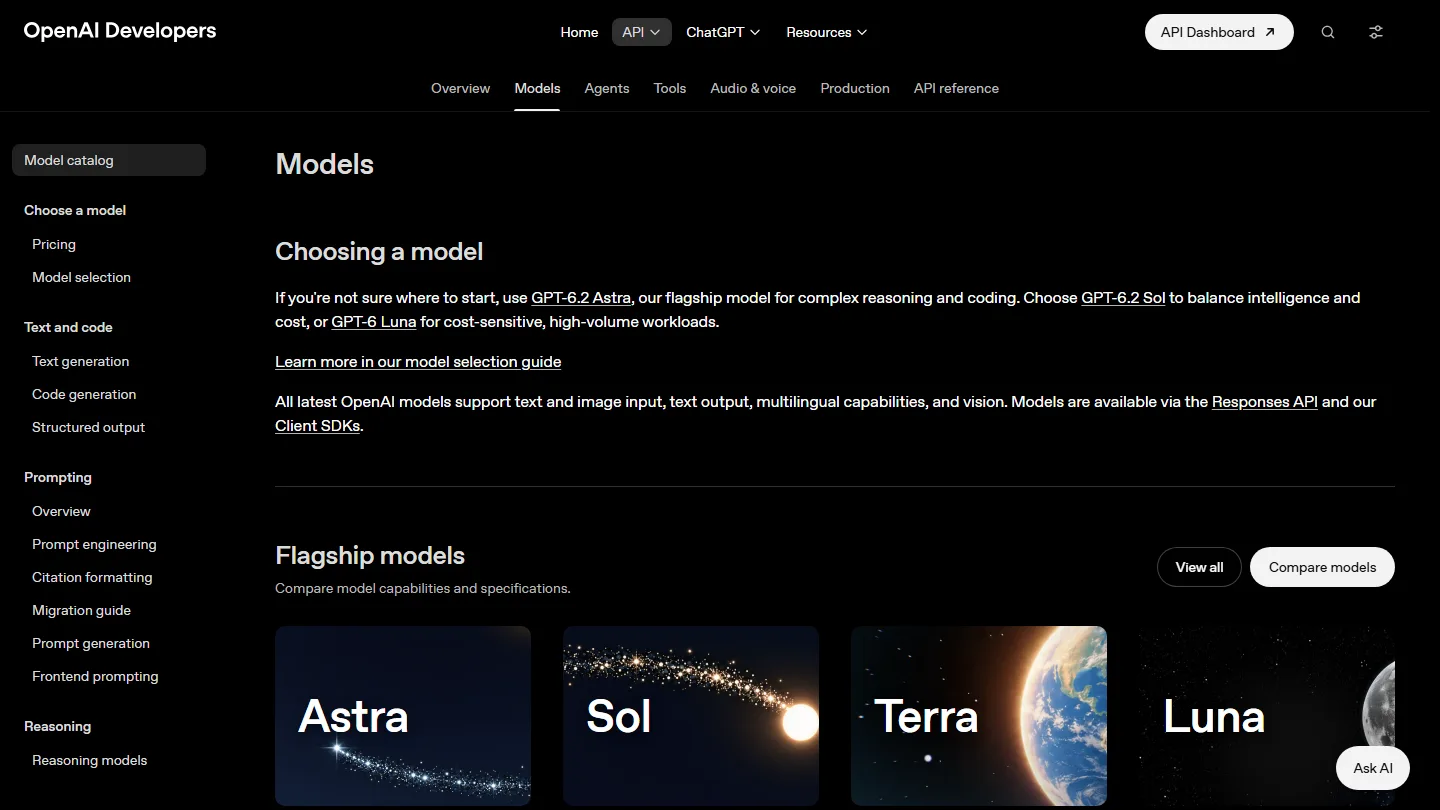
Best for: Teams that need one high-capability model for reasoning, coding, research, document analysis, and agent workflows.
GPT-6.2 Astra is the strongest all-round choice in this list. It is designed for difficult tasks that require more than a quick response, such as debugging a large codebase, analyzing long documents, planning a multi-stage project, or combining research with structured outputs.
Its main advantage is breadth. Developers can combine the model with web search, file retrieval, computer use, and custom functions, so it can act as the reasoning layer behind more capable AI agents instead of only generating chat responses.
Key Features
- Advanced reasoning with adjustable effort levels
- Text and image understanding
- Large context for long documents and codebases
- Tool calling, web search, file search, and computer-use support
- Strong fit for structured outputs and agentic workflows
Pros: Excellent all-round capability; broad developer ecosystem; useful across writing, code, research, and automation.
Cons: Higher-cost option for routine tasks; smaller models can be more economical for high-volume work.
2. Claude Fable 5.2 — Best for Complex Technical Work
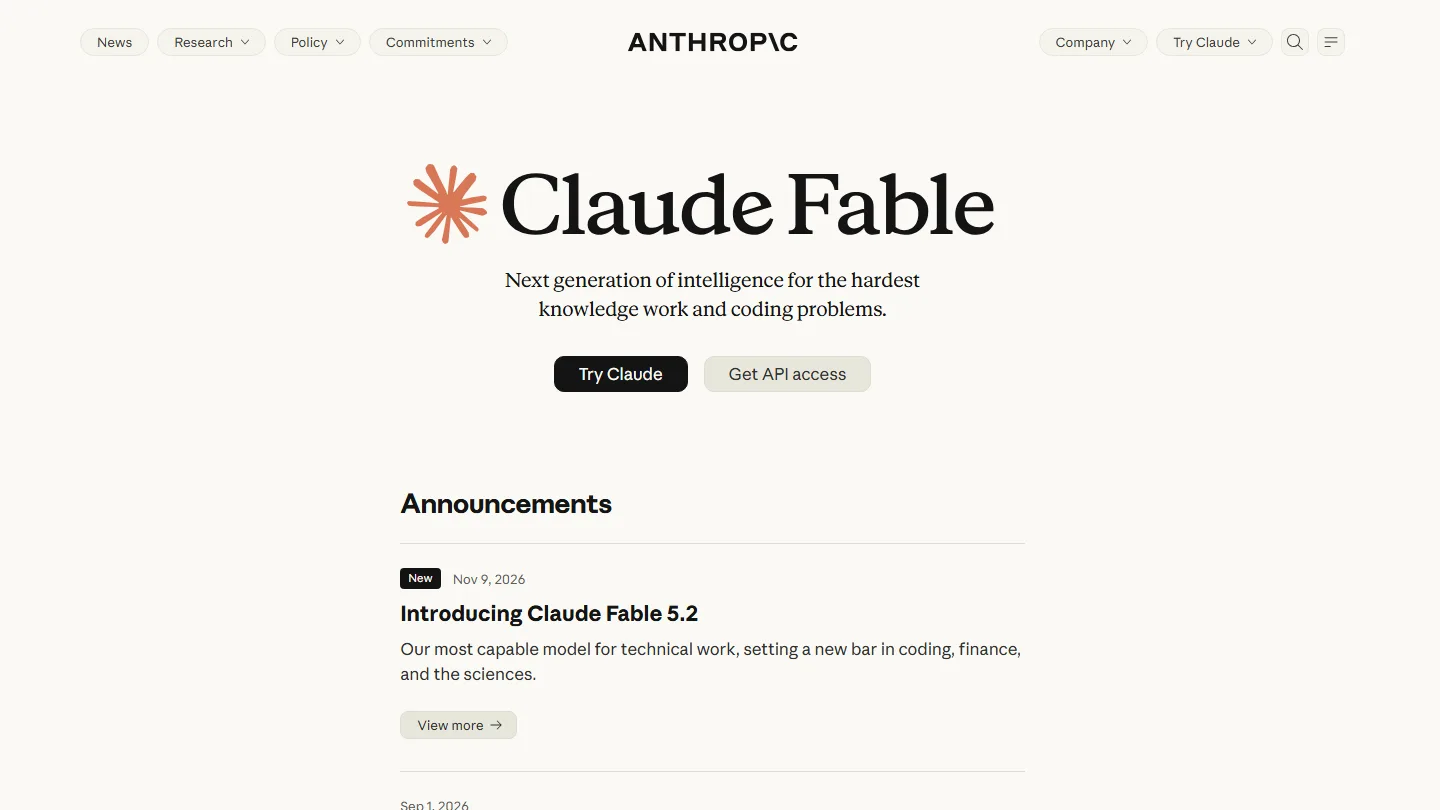
Best for: Deep coding, scientific research, finance, and difficult knowledge-work tasks.
Claude Fable 5.2 is built for tasks that need sustained reasoning rather than a fast first draft. It is especially compelling for codebase-level changes, architecture planning, technical research, complex financial analysis, and multi-step professional workflows.
For developers, its appeal is the ability to stay consistent across a demanding task, revisit assumptions, and work through difficult instructions. For research and operations teams, it is a strong option when careful analysis matters more than minimizing the cost of each prompt.
Key Features
- Advanced coding and long-horizon agent performance
- Strong reasoning for science, finance, and professional workflows
- Vision and document understanding
- Safety-focused deployment controls
- Access through Claude and supported cloud platforms
Pros: Excellent for difficult technical work; reliable iterative reasoning; useful for high-value professional tasks.
Cons: More than most everyday tasks require; safety controls can limit certain sensitive technical workflows.
3. Gemini 4 Carbon — Best for Long-Horizon Enterprise Work
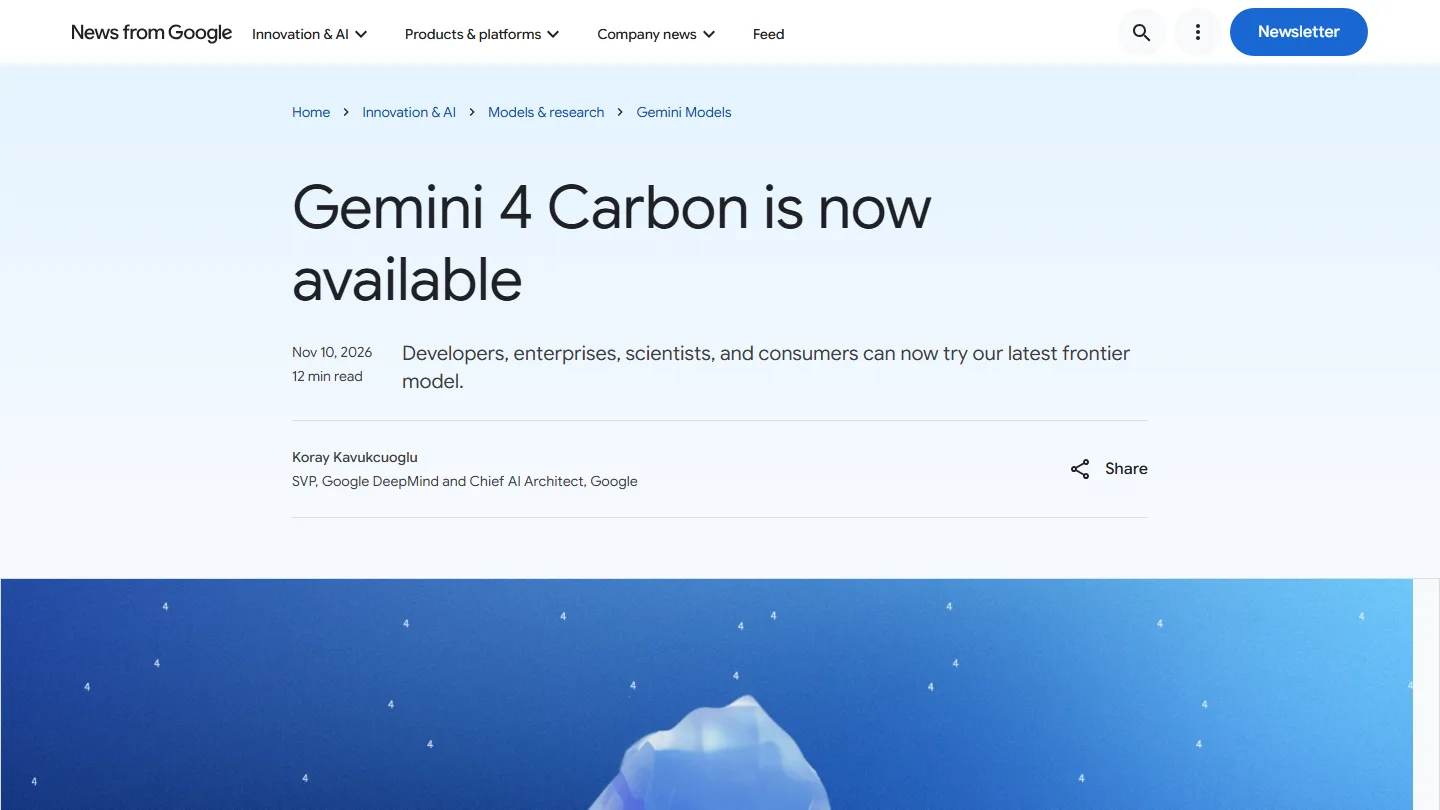
Best for: Complex enterprise knowledge work, multimodal analysis, scientific reasoning, and agent workflows.
Gemini 4 Carbon is Google’s high-end option for tasks where a model must handle a large amount of information, reason across many steps, and keep track of progress while using tools. It is well suited to large document collections, multimodal inputs, internal knowledge systems, and complex business processes.
It is particularly worth considering for organizations that already use Google Cloud or Google Workspace. Carbon is not the most economical choice for simple prompts, but it becomes more compelling when a task involves extended reasoning, large context, or tool-assisted work.
Key Features
- Reasoning for technical, scientific, and enterprise tasks
- Long-horizon agent capability
- Strong multimodal understanding
- Potential for deep Google ecosystem integration
- Suitable for document-heavy workflows
Pros: Strong for multi-stage projects; capable with documents and visual inputs; useful for Google-based organizations.
Cons: Ecosystem fit matters; can be unnecessary for lightweight everyday use.
4. Grok 4.7 — Best for Fast Coding and Knowledge Work
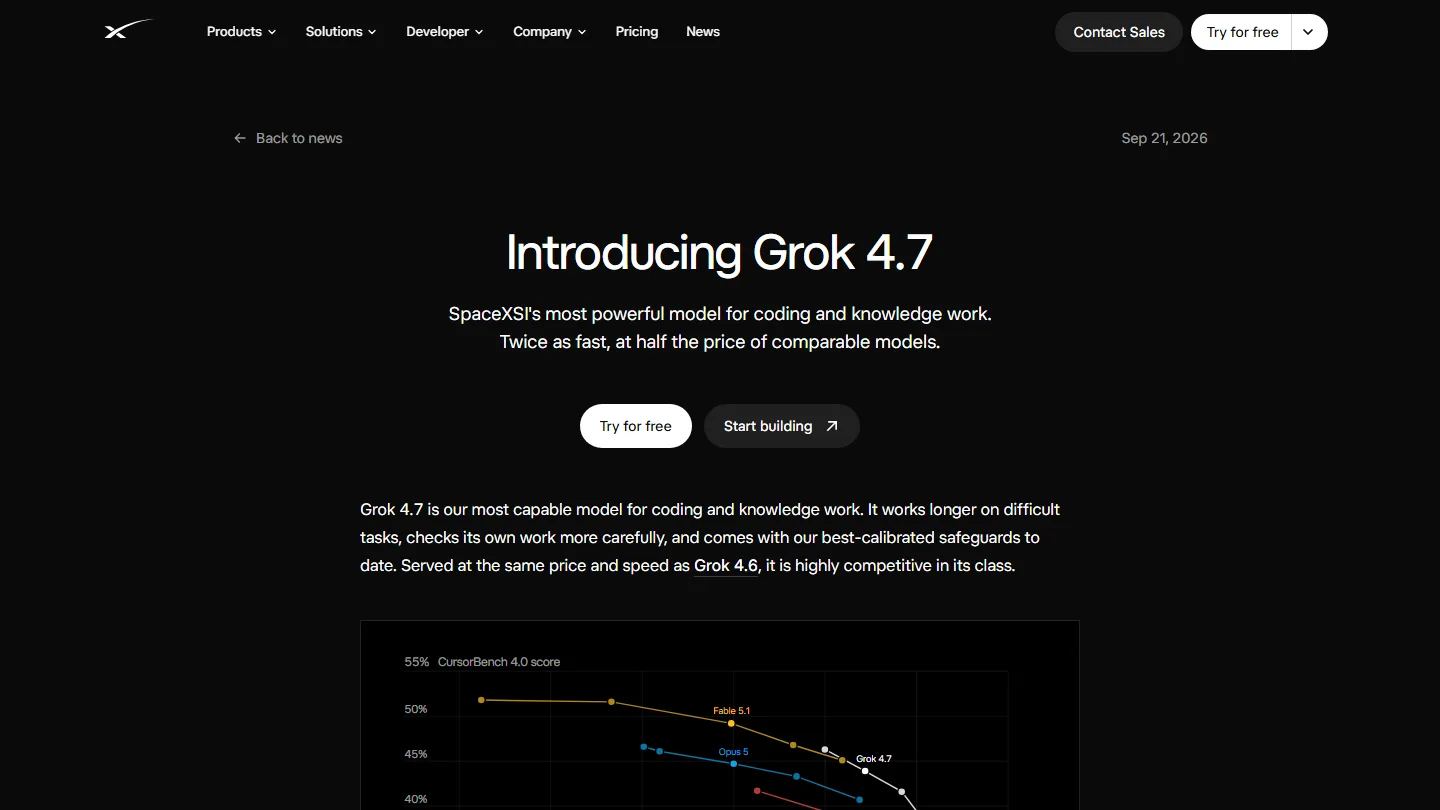
Best for: Fast technical iteration, coding, analytical tasks, and knowledge work.
Grok 4.7 is a capable model for teams that want strong technical performance without making every workflow feel slow or heavy. It is useful for code generation, debugging, technical explanations, project planning, and structured knowledge tasks that benefit from longer context.
Its practical advantage is a balance of speed and capability. It can work through difficult assignments and check its approach while remaining suitable for iterative development work.
Key Features
- Strong coding and technical reasoning
- Long-context task handling
- Self-checking behavior for harder assignments
- Useful for technical research and structured knowledge work
- Competitive speed-to-capability balance
Pros: Strong coding performance; fast iteration; useful for demanding technical workflows.
Cons: Enterprise integration requirements should be evaluated before standardizing on it.
5. Qwen4-Max — Best for Multilingual Work
Best for: Multilingual content, Chinese-language workflows, multimodal tasks, and teams serving Asian markets.
Qwen4-Max is a powerful choice for multilingual work, especially when a team needs strong Chinese-language capability alongside English, image understanding, video analysis, tool use, and structured outputs. It is designed for professional work, creative tasks, research, and agent-oriented workflows.
The wider Qwen ecosystem is also attractive because it includes models at different sizes and deployment styles. That gives technical teams more room to match a model to the job instead of relying on one expensive model tier for every request.
Key Features
- Strong multilingual understanding and generation
- Text, image, and video input support
- Tool calling and structured outputs
- Useful for content, coding, research, and automation
- Broad family of related hosted and open-weight models
Pros: Strong multilingual capability; valuable for Chinese and Asia-focused use cases; flexible ecosystem.
Cons: Regional availability and deployment options can differ.
6. DeepSeek-V4-Pro — Best for Cost-Aware AI Agents
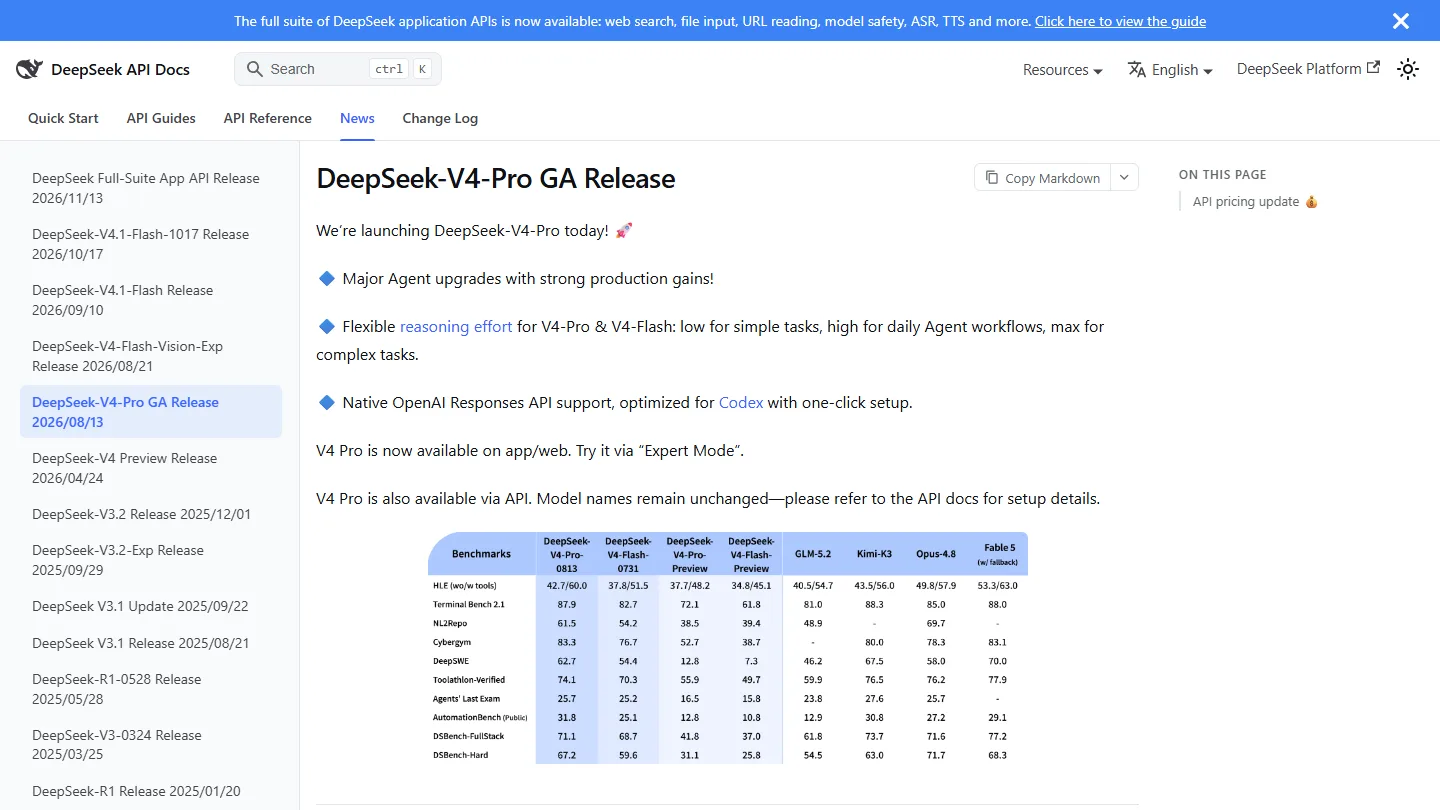
Best for: Developers building coding tools, AI agents, and high-volume workflows with cost control.
DeepSeek-V4-Pro is a strong option for technical teams that need capable reasoning while maintaining flexibility around cost. Its adjustable reasoning effort lets teams use lighter settings for routine work and reserve deeper reasoning for complex agent tasks.
It also supports Responses API-style workflows, which can reduce integration friction for developers already using agent architectures built around similar patterns. This makes it especially useful for internal automation, coding agents, and applications that need to scale.
Key Features
- Flexible reasoning effort for different task complexity
- Support for Responses API-style development
- Agent and coding workflow improvements
- Tool-oriented and search-related capabilities
- Pricing options that can support workload planning
Pros: Good balance of capability and cost control; developer-friendly; useful for production agent experiments.
Cons: Smaller enterprise ecosystem than the largest cloud providers; reliability should be tested on your own workflows.
7. Mistral Large 4 — Best for European AI Sovereignty
Best for: Organizations that prioritize deployment control, European infrastructure, multilingual work, and an open-weight strategy.
Mistral Large 4 is designed for demanding enterprise work across coding, cybersecurity, finance, law, multimodal analysis, and agentic workflows. Its strongest differentiator is not just raw capability. It is the ability to build with more control over where models run, how data is handled, and which infrastructure supports the application.
That makes it particularly relevant to regulated companies, public-sector teams, and organizations with strict data-residency requirements. It is best suited to teams prepared to make deliberate choices about infrastructure and deployment.
Key Features
- Multimodal understanding
- Large-context enterprise workflows
- Support for coding, finance, law, and security use cases
- European deployment and sovereignty positioning
- Open-weight strategy and deployment flexibility
Pros: Strong choice for data control; useful for regulated environments; flexible deployment direction.
Cons: Requires more technical planning than a simple hosted chatbot.
8. Muse Spark Open — Best Open-Weight Model for Agentic Coding
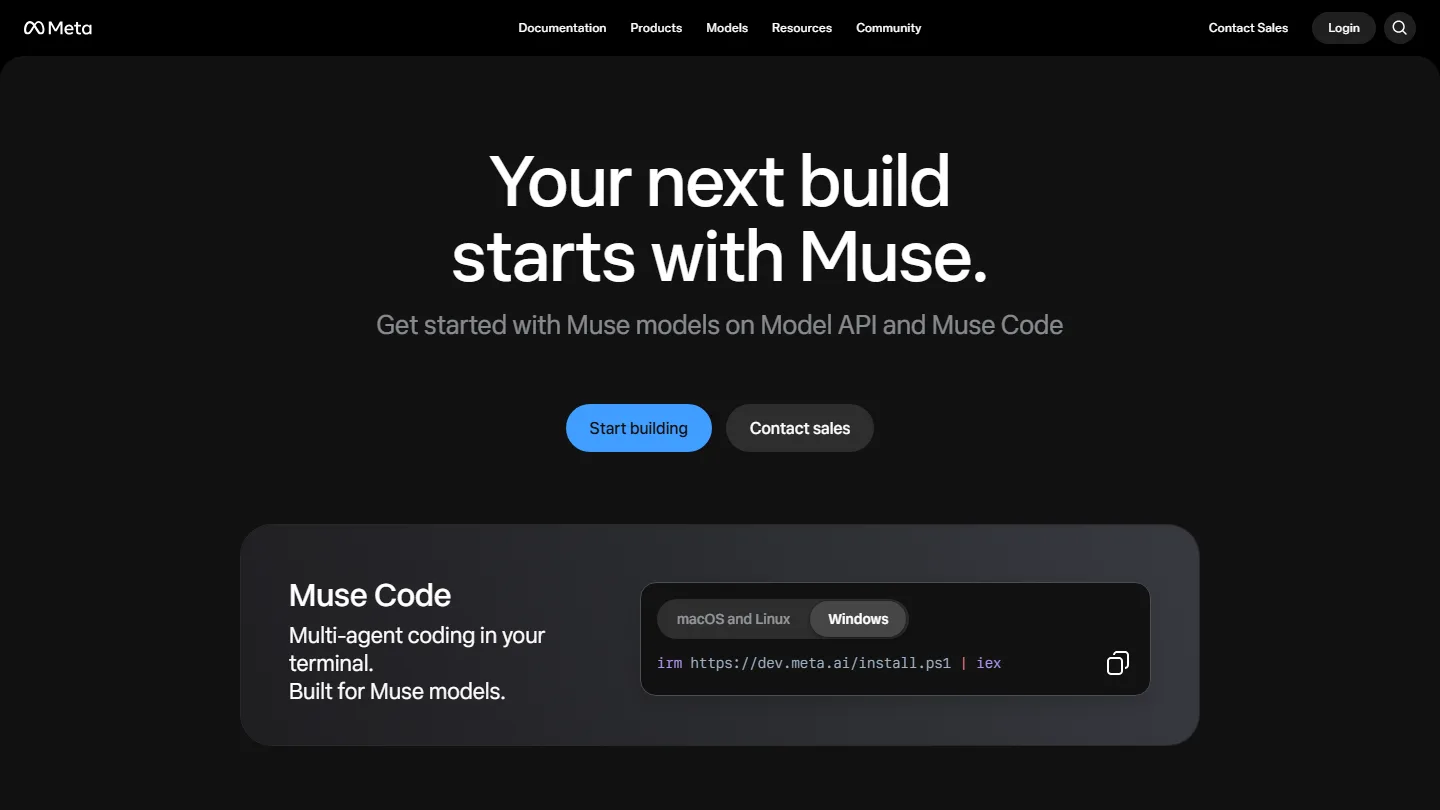
Best for: Technical teams that want to self-host, customize, or fine-tune an advanced model for coding agents.
Muse Spark Open is designed for organizations that need more control than a closed hosted API can provide. It is focused on agentic coding, which means it is most useful when paired with repository analysis, tool calling, multi-agent task division, or internal developer automation.
The tradeoff is operational. Running an advanced open-weight model well requires sufficient compute, model-serving experience, and a clear evaluation process. It is not the easiest choice for casual users, but it can be compelling for infrastructure-ready teams building private AI systems.
Key Features
- Open-weight model for advanced coding agents
- Self-hosting and customization potential
- Designed for long-horizon development workflows
- Compatible with common inference frameworks
- Useful for private development environments
Pros: Greater deployment control; useful for private coding workflows; strong customization potential.
Cons: Requires substantial compute and engineering effort to deploy and maintain.
Which AI Model Should You Choose?
- For the best overall AI model: GPT-6.2 Astra
- For advanced coding, research, and technical work: Claude Fable 5.2
- For long-running enterprise workflows: Gemini 4 Carbon
- For fast coding and knowledge work: Grok 4.7
- For multilingual and Chinese-language work: Qwen4-Max
- For cost-aware coding agents: DeepSeek-V4-Pro
- For European AI sovereignty: Mistral Large 4
- For self-hosted coding agents: Muse Spark Open
For many teams, the best setup is not one model. A practical approach is to use a frontier model for high-value work, a faster model for routine tasks, and an open-weight model where customization or deployment control matters.
How to Test an AI Model Before Choosing It
Do not select an AI model from public benchmarks alone. Create a small evaluation set based on your own work, then compare output quality, consistency, speed, cost, tool use, and editing effort.
- A real customer-support question
- A coding bug from your repository
- A document summarization task
- A spreadsheet or report analysis request
- A prompt requiring strict structured output
- A multilingual prompt, if relevant
- A task that requires tools or web research
The best AI model is the one that improves your workflow reliably, not simply the one with the most impressive public score.
FAQ
What is the best AI model in 2026?
GPT-6.2 Astra is the strongest general-purpose choice for reasoning, coding, tool use, and agent workflows. However, Claude Fable 5.2 can be a better fit for deep technical work, while Gemini 4 Carbon is particularly strong for complex enterprise workflows.
Which AI model is best for coding?
Claude Fable 5.2, GPT-6.2 Astra, Grok 4.7, DeepSeek-V4-Pro, and Muse Spark Open are all strong coding choices. The best option depends on whether you prioritize capability, speed, price, or self-hosting.
Are open-weight AI models as good as closed models?
Some open-weight models are highly capable, especially for coding, multilingual work, and customized deployments. Hosted frontier models may still be easier to integrate and operate, particularly when you need mature tools and enterprise support.
Should I use one AI model for every task?
Usually not. Many teams route simple tasks to faster, lower-cost models and reserve frontier models for complex reasoning, research, code, and high-value business work.
Can AI models be trusted with sensitive business data?
Only after reviewing the provider’s data handling, retention, access controls, compliance options, and deployment methods. For sensitive workloads, consider enterprise plans, private cloud options, or self-hosted open-weight models.
Final Thoughts
The best AI models in 2026 are increasingly specialized. GPT-6.2 Astra is the most balanced pick for demanding all-round work, Claude Fable 5.2 is excellent for technical depth, Gemini 4 Carbon is built for long-running enterprise tasks, and the open-weight options on this list give technical teams more deployment freedom. Start with the model that best matches your highest-value workflow, then test it against real tasks before scaling.
Latest Reviews
Gemini 4 Hydrogen Review: Coding, 1M Context, API Pricing and NSFW Limits

6 Best Image Translators in 2026: Translate Photos and Designs

Best Free Antivirus Software in 2026: 5 Reliable Options for Safer Devices
Best Free Antivirus Software in 2026: 5 Reliable Options for Safer Devices
MAI Image 2.7 and Flash Review: Editing, Canvas, Pricing and NSFW Limits
Hy4 Flash Review: Local Setup, 1M Context, Hardware, API Costs and NSFW Limits