
Table of Contents
- What Are AEO Tools?
- AEO vs SEO vs GEO
- Why AEO Tools Matter
- Quick Comparison
- 1. Profound
- 2. Peec AI
- 3. Scrunch AI
- 4. Otterly AI
- 5. Semrush AI Search Tools
- 6. Ahrefs Brand Radar
- 7. Goodie AI
- 8. AthenaHQ
- 9. AlsoAsked
- 10. Google Search Console and Analytics
- How to Choose the Right AEO Tool
- AEO Optimization Checklist
- FAQ
What Are AEO Tools?
AEO tools help marketers, SEO teams, founders, and content teams understand how their brand appears in AI-generated answers. Traditional SEO focuses on ranking in search engine results pages. AEO focuses on whether answer engines mention, cite, summarize, recommend, or ignore your brand.
For example, a user may ask an AI assistant, “What are the best project management tools for agencies?” or “Which AI PDF translator should I use?” In that moment, the answer engine may list products, cite sources, summarize comparisons, or recommend brands. AEO tools help you track and improve that visibility.
Common AEO tool features include:
- Tracking brand mentions in AI answers
- Monitoring citations and source links
- Comparing your visibility against competitors
- Checking which prompts trigger your brand
- Measuring AI share of voice
- Finding content gaps for answer engines
- Monitoring sentiment and accuracy
- Identifying pages that AI systems cite
Because AI search is changing fast, AEO is still an emerging category. But the direction is clear: brands need to know how they appear in AI-generated answers, not only in blue-link search results.
AEO vs SEO vs GEO
AEO, SEO, and GEO are related, but they are not exactly the same.
SEO means Search Engine Optimization. It focuses on improving rankings in traditional search engines.
AEO means Answer Engine Optimization. It focuses on getting your content, brand, or product included in direct answers.
GEO means Generative Engine Optimization. It usually refers to optimizing for generative AI search experiences and AI-generated responses.
In practice, these terms overlap. A strong AEO strategy still needs good SEO foundations: useful content, clear structure, topical authority, accurate facts, fast pages, strong internal linking, and trustworthy sources. But AEO also adds new questions:
- Does AI mention your brand?
- Does it cite your website?
- Does it describe your product accurately?
- Which competitors appear more often?
- Which prompts include you?
- Which content formats are more likely to be cited?
AEO tools help answer those questions.
Why AEO Tools Matter
Search behavior is shifting. Users increasingly ask AI assistants for recommendations, comparisons, explanations, and buying advice. If your brand does not appear in those answers, you may lose visibility even if your traditional SEO traffic looks stable.
AEO tools matter because they help teams:
- Understand AI answer visibility
- Track brand mentions in ChatGPT, Perplexity, Gemini, and other AI platforms
- Monitor whether AI answers cite their content
- Find competitor visibility gaps
- Detect inaccurate AI descriptions
- Improve content so it is easier for AI systems to summarize
- Measure the impact of content updates
- Build a strategy beyond traditional rankings
This is especially important for SaaS, ecommerce, financial services, healthcare, education, travel, software reviews, and any category where users ask AI for recommendations.
Quick Comparison
| Tool | Best For | Main Strength | Possible Limitation |
|---|---|---|---|
| Profound | Enterprise AI visibility | AI search analytics, brand visibility, and answer tracking | May be more advanced than small teams need |
| Peec AI | AI search monitoring | Visibility tracking across answer engines | New category, workflow may require learning |
| Scrunch AI | Brand performance in AI search | AI search presence, competitive analysis, and monitoring | Best for teams ready to invest in AEO |
| Otterly AI | AI answer monitoring | Tracks prompts, citations, and brand mentions | Needs careful prompt setup |
| Semrush AI Search Tools | SEO teams adding AI visibility | Familiar SEO ecosystem plus AI search insights | Best for users already using Semrush |
| Ahrefs Brand Radar | Brand and AI mention tracking | Brand visibility, citations, and competitor signals | Best for users already using Ahrefs |
| Goodie AI | AEO and AI visibility | Brand optimization for AI search | Category still evolving |
| AthenaHQ | AI visibility and brand intelligence | Monitors AI answers and competitive visibility | May suit growth and brand teams more than beginners |
| AlsoAsked | Question research | Finds question clusters and search intent | Not a full AEO tracking platform |
| Search Console and Analytics | SEO baseline tracking | Free first-party performance data | Does not directly show ChatGPT or AI answer mentions |
1. Profound
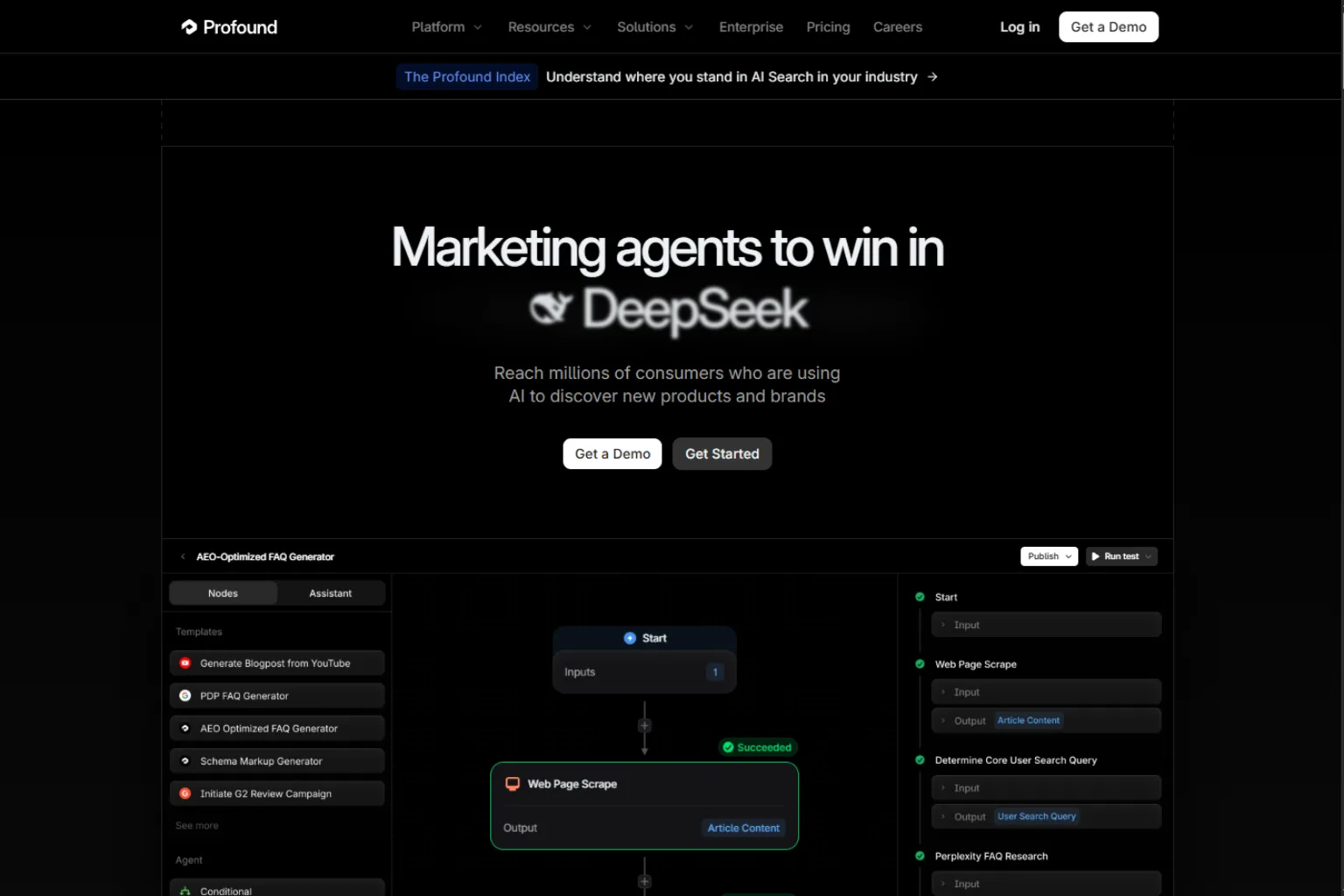
Profound is one of the most discussed AEO tools for enterprise AI visibility. It helps teams understand how their brand appears in AI search and answer engines, compare against competitors, and track answer-level visibility over time.
It is especially useful for brands that care about AI share of voice, answer accuracy, competitive visibility, and executive-level reporting. For larger companies, this type of visibility is becoming important because AI assistants can influence research and buying decisions.
Profound is best for:
- Enterprise AEO
- AI search visibility tracking
- Competitive answer monitoring
- Brand mention analysis
- AI share of voice
- Marketing and SEO teams
Choose Profound if AI visibility is becoming a serious part of your marketing strategy.
2. Peec AI
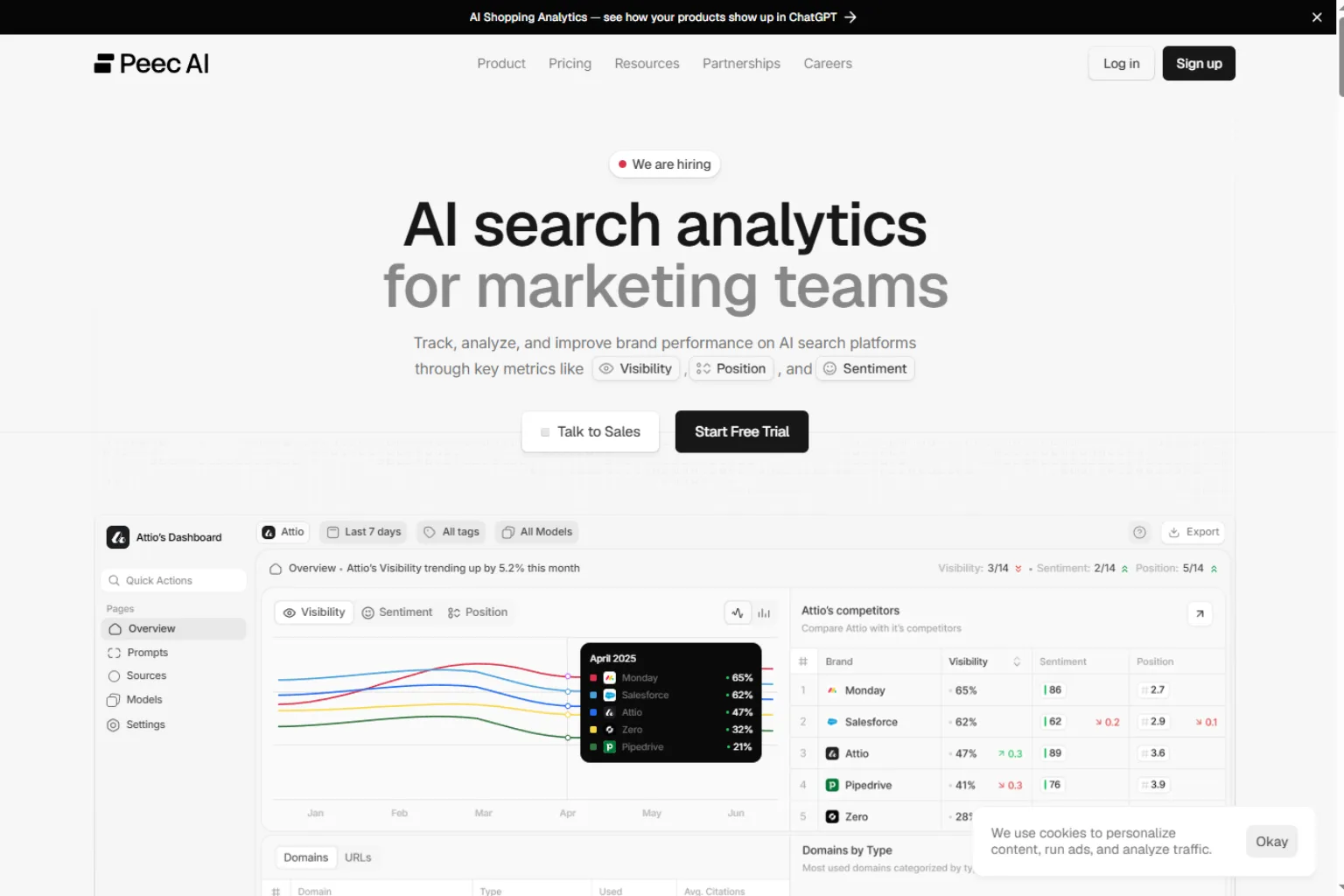
Peec AI focuses on tracking brand visibility in AI search. It helps teams see how often they appear in AI answers, which prompts include them, and how competitors perform across answer engines.
This is useful because AI search visibility is not the same as Google ranking. A brand may rank well in traditional search but still appear less often in AI-generated recommendations.
Peec AI is best for:
- AI search monitoring
- Prompt tracking
- Competitor comparison
- Brand visibility reporting
- AEO strategy
- Growth teams
Choose Peec AI if you want a focused tool for monitoring brand presence in AI answers.
3. Scrunch AI
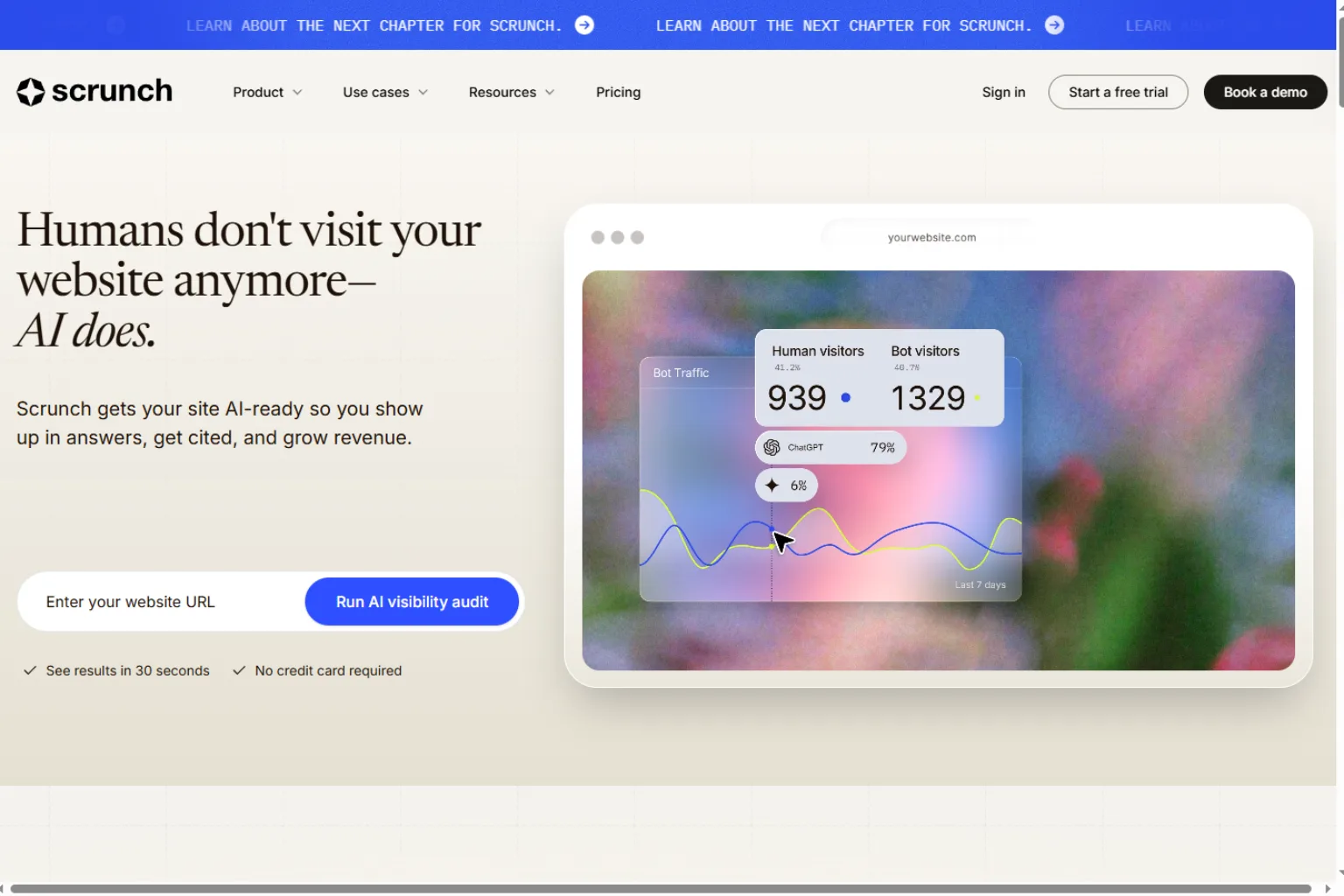
Scrunch AI is designed to help brands understand and improve their performance in AI search. It can track AI visibility, analyze competitors, monitor brand mentions, and help teams identify where their content may need improvement.
This makes it useful for companies that want to treat AI search as a measurable channel instead of a vague trend.
Scrunch AI is best for:
- AI search performance
- Brand monitoring
- Competitor visibility
- AEO reporting
- Marketing strategy
- Content optimization
Choose Scrunch AI if you want to monitor and improve your brand’s presence across AI answer engines.
4. Otterly AI
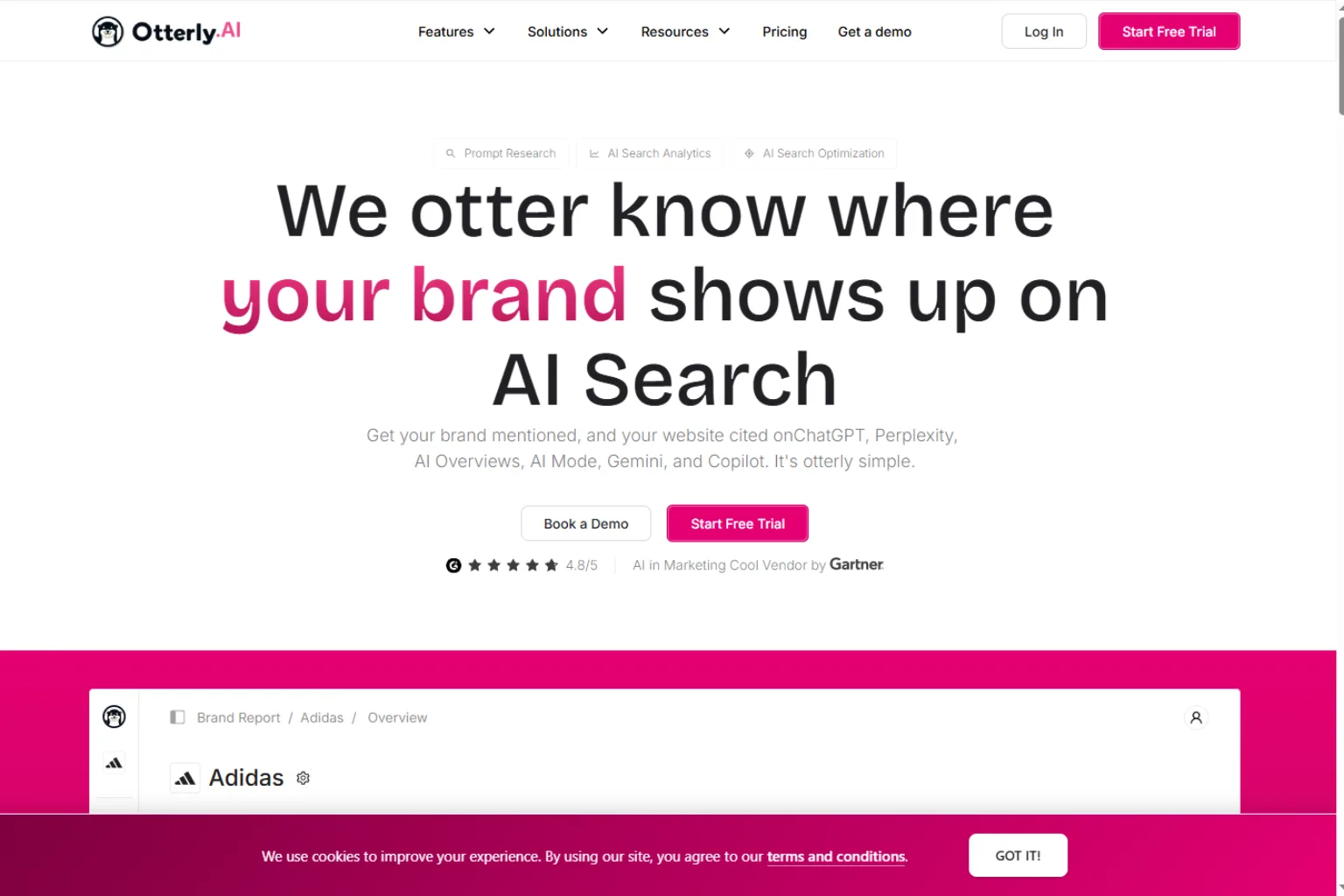
Otterly AI helps teams monitor how brands, competitors, and sources appear in AI-generated answers. It can be useful for tracking prompts, citations, and brand mentions across AI search experiences.
Its value comes from turning AI answer visibility into something you can measure. Instead of manually asking the same prompts again and again, teams can track changes over time.
Otterly AI is best for:
- AI answer monitoring
- Prompt tracking
- Citation tracking
- Brand mentions
- Competitor comparison
- Small and mid-sized marketing teams
Choose Otterly AI if you want a practical way to monitor AI search visibility without building your own tracking system.
5. Semrush AI Search Tools
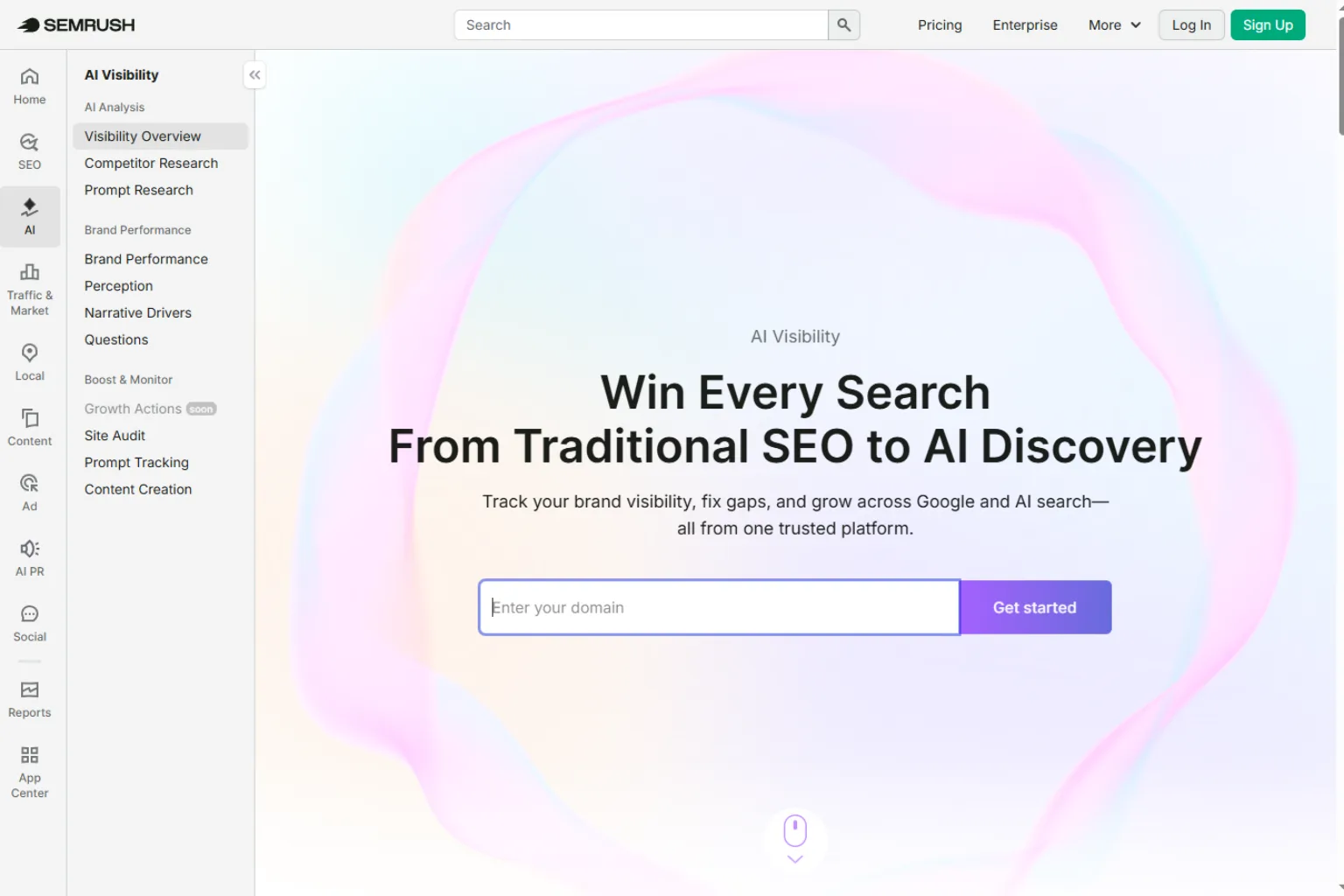
Semrush is already a major SEO platform, and its AI search visibility features are useful for teams that want to connect traditional SEO with AEO. This matters because most AEO work still depends on strong SEO foundations.
Semrush can be helpful for keyword research, competitor research, content strategy, and AI-related visibility tracking. If your team already uses Semrush, adding AEO work inside the same workflow may be easier than starting from a separate platform.
Semrush AI Search Tools are best for:
- SEO teams
- Keyword and competitor research
- AI visibility add-ons
- Content gap analysis
- Traditional SEO plus AEO
- Reporting workflows
Choose Semrush if you want to connect AEO work to a broader SEO toolkit.
6. Ahrefs Brand Radar
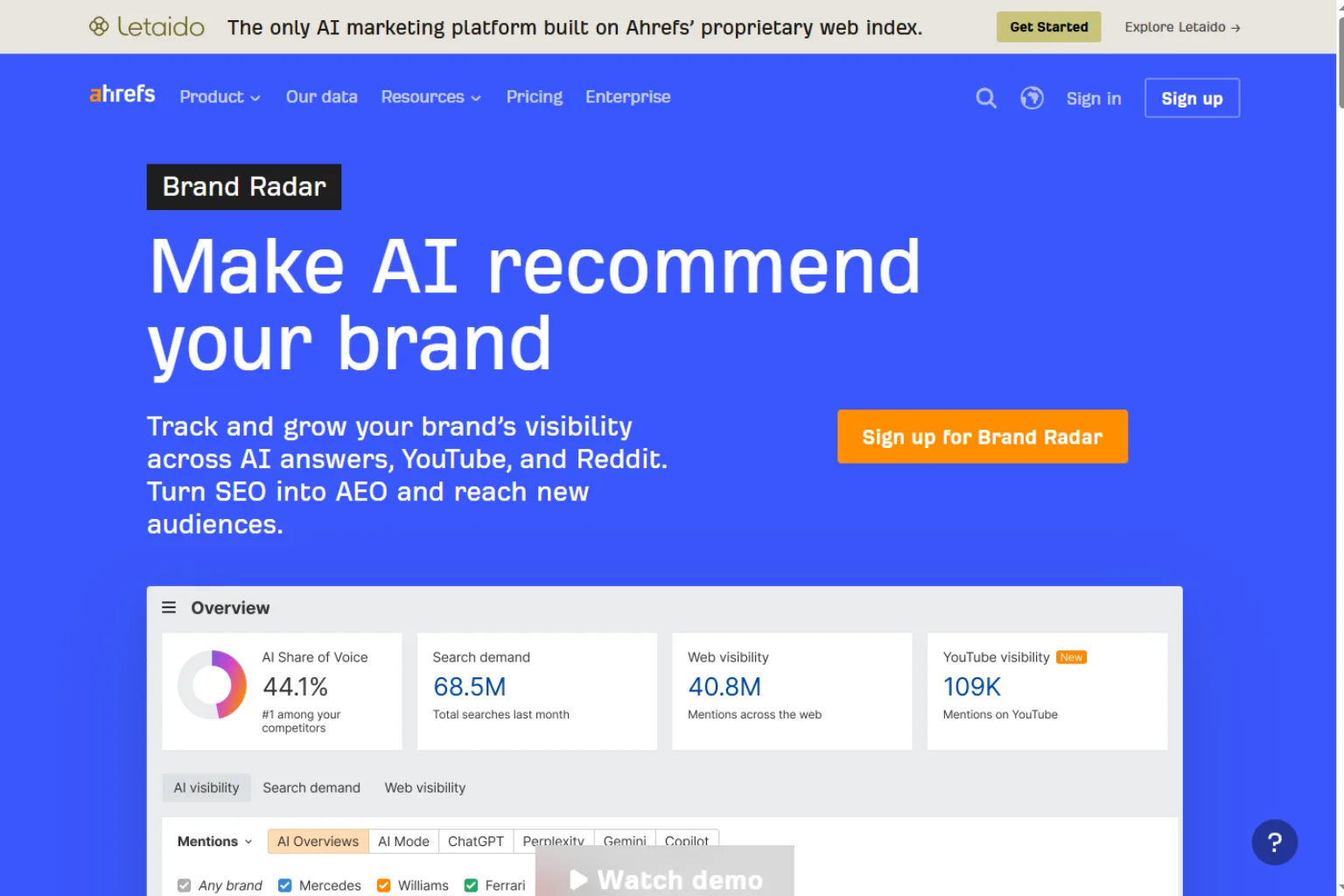
Ahrefs Brand Radar is useful for tracking brand visibility, mentions, and AI search signals inside a broader SEO and content research platform. For teams already using Ahrefs, it can help connect brand monitoring with competitor research and content strategy.
Ahrefs is strong for backlink data, content research, keyword tracking, and competitive SEO analysis. Brand Radar adds another layer for understanding how brands appear across the web and AI-driven discovery.
Ahrefs Brand Radar is best for:
- Brand mention tracking
- SEO and content teams
- Competitor analysis
- Citation signals
- AI visibility research
- Teams already using Ahrefs
Choose Ahrefs if you want brand and AI visibility insights alongside strong SEO data.
7. Goodie AI
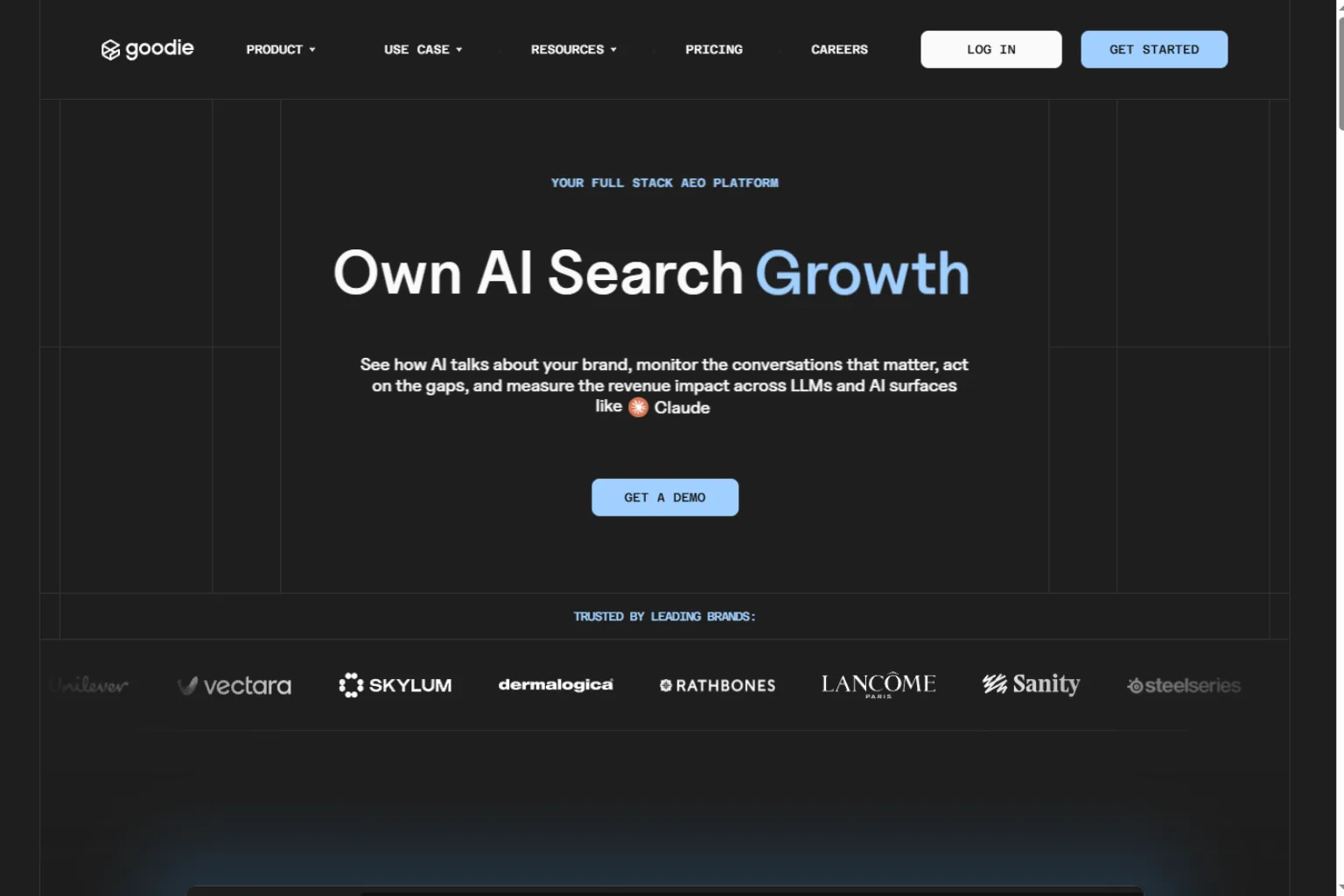
Goodie AI is built around AEO and AI search visibility. It helps brands understand how they appear in AI answers and improve their presence in answer engines.
This type of tool is useful for businesses that want to move beyond traditional keyword ranking and start measuring AI-driven discovery. It can help identify where a brand is mentioned, where it is missing, and what content may need improvement.
Goodie AI is best for:
- AEO strategy
- AI search optimization
- Brand visibility
- Content improvement
- AI answer tracking
- Marketing teams testing AEO
Choose Goodie AI if you want a tool focused specifically on the AEO category.
8. AthenaHQ
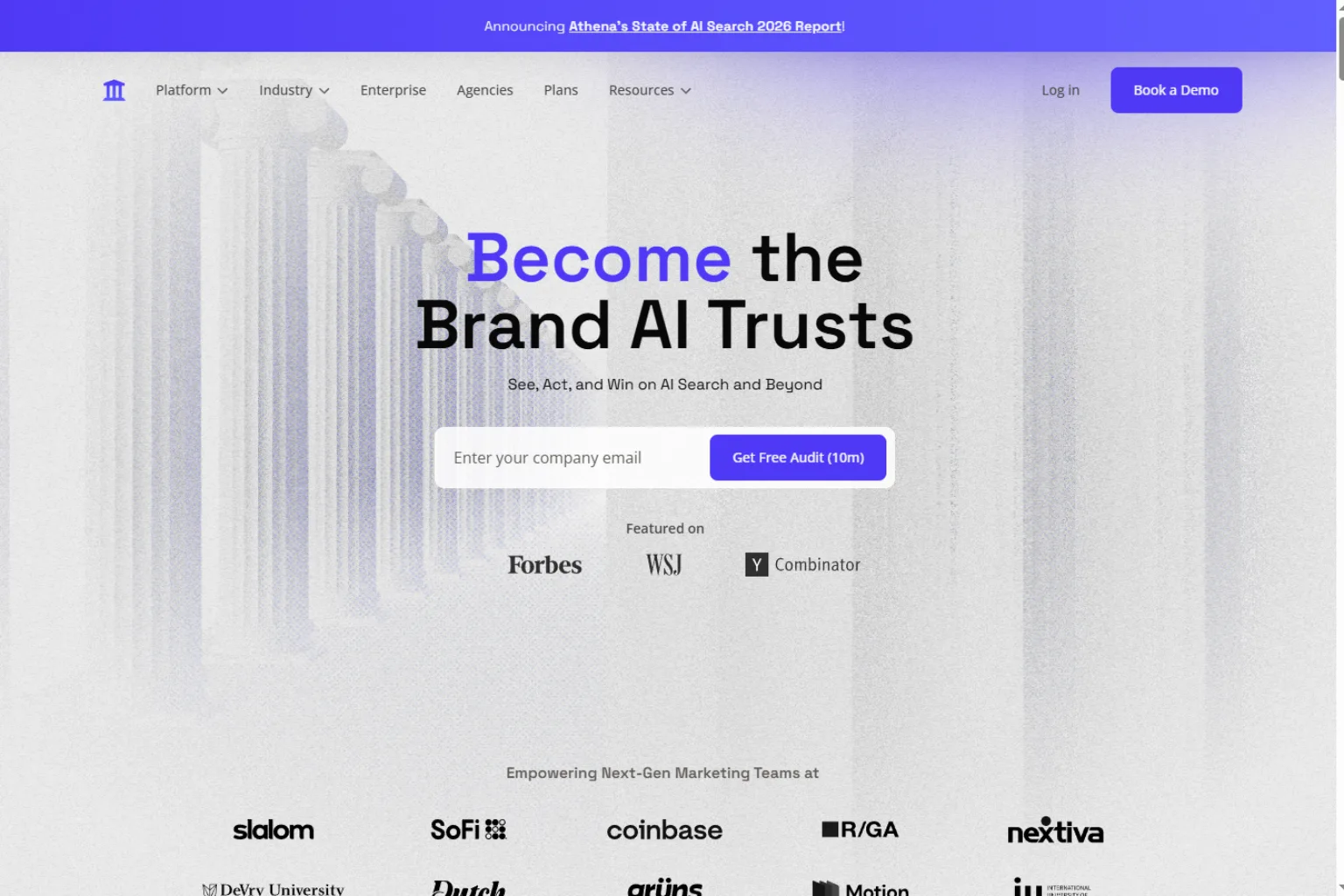
AthenaHQ is an AI visibility and brand intelligence tool for teams that want to understand how their brand appears inside AI-generated answers. It can be useful for monitoring answer engine presence, competitive visibility, and brand positioning.
For growth and brand teams, this type of visibility can help shape content strategy and messaging. If AI systems describe your product inaccurately or ignore your brand in key prompts, you need to know.
AthenaHQ is best for:
- AI visibility monitoring
- Brand intelligence
- Competitive tracking
- Prompt-level insights
- Growth marketing
- AEO reporting
Choose AthenaHQ if you want brand-level intelligence for AI search and answer engines.
9. AlsoAsked
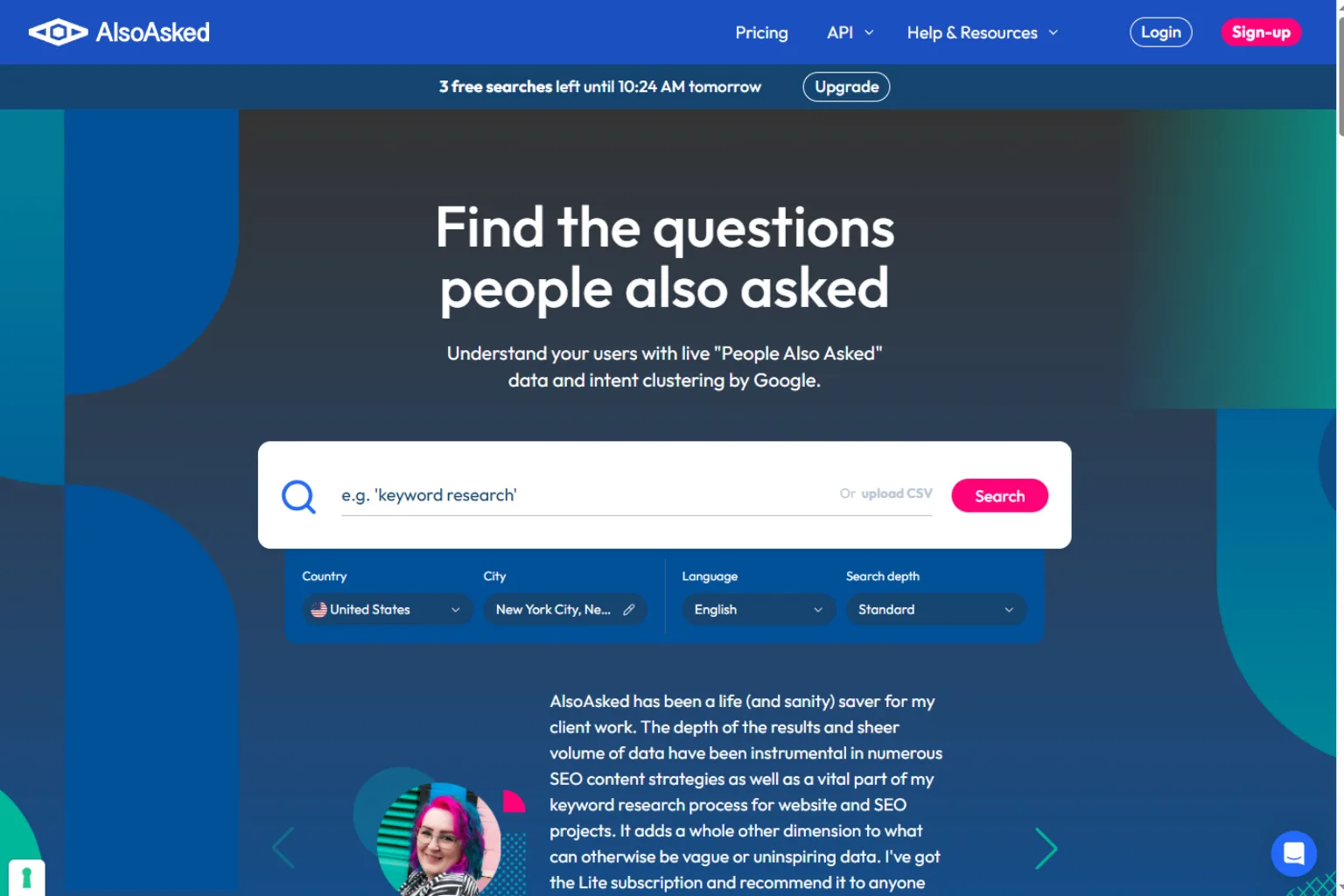
AlsoAsked is not a full AEO platform, but it is useful for AEO research because it helps identify question clusters. Answer engines are driven heavily by questions, comparisons, and conversational search intent.
By finding related questions, marketers can create content that is easier for AI systems to understand and summarize. This makes AlsoAsked useful for planning FAQ sections, comparison articles, how-to guides, and topic clusters.
AlsoAsked is best for:
- Question research
- FAQ planning
- Topic clusters
- Content structure
- Search intent research
- Early AEO content planning
Choose AlsoAsked if you need a simple research tool to understand the questions your content should answer.
10. Google Search Console and Analytics
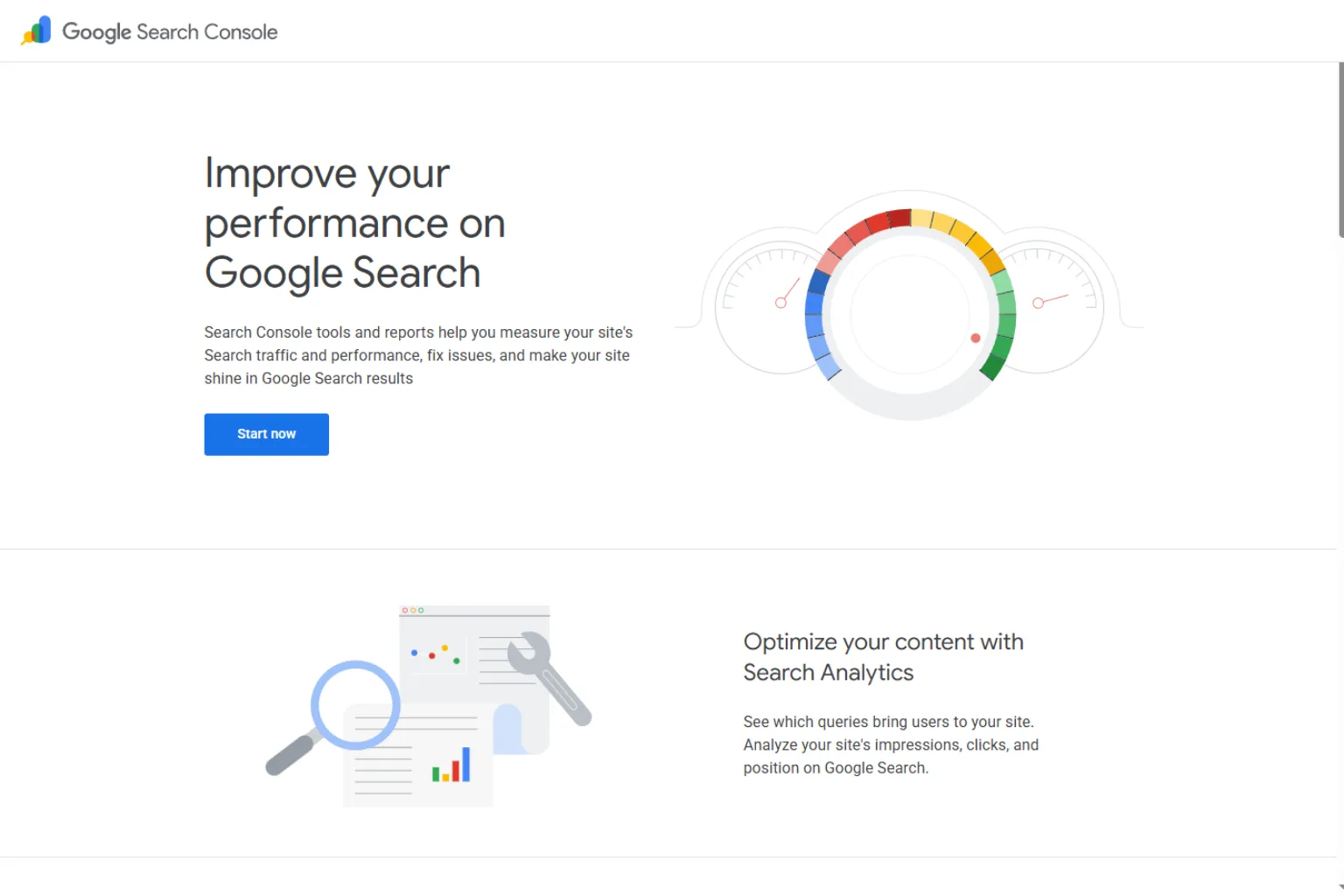
Google Search Console and analytics tools are not AEO tools in the strict sense, but they are still important. AEO does not replace SEO. If your content is not discoverable, trusted, structured, and useful, it is less likely to be cited or summarized by AI systems.
Use Search Console and analytics to understand which pages already perform well, which queries drive traffic, which pages deserve updates, and whether AEO-focused content also supports traditional search.
Search Console and analytics are best for:
- SEO baseline tracking
- Content performance
- Query research
- Page improvement
- Measuring traffic impact
- Supporting AEO strategy
Choose these tools as your foundation, then add dedicated AEO tools for AI answer tracking.
How to Choose the Right AEO Tool
The best AEO tool depends on your maturity level.
Choose Profound, Peec AI, Scrunch AI, Otterly AI, Goodie AI, or AthenaHQ if you want dedicated AI search visibility tracking. Choose Semrush or Ahrefs if you want AEO insights inside a broader SEO platform. Choose AlsoAsked if you need question research and content planning. Use Search Console and analytics as the baseline for traditional SEO performance.
Before choosing, ask:
- Which AI platforms do I need to monitor?
- Do I need brand mentions, citations, or competitor comparisons?
- Do I care about ChatGPT, Perplexity, Gemini, Claude, Copilot, or all of them?
- Do I need prompt tracking over time?
- Do I need reporting for executives or clients?
- Do I already use Semrush or Ahrefs?
- Do I need content recommendations or only monitoring?
- How often will I update content based on findings?
AEO Optimization Checklist
AEO tools can show visibility problems, but content still needs to be improved manually.
Use this checklist:
- Identify high-value questions your audience asks AI tools.
- Create clear pages that answer those questions directly.
- Add comparison tables, FAQs, definitions, and use-case sections.
- Keep product and brand information accurate and consistent.
- Update old pages with current features, pricing notes, and examples.
- Build topical authority around a category, not only one article.
- Use clear headings that match natural questions.
- Include original insights, data, examples, or product details.
- Monitor whether AI answers mention your brand and competitors.
- Track whether AI systems cite your website or only third-party sources.
- Fix inaccurate or outdated information across your owned content.
- Repeat monitoring after content updates.
AEO is not a one-time task. It is an ongoing content visibility workflow.
FAQ
What are AEO tools?
AEO tools help brands monitor and improve visibility in AI-generated answers. They can track brand mentions, citations, competitor visibility, prompt results, and AI search performance.
What does AEO mean?
AEO means Answer Engine Optimization. It focuses on improving how a brand, website, or product appears in direct answers from AI assistants and answer engines.
Is AEO different from SEO?
Yes, but they overlap. SEO focuses on traditional search rankings, while AEO focuses on being included, cited, or recommended in AI-generated answers. Strong SEO content often supports AEO.
What is the difference between AEO and GEO?
AEO usually means optimizing for answer engines, while GEO means Generative Engine Optimization. In practice, both terms often refer to improving visibility in AI-generated search and answer experiences.
Do I need AEO tools if I already use SEO tools?
If AI search visibility matters to your business, yes. SEO tools show traditional search performance, while AEO tools help show whether AI assistants mention, cite, or recommend your brand.
Which AEO tool is best?
The best AEO tool depends on your needs. Profound, Peec AI, Scrunch AI, Otterly AI, Goodie AI, and AthenaHQ are focused on AI visibility. Semrush and Ahrefs are useful if you want AI insights inside broader SEO workflows.
Can AEO tools improve rankings?
AEO tools do not magically improve rankings. They help you monitor visibility, find gaps, and guide content updates. The improvement comes from better content, clearer structure, stronger authority, and ongoing optimization.
Who should use AEO tools?
SEO teams, SaaS companies, ecommerce brands, agencies, content teams, product marketers, PR teams, and businesses that rely on online recommendations can benefit from AEO tools.
Final Thoughts
AEO tools are becoming important because users increasingly ask AI assistants for recommendations, comparisons, and answers. Traditional SEO still matters, but it is no longer the whole picture.
If you want dedicated AI visibility tracking, start with tools like Profound, Peec AI, Scrunch AI, Otterly AI, Goodie AI, or AthenaHQ. If you want to connect AEO with broader SEO work, use Semrush or Ahrefs. For question research, AlsoAsked is useful. For baseline performance, keep using Search Console and analytics.
The best AEO strategy is not just tracking mentions. It is creating clear, trustworthy, useful content that answer engines can understand, cite, and recommend.
Related
AI Humanizer: Making AI-Generated Text Sound More Human (2026 Guide)

Best AI Customer Service Tools for Faster Support
Best AI PDF Readers to Summarize, Search, and Chat With Documents
The 8 Best Speech to Text AI Tools in 2026: Features, Reviews, and Real-World Use Cases
Top 7 YouTube Video Free Downloader Tools
How to Manage Email Overload with AI: Prioritize, Delegate and Follow Up
