
Table of Contents
- What Are AI Customer Service Tools?
- Why Use AI for Customer Service?
- Quick Comparison
- 1. Zendesk AI
- 2. Intercom Fin
- 3. Freshdesk Freddy AI
- 4. Ada
- 5. Gorgias
- 6. Tidio
- 7. Help Scout
- 8. HubSpot Service Hub
- 9. Salesforce Service Cloud AI
- 10. Kustomer
- How to Choose the Right AI Customer Service Tool
- AI Customer Service Prompt Examples
- Mistakes to Avoid
- FAQ
What Are AI Customer Service Tools?
AI customer service tools are software platforms that help businesses answer customer questions, automate support tasks, organize tickets, assist agents, and improve response speed. They can work through live chat, email, help desks, knowledge bases, social messaging, and support portals.
Modern AI customer service software usually includes features such as AI chatbots, ticket triage, suggested replies, knowledge base search, sentiment detection, customer intent recognition, automated routing, and human handoff. Some tools focus on full help desk operations, while others focus on ecommerce support, live chat, or AI agents.
The best AI customer service tools do not simply replace support teams. They help teams handle repetitive questions faster, give agents better context, and make it easier for customers to get answers without waiting.
Why Use AI for Customer Service?
Customer service teams often deal with the same questions again and again: shipping status, refunds, order changes, account access, billing issues, product setup, troubleshooting, and pricing. AI can handle many of these repeatable tasks, especially when the answer already exists in a knowledge base or help center.
AI customer service tools can help businesses:
- Answer common questions instantly
- Reduce repetitive tickets
- Route urgent or complex issues to the right team
- Suggest replies for support agents
- Summarize long conversations
- Detect sentiment or unhappy customers
- Improve response time outside business hours
- Support customers across chat, email, and messaging channels
- Collect more useful context before human handoff
The goal is not to make support feel robotic. The goal is to resolve simple issues faster and give human agents more time for complex, emotional, or high-value conversations.
Quick Comparison
| Tool | Best For | Main Strength | Possible Limitation |
|---|---|---|---|
| Zendesk AI | Support teams and help desks | Ticketing, agent assistance, help center automation | Best inside Zendesk ecosystem |
| Intercom Fin | SaaS customer support | AI support agent, inbox, and knowledge base answers | Best for Intercom users |
| Freshdesk Freddy AI | Omnichannel help desk | AI agent assistance, ticket automation, support workflows | Setup depends on existing Freshworks workflow |
| Ada | AI-first customer service automation | Automated customer resolutions and enterprise workflows | More advanced than simple chatbot tools |
| Gorgias | Ecommerce support | Shopify-focused support, order context, automation | Best for ecommerce teams |
| Tidio | Small businesses and ecommerce | Live chat, AI chatbot, and sales support | Less enterprise-focused |
| Help Scout | Human-centered support teams | Shared inbox, AI assist, and knowledge base support | Less automation-heavy than enterprise tools |
| HubSpot Service Hub | CRM-connected support | Customer context, tickets, chat, and CRM workflows | Best for HubSpot users |
| Salesforce Service Cloud AI | Enterprise service operations | CRM, AI, automation, and large support teams | Can be complex for small teams |
| Kustomer | Omnichannel customer service | Timeline-based customer view and AI support | Best for teams needing unified customer history |
1. Zendesk AI
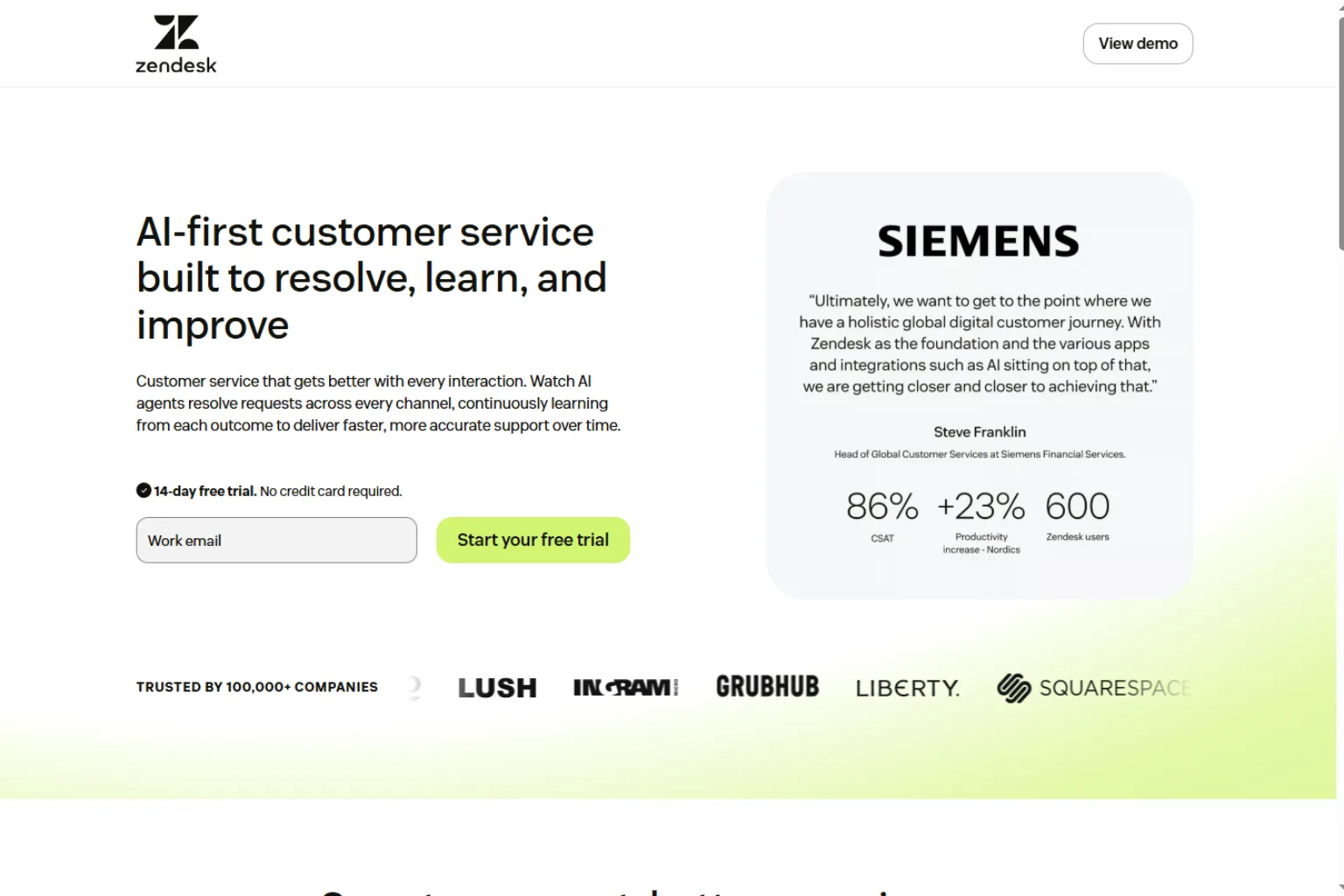
Zendesk AI is one of the strongest AI customer service tools for businesses that need a full help desk system. It can support ticket management, help center automation, agent assistance, AI-powered replies, routing, and customer service analytics.
Zendesk is especially useful for teams that already have a large volume of customer conversations. Its value comes from combining AI with a mature support platform rather than acting as a standalone chatbot.
Zendesk AI is best for:
- Help desk teams
- Ticket management
- Support automation
- Agent assistance
- Knowledge base workflows
- Customer service analytics
Choose Zendesk AI if your team needs a full customer service platform with AI built into the support workflow.
2. Intercom Fin
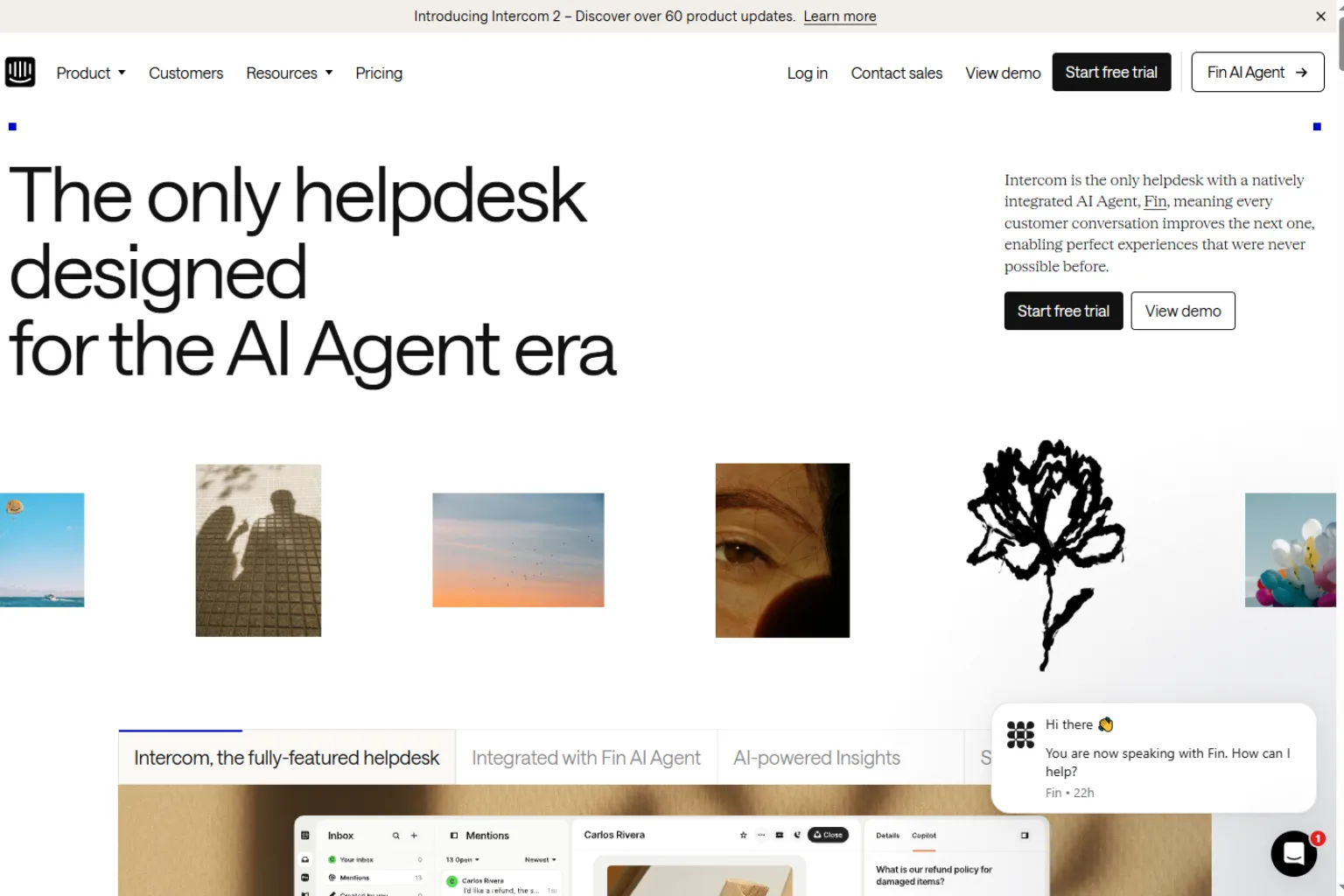
Intercom Fin is an AI support agent designed to answer customer questions from a company’s help content and work alongside the Intercom inbox. It is especially popular with SaaS companies and digital businesses that already use Intercom for live chat and customer communication.
Fin can help resolve common customer questions, suggest answers, and hand off to humans when needed. For teams using Intercom, this can be a natural way to add AI customer service without changing the entire support stack.
Intercom Fin is best for:
- SaaS support
- Website live chat
- Help center answers
- Human handoff
- AI support agents
- Teams already using Intercom
Choose Intercom Fin if your business wants an AI customer service agent inside a modern chat-first support workflow.
3. Freshdesk Freddy AI
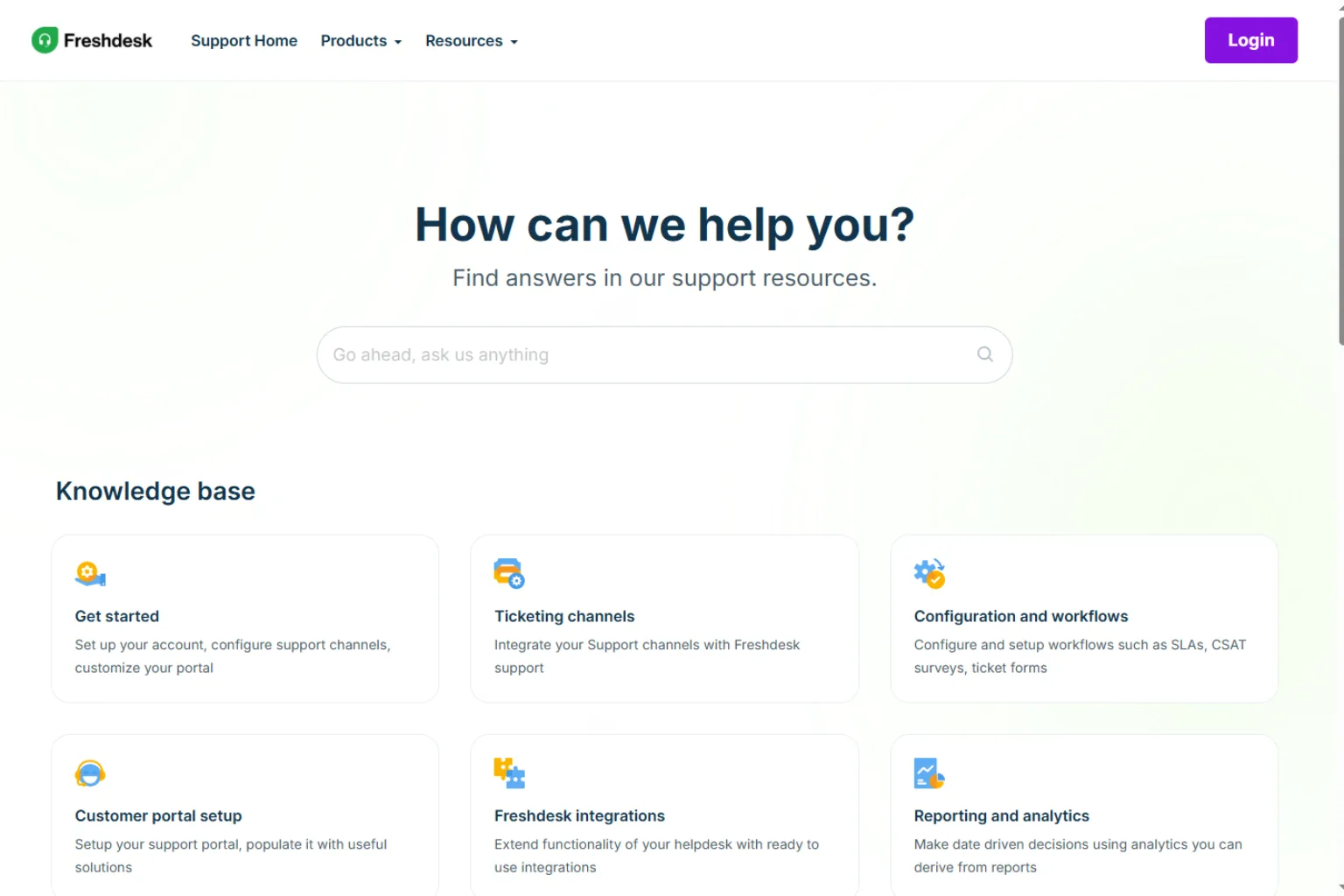
Freshdesk Freddy AI helps customer service teams automate support tasks, assist agents, summarize issues, and manage tickets across channels. It is part of the Freshworks ecosystem, which makes it useful for teams already using Freshdesk or related tools.
Freddy AI can support ticket classification, suggested responses, workflow automation, and customer-facing AI assistance. It is a strong option for teams that want AI inside a broader help desk system.
Freshdesk Freddy AI is best for:
- Omnichannel support
- Ticket automation
- Agent productivity
- Support summaries
- Help desk workflows
- Freshworks users
Choose Freshdesk Freddy AI if you want AI support inside a practical help desk platform.
4. Ada
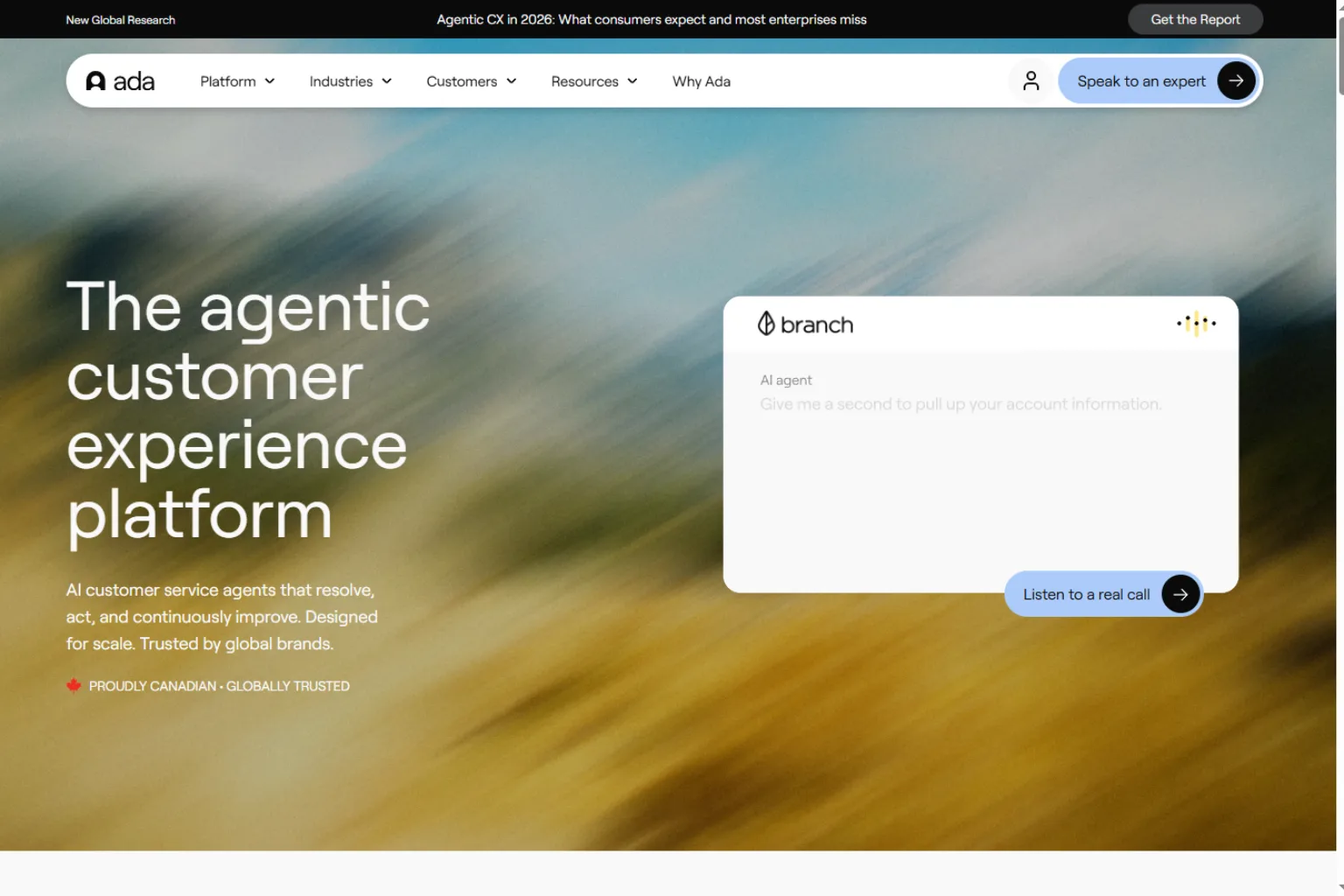
Ada is an AI-first customer service automation platform focused on helping businesses resolve customer issues automatically. It is often used by larger teams that want to automate high-volume support while still offering escalation paths when needed.
Ada can help businesses build AI agents, automate conversations, connect with support systems, and handle customer questions at scale. It is especially relevant for companies that treat automation as a core part of their support strategy.
Ada is best for:
- AI-first customer service
- High-volume support
- Automated resolutions
- Enterprise workflows
- Multichannel support
- Support teams needing scalable automation
Choose Ada if your business wants a serious AI customer service automation platform rather than a simple website chatbot.
5. Gorgias
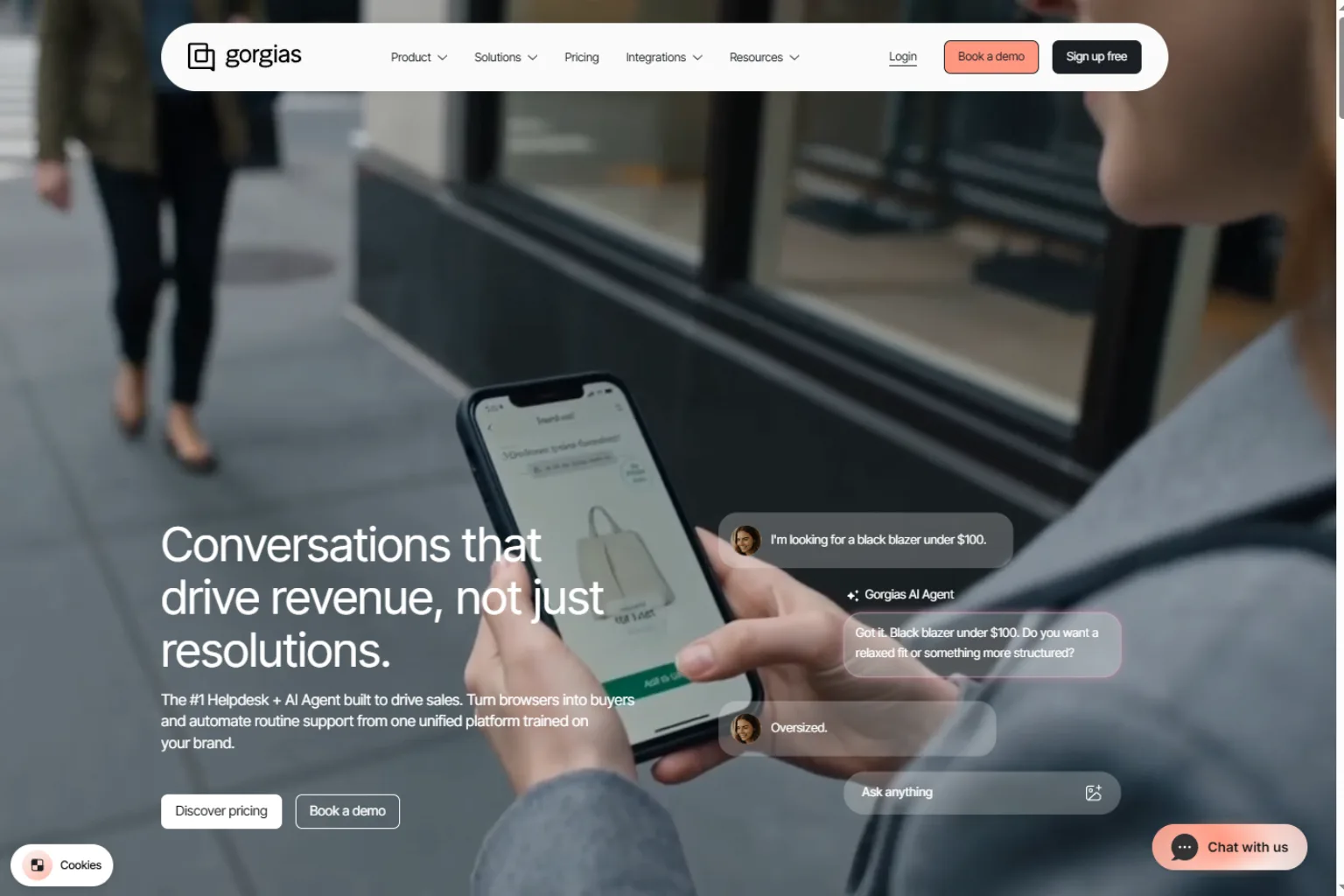
Gorgias is built for ecommerce customer service, especially stores that need support connected to order data, customer profiles, shipping details, returns, and product questions. It is a strong choice for Shopify-focused teams and online stores.
Its AI features can help automate repetitive ecommerce questions and give agents customer context quickly. This makes it useful for stores that receive many similar questions about orders, refunds, shipping, and product availability.
Gorgias is best for:
- Ecommerce support
- Shopify stores
- Order-related questions
- Returns and shipping support
- Customer context
- Sales and support workflows
Choose Gorgias if your customer service workload is strongly tied to ecommerce orders.
6. Tidio
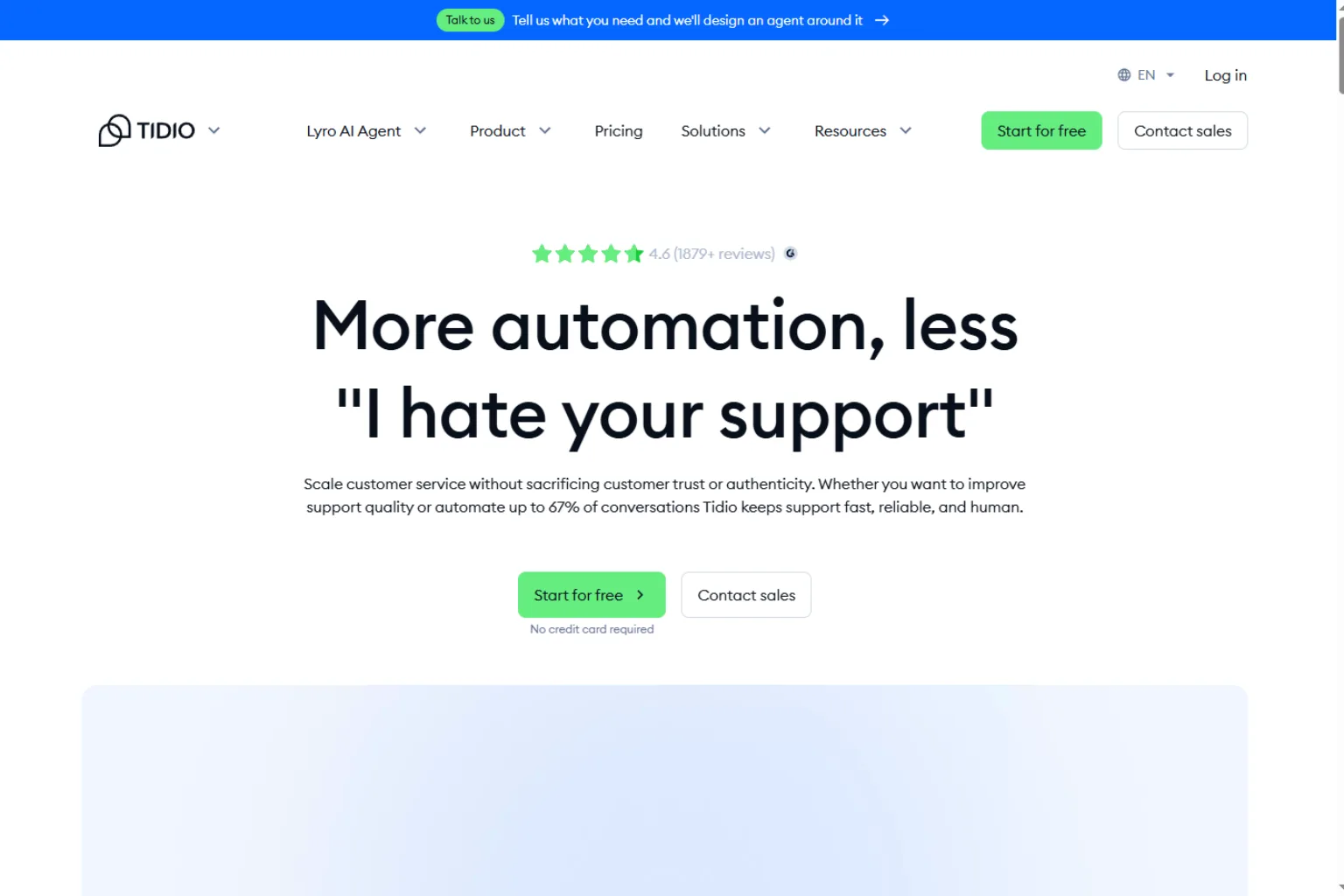
Tidio is a practical AI customer service tool for small businesses and ecommerce stores. It combines live chat, AI chatbot features, website visitor engagement, and sales support in a beginner-friendly platform.
It is useful for businesses that want to answer customer questions quickly without building a large support operation. Tidio can help with FAQs, product questions, lead capture, and simple support automation.
Tidio is best for:
- Small businesses
- Ecommerce websites
- Live chat
- AI chatbot support
- Visitor engagement
- Simple automation
Choose Tidio if you want an approachable AI customer service tool that is easy to add to a website.
7. Help Scout
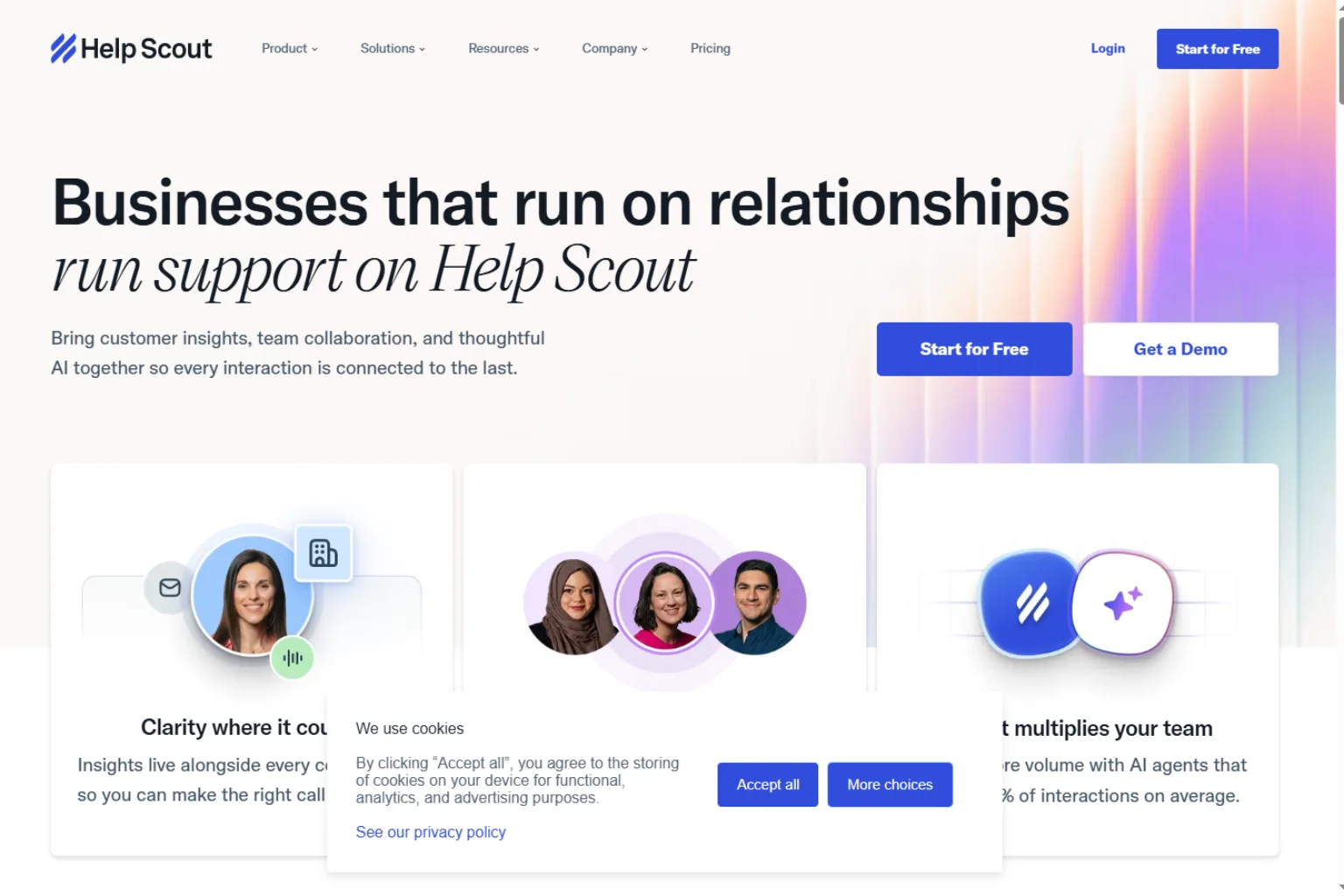
Help Scout is known for a customer-friendly shared inbox and support experience. Its AI features can help support teams draft replies, summarize conversations, improve response quality, and work more efficiently while keeping a human tone.
Help Scout is a good fit for teams that want AI assistance without making support feel too automated. It is especially useful for businesses that value clear, thoughtful customer communication.
Help Scout is best for:
- Shared inbox support
- Human-centered customer service
- AI writing assistance
- Knowledge base support
- Conversation summaries
- Small and mid-sized support teams
Choose Help Scout if your team wants AI to support agents while keeping customer service personal.
8. HubSpot Service Hub
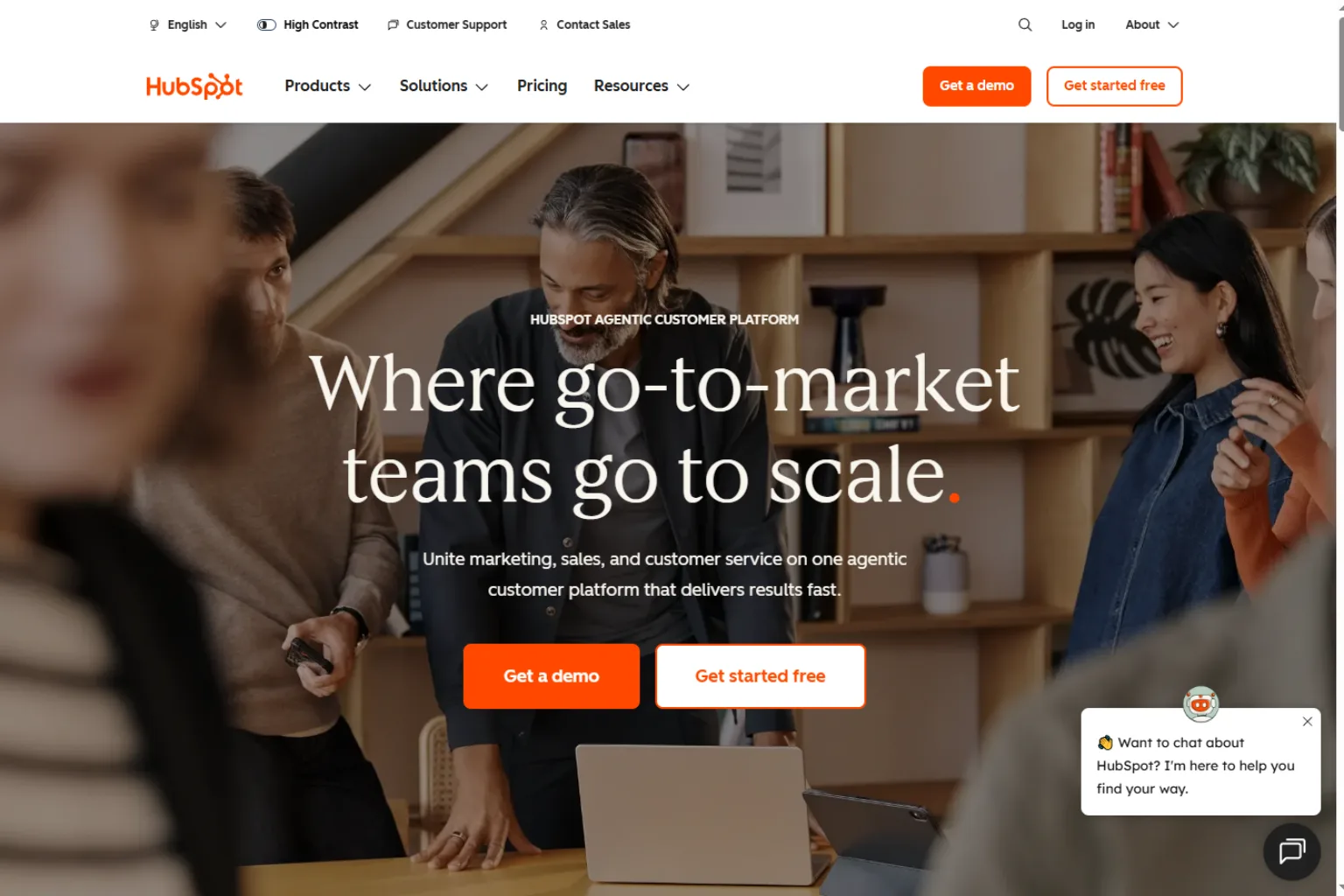
HubSpot Service Hub is useful for businesses that want customer service connected to CRM data, marketing, sales, and customer history. Its AI and automation features can help with tickets, chat, customer records, and service workflows.
This is a strong option if your business already uses HubSpot CRM. Support teams can see customer context and connect service conversations to the broader customer journey.
HubSpot Service Hub is best for:
- CRM-connected support
- Ticket management
- Customer history
- Sales and support alignment
- Website chat
- HubSpot users
Choose HubSpot Service Hub if customer service needs to connect closely with your CRM.
9. Salesforce Service Cloud AI
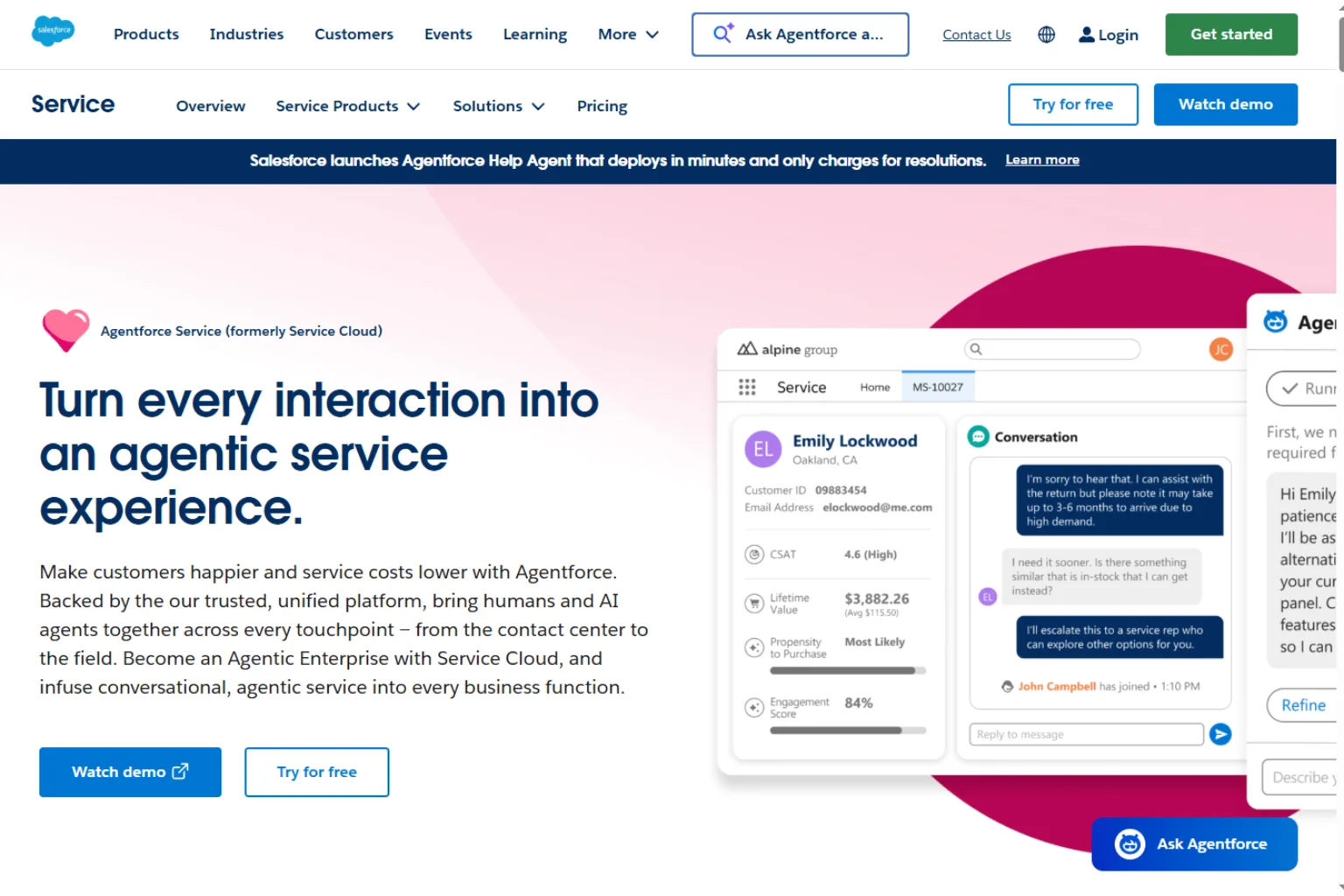
Salesforce Service Cloud AI is built for large customer service operations that need CRM, automation, AI assistance, case management, and enterprise-level support workflows. It is a strong option for companies already invested in Salesforce.
It can help agents work faster, automate service processes, summarize customer issues, and use customer data across the organization.
Salesforce Service Cloud AI is best for:
- Enterprise customer service
- CRM-based support
- Case management
- Agent assistance
- Large support teams
- Complex service workflows
Choose Salesforce Service Cloud AI if your organization needs enterprise-grade customer service connected to Salesforce data.
10. Kustomer
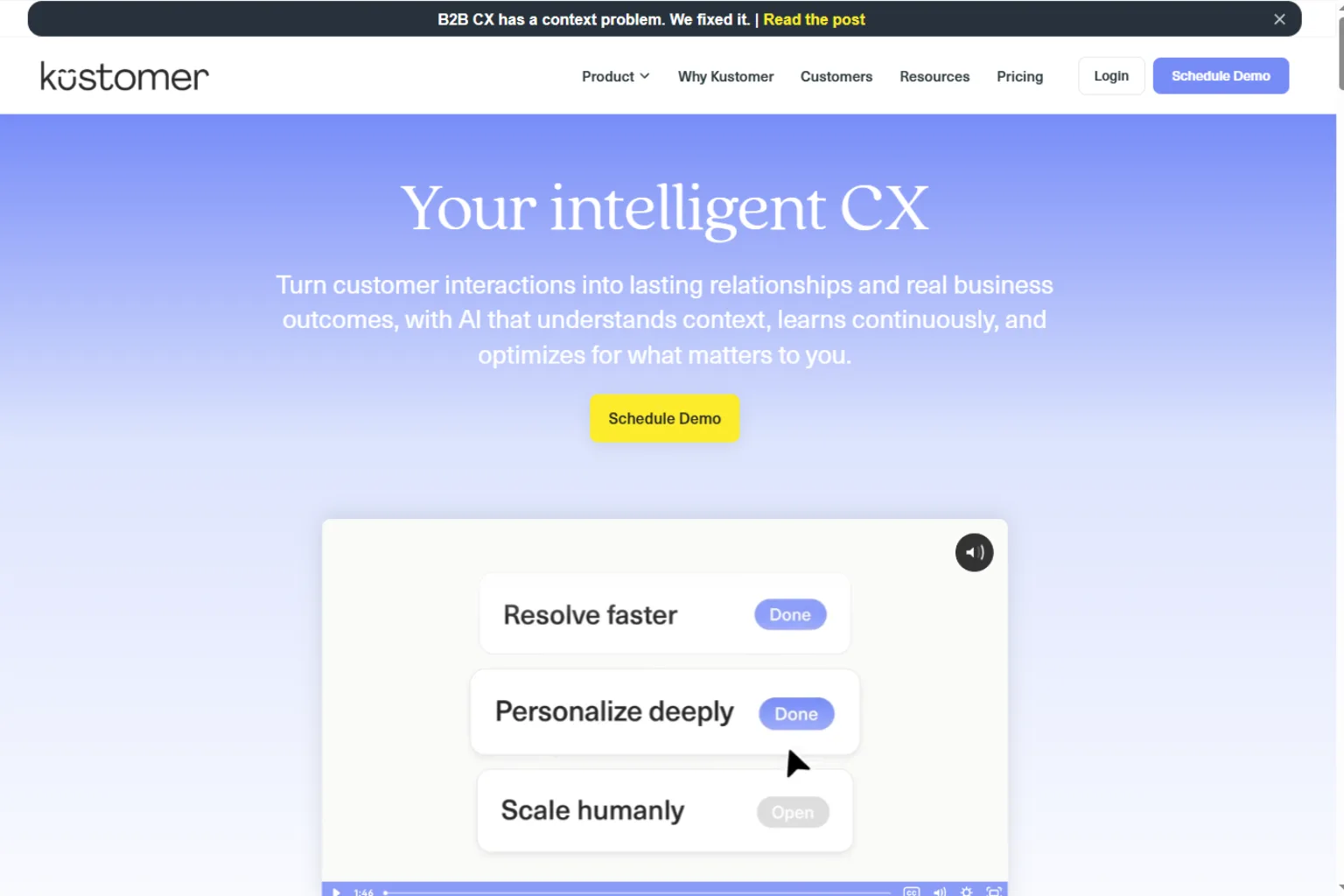
Kustomer is an omnichannel customer service platform that gives teams a timeline-based view of customer interactions. Its AI features can support customer context, automation, agent assistance, and faster resolution.
It is useful for teams that need to understand the full customer history across channels. This can be especially helpful when customers contact a business through email, chat, social, and other channels.
Kustomer is best for:
- Omnichannel support
- Unified customer timeline
- Customer context
- AI-assisted service
- Support automation
- Teams with complex customer histories
Choose Kustomer if your support team needs a complete view of each customer conversation.
How to Choose the Right AI Customer Service Tool
The best AI customer service tool depends on your team size, channels, customer volume, and existing systems.
Choose Zendesk AI or Freshdesk Freddy AI if you need a full help desk. Choose Intercom Fin if your support workflow is chat-first. Choose Ada if you want AI-first automation at scale. Choose Gorgias if you run an ecommerce store. Choose Tidio if you need a simple website chat and AI support tool. Choose Help Scout if you want a human-centered inbox with AI assistance. Choose HubSpot if support must connect to CRM. Choose Salesforce Service Cloud AI if you need enterprise service workflows.
Before choosing, ask:
- How many support tickets do we receive each month?
- Which channels matter most: email, chat, social, phone, or messaging?
- Do we need a chatbot, help desk, or full service platform?
- Does the tool connect to our knowledge base?
- Can it hand off to human agents cleanly?
- Does it integrate with our CRM or ecommerce platform?
- Does it support reporting and quality control?
- How does it handle customer data and privacy?
AI Customer Service Prompt Examples
If you are configuring an AI support assistant, clear instructions help keep answers accurate and on-brand.
You are a customer support assistant for a SaaS product. Answer only from the approved help center. If the answer is not available, ask a clarifying question or offer to create a support ticket.Summarize this customer conversation for a support agent. Include the customer's issue, troubleshooting steps already tried, account details mentioned, and the recommended next action.Draft a friendly support reply for a delayed shipping issue. Apologize briefly, explain the next step, avoid overpromising, and keep the tone calm and helpful.Classify this ticket by intent, urgency, sentiment, and best team to handle it. Return a short reason for the classification.Mistakes to Avoid
AI can improve customer service, but only if it is implemented carefully.
Avoid these common mistakes:
- Launching an AI chatbot without testing real customer questions
- Letting AI answer outside approved support content
- Making human handoff difficult
- Training the system on outdated help articles
- Ignoring failed answers and chatbot analytics
- Using a cold or robotic tone
- Automating sensitive issues that need human care
- Forgetting privacy and data handling requirements
- Treating AI as a full replacement for support agents
The best customer service automation feels helpful, accurate, and easy to escape when a customer needs a person.
FAQ
What are the best AI customer service tools?
The best AI customer service tools depend on your use case. Zendesk AI and Freshdesk are strong for help desks, Intercom Fin is strong for SaaS chat support, Ada is strong for AI-first automation, Gorgias is strong for ecommerce, and Tidio is useful for small businesses.
Can AI handle customer support tickets?
Yes. AI can summarize tickets, classify intent, suggest replies, route conversations, and answer common questions. Complex or sensitive issues should still go to human agents.
Are AI customer service chatbots worth it?
They can be worth it if your team receives repeat questions and has a solid knowledge base. A chatbot can reduce response time and ticket volume, but it must be tested and monitored.
Which AI customer service tool is best for ecommerce?
Gorgias and Tidio are strong options for ecommerce. Gorgias is especially useful for stores that need order context, while Tidio is a friendly choice for smaller stores.
Which AI customer service tool is best for SaaS?
Intercom Fin, Zendesk AI, Help Scout, and HubSpot Service Hub can all work well for SaaS. The best choice depends on whether your team prefers live chat, help desk tickets, CRM workflows, or shared inbox support.
Can AI replace customer service agents?
AI can handle repetitive questions and support agents with drafts, summaries, and routing. It should not replace all customer service agents, especially for complex, emotional, or high-value conversations.
What should I check before choosing an AI customer service tool?
Check integrations, knowledge base support, human handoff, analytics, data privacy, pricing, ticket volume limits, and whether the tool matches your customer channels.
Final Thoughts
AI customer service tools can help businesses answer questions faster, reduce repetitive tickets, and support agents with better context. The best option depends on your support workflow.
For full help desk automation, start with Zendesk AI or Freshdesk Freddy AI. For SaaS chat support, compare Intercom Fin and Help Scout. For ecommerce, look at Gorgias or Tidio. For enterprise support, consider Salesforce Service Cloud AI, Ada, or Kustomer.
The right AI customer service tool should improve response speed without making customers feel trapped by automation.
Related
7 Best AI Headshot Generator Apps Online for Free

How to Remove Vocal from a Song? Manual Method vs AI Vocal Remover

Best AI Lesson Plan Generators for Teachers
Top 5 Ways on How to Remove Glare from Photo
AI Is Making Identity Theft Smarter: Here's How PureVPN Identity Threat Protection Keeps You a Step Ahead
Best Sora Alternatives for AI Video Generation in 2026