
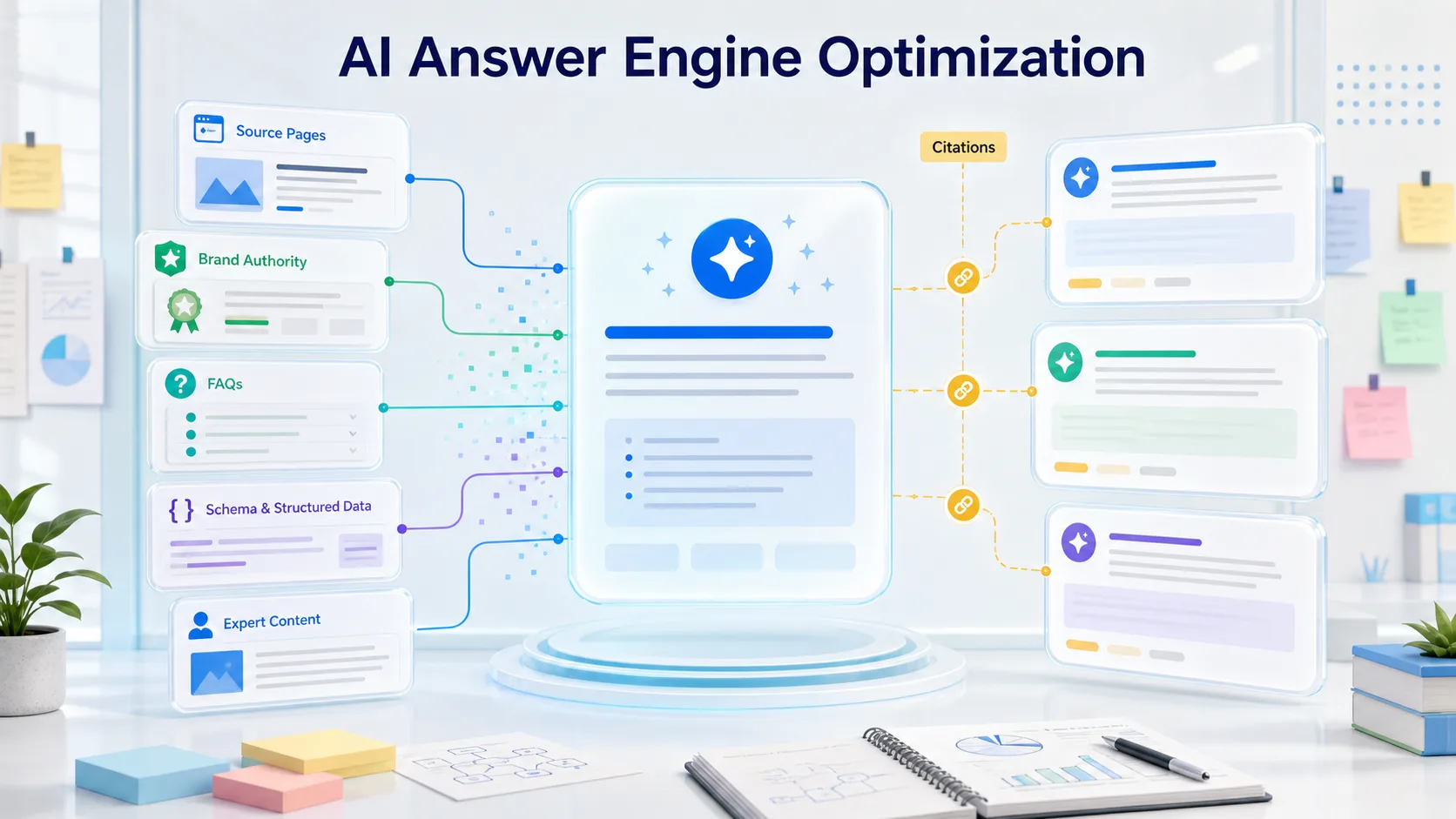
Table of Contents
- What Is AI Answer Engine Optimization?
- Why AI Answer Engine Optimization Matters
- AEO vs SEO vs GEO
- How AI Answer Engines Choose What to Mention
- Core Elements of AI Answer Engine Optimization
- Best Tools for AI Answer Engine Optimization
- How to Optimize Content for AI Answers
- AEO Content Examples
- Common AEO Mistakes
- How to Measure AEO Performance
- FAQ
What Is AI Answer Engine Optimization?
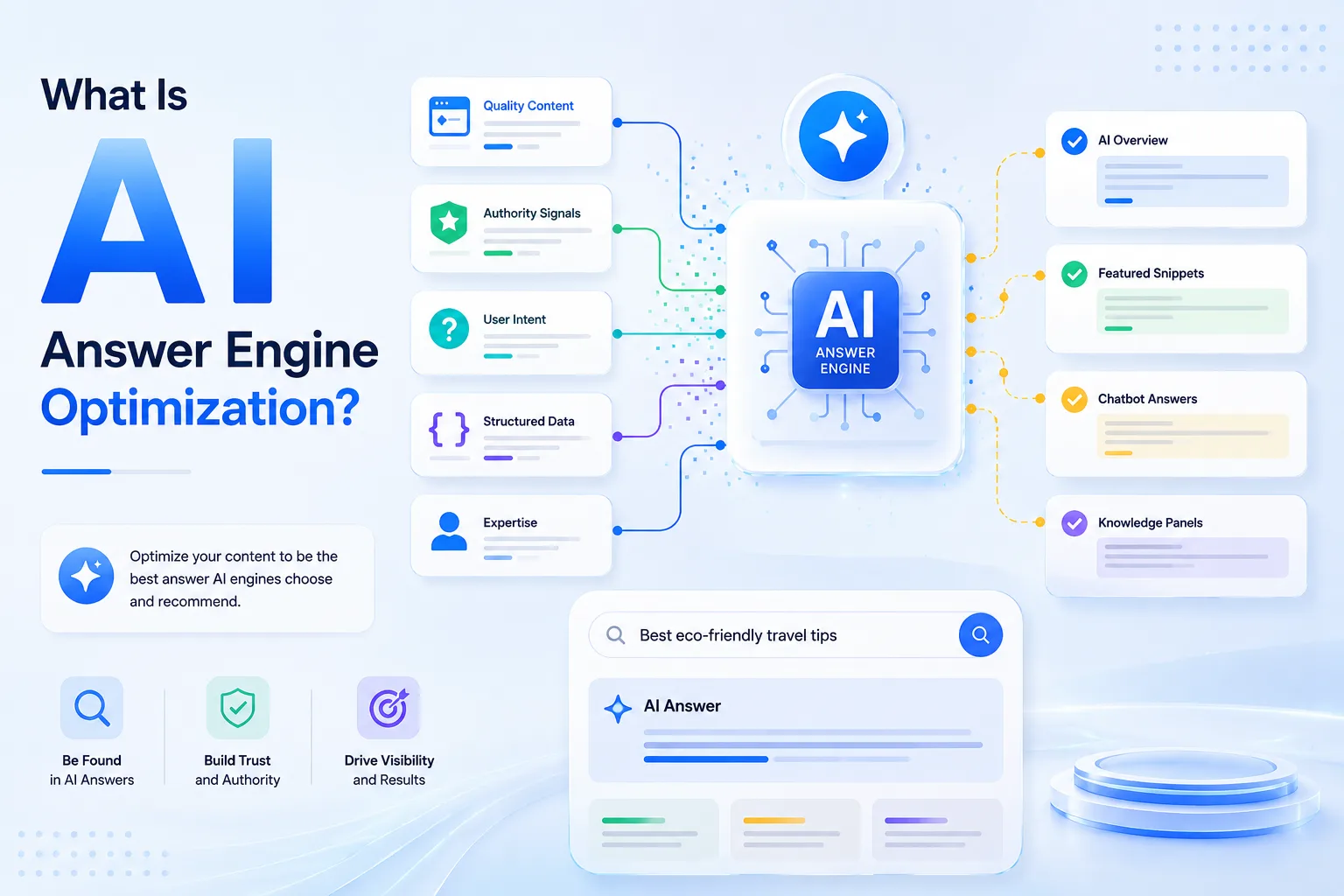
AI answer engine optimization is the process of improving how your brand, product, website, or content appears in AI-generated answers. Instead of only trying to rank on traditional search result pages, AI answer engine optimization focuses on whether answer engines mention you, cite you, recommend you, or describe you accurately.
Traditional SEO is built around search rankings and clicks. AEO is built around direct answers. When someone asks an AI assistant, “What are the best AI customer service tools?” or “Which product photo generator should I use?”, the answer may summarize several brands, compare features, and cite sources. If your brand is missing from that answer, you may lose visibility even if your website still ranks in traditional search.
This is why AI answer engine optimization is becoming important for SaaS companies, ecommerce brands, agencies, publishers, local businesses, and content teams. Users are not only searching. They are asking, comparing, and making decisions inside AI tools.
Why AI Answer Engine Optimization Matters
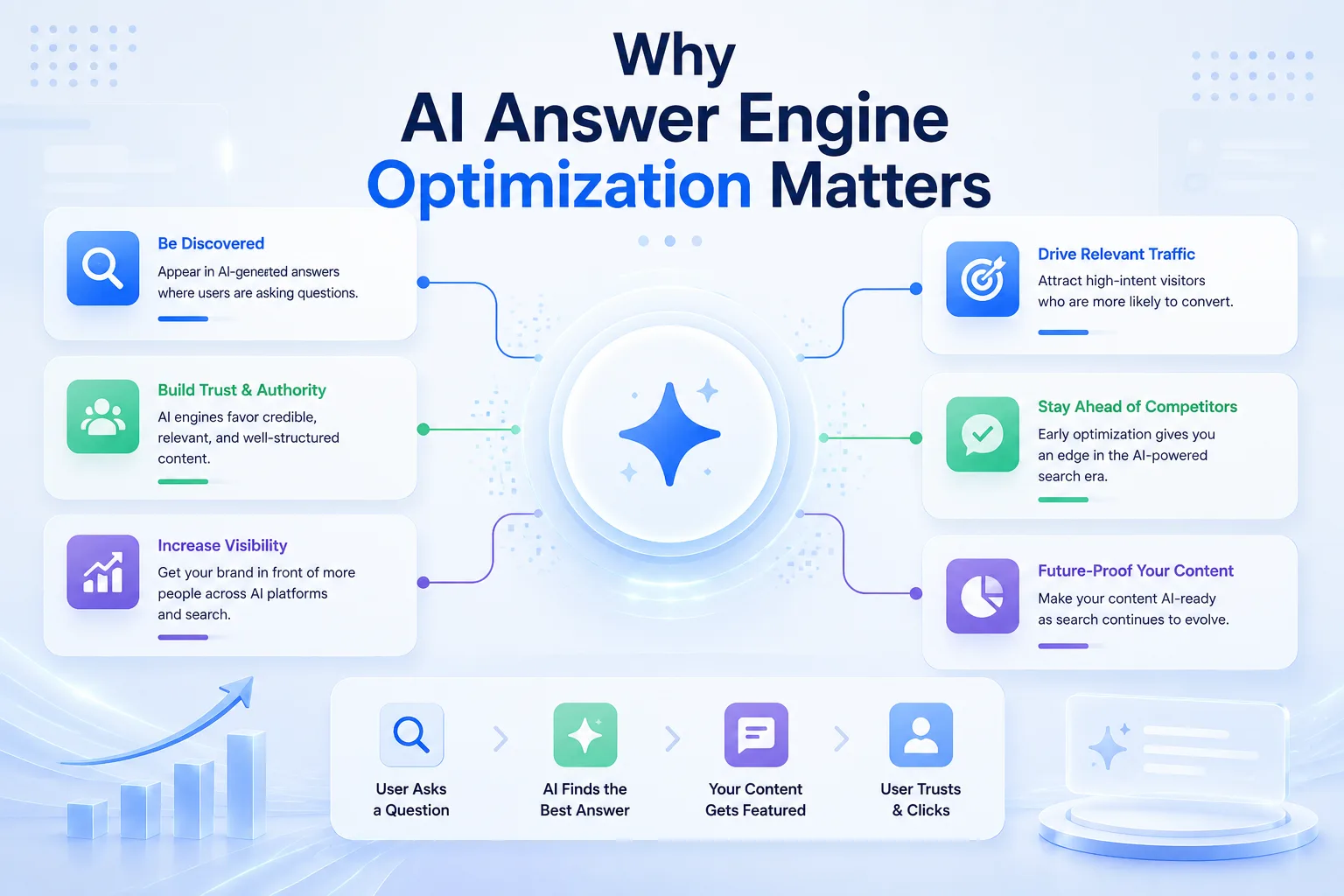
AI search changes how people discover information. Users often want a direct answer instead of a list of links. They may ask an AI assistant to compare tools, recommend software, summarize a topic, or explain which product fits their needs.
AI answer engine optimization matters because it can help you:
- Increase brand visibility in AI-generated answers
- Improve the chance of being cited as a source
- Make your product descriptions more accurate in AI tools
- Identify competitor visibility gaps
- Build content that answers natural questions clearly
- Support traditional SEO with stronger topical authority
- Prepare for lower-click search experiences
- Track how AI tools describe your brand
Even if AI answers do not always send direct traffic, they can influence awareness, trust, and buying decisions. A user may see your brand recommended by an AI assistant and search for it later.
AEO vs SEO vs GEO
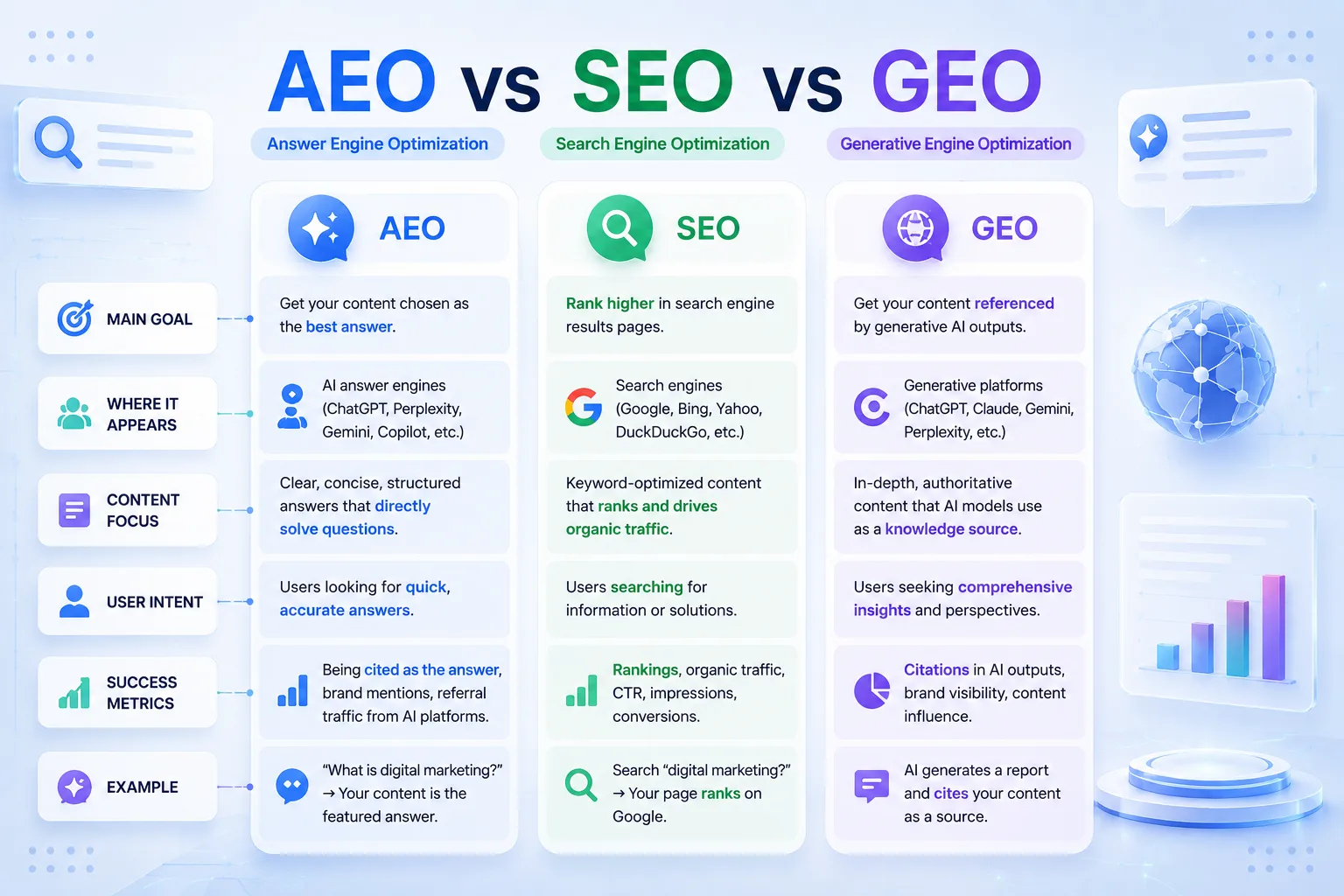
AEO, SEO, and GEO are related, but each term emphasizes a different part of search visibility.
SEO stands for Search Engine Optimization. It focuses on improving rankings, organic clicks, and search engine visibility.
AEO stands for Answer Engine Optimization. It focuses on getting your content included in direct answers, featured responses, AI summaries, and recommendation-style answers.
GEO stands for Generative Engine Optimization. It usually refers to optimizing for generative AI search experiences, especially when AI systems synthesize information from multiple sources.
In practice, a good strategy includes all three. You still need SEO foundations such as helpful content, authority, technical health, structured pages, and strong internal linking. But AEO adds another layer: making your content easy for AI systems to understand, summarize, verify, and cite.
How AI Answer Engines Choose What to Mention
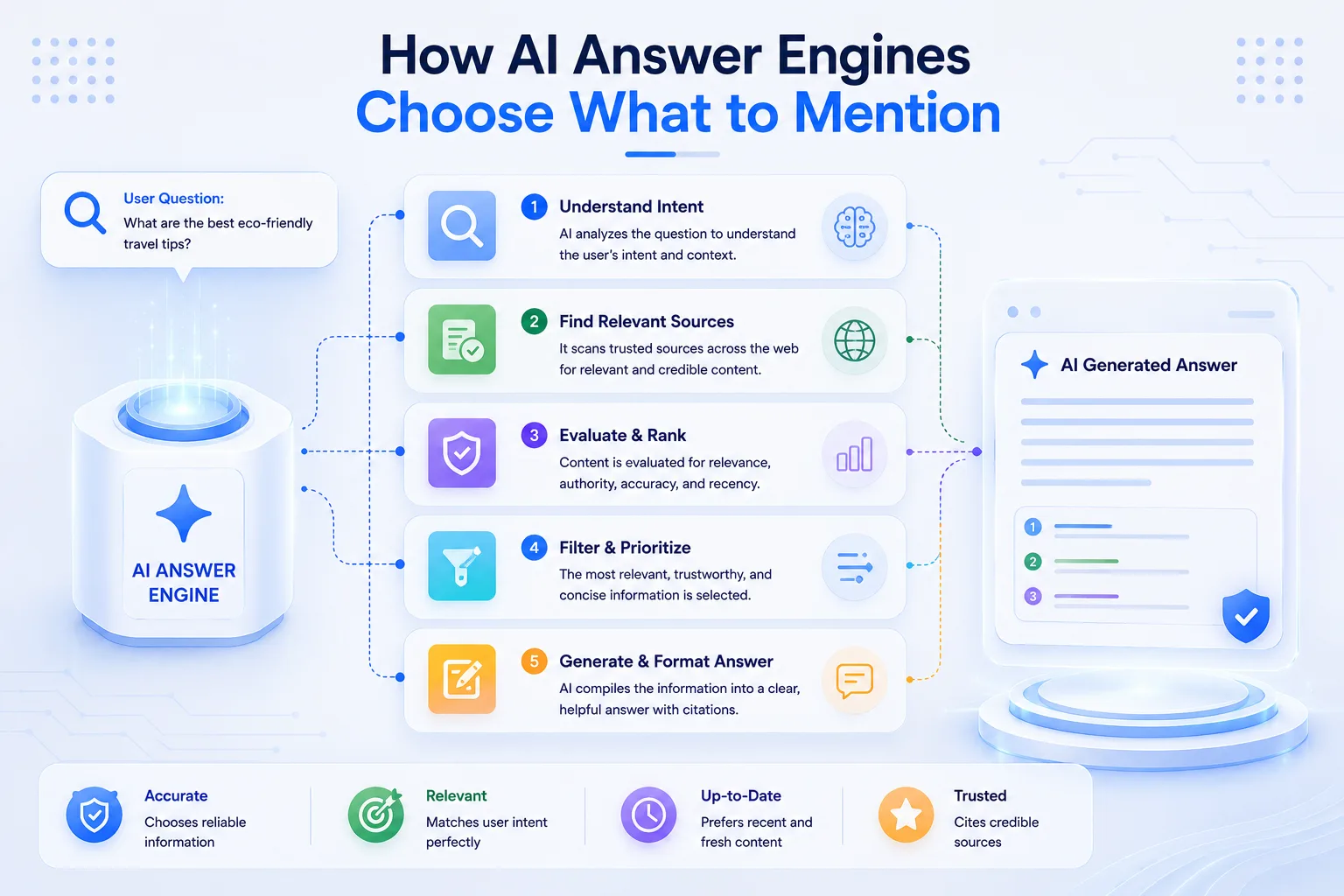
AI answer engines do not all work the same way, but they often look for similar signals. They need information that is clear, useful, trustworthy, current, and easy to summarize.
Common signals include:
- Clear answers to common questions
- Strong topical coverage
- Consistent brand information across the web
- Authoritative sources and citations
- Fresh and accurate content
- Comparison tables and structured sections
- FAQ sections and definitions
- Product details that are easy to verify
- Third-party mentions and reviews
- Pages that match conversational search intent
This does not mean you can force an AI system to recommend your brand. But you can make your content much easier to understand, cite, and include.
Core Elements of AI Answer Engine Optimization
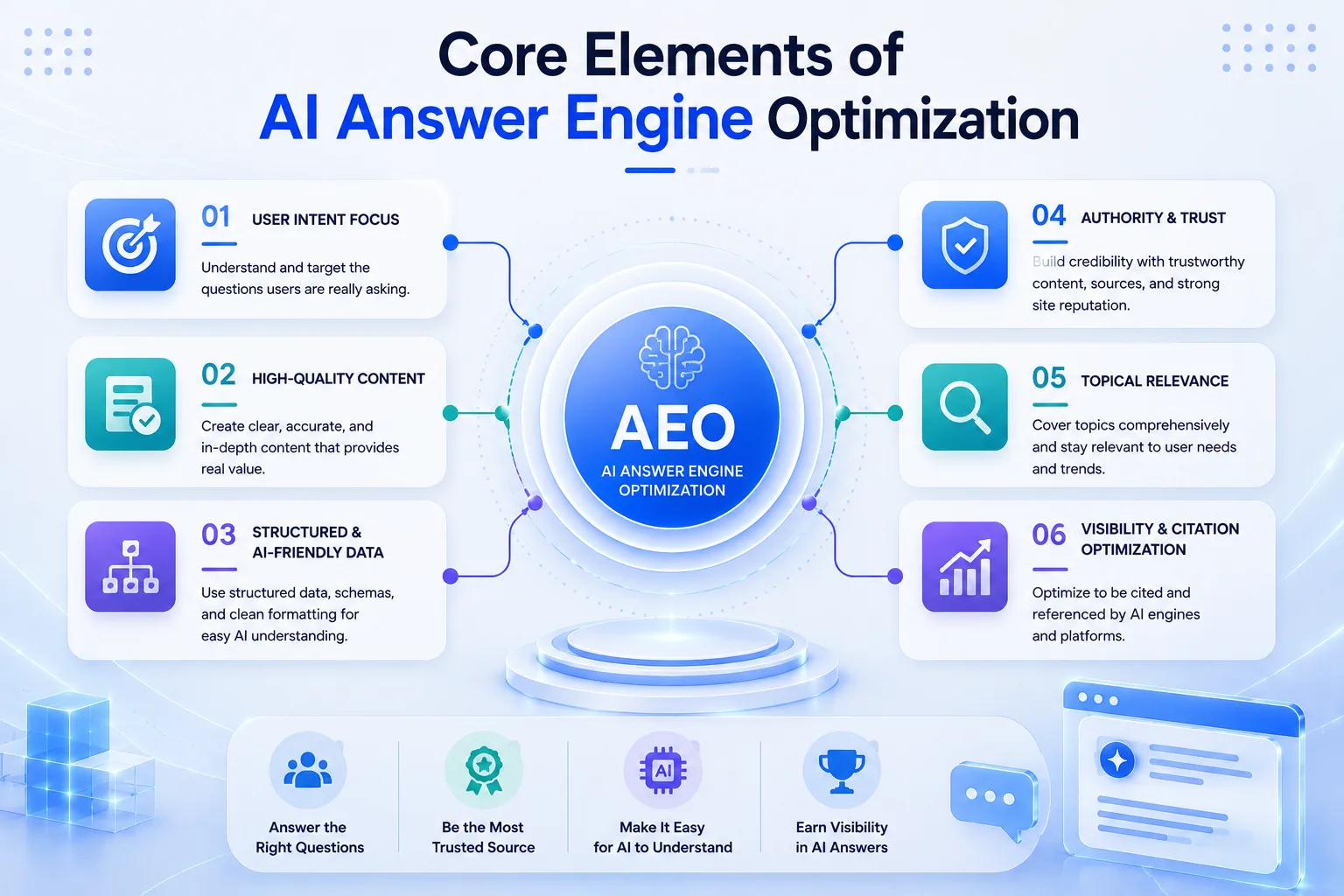
A strong AI answer engine optimization strategy usually includes five parts.
Clear Entity Information
Answer engines need to understand who you are, what you offer, who it is for, and how you are different. If your brand information is vague or inconsistent, AI tools may describe you incorrectly or skip you.
Make sure your website clearly explains:
- Brand name
- Product category
- Use cases
- Target users
- Main features
- Pricing or plan structure
- Alternatives and competitors
- Differentiators
- Trust signals
Question-Based Content
AI answers often respond to natural questions. Pages with clear question-and-answer sections are easier to use as answer sources.
Useful content types include:
- What is guides
- Best tools lists
- Comparison articles
- Alternatives pages
- FAQ pages
- How-to tutorials
- Pricing explainers
- Use-case pages
Structured Comparisons
AI tools often answer comparison questions. Tables, pros and cons, best-for sections, and decision guides can help answer engines summarize your content.
For example, instead of only writing a paragraph about a tool, add:
- Best for
- Key features
- Pros
- Cons
- Pricing notes
- Who should use it
- Who should avoid it
Trust and Authority Signals
Answer engines need confidence. Trust signals can include expert authorship, updated dates, original examples, product screenshots, data, case studies, customer proof, and consistent third-party mentions.
For business content, accuracy matters. Outdated pricing, old product names, or unclear claims can reduce trust.
Citation-Friendly Pages
If an AI answer engine cites sources, it needs pages that clearly support a claim. Long vague content is less useful than a focused page that answers a question directly.
Make pages easier to cite by using:
- Descriptive headings
- Short direct answers
- Clear definitions
- Original examples
- Updated information
- Tables and bullet lists
- FAQ sections
Best Tools for AI Answer Engine Optimization
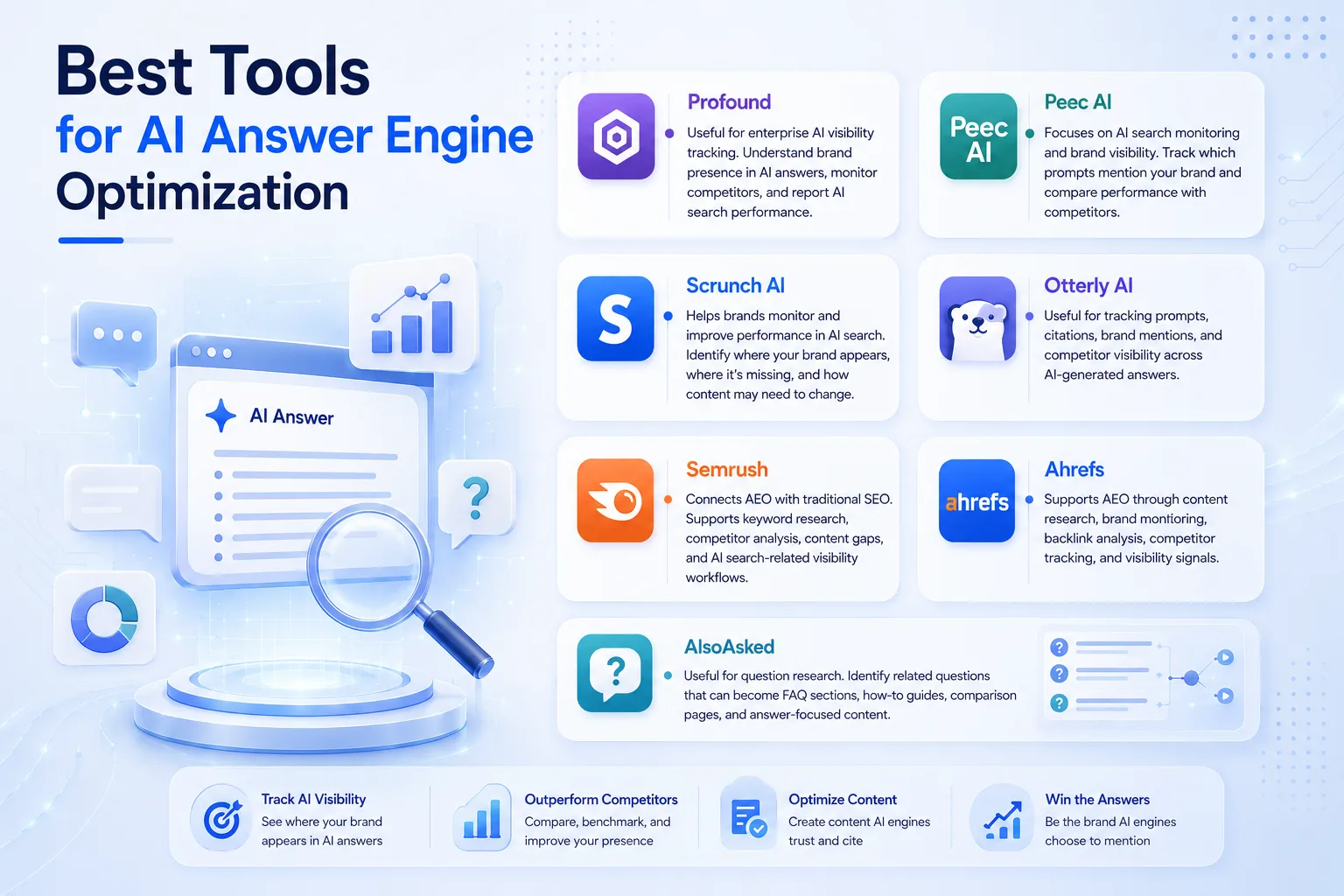
AEO is still an emerging category, but several tools can help track AI visibility and improve content strategy.
Profound
Profound is useful for enterprise AI visibility tracking. It can help teams understand how their brand appears in AI answers, monitor competitors, and report AI search performance.
Peec AI
Peec AI focuses on AI search monitoring and brand visibility. It can help teams track which prompts mention their brand and how they compare with competitors.
Scrunch AI
Scrunch AI helps brands monitor and improve their performance in AI search. It is useful for understanding where a brand appears, where it is missing, and how content may need to change.
Otterly AI
Otterly AI is useful for tracking prompts, citations, brand mentions, and competitor visibility across AI-generated answers.
Semrush
Semrush is helpful for connecting AEO with traditional SEO. It can support keyword research, competitor analysis, content gaps, and AI search-related visibility workflows.
Ahrefs
Ahrefs can support AEO through content research, brand monitoring, backlink analysis, competitor tracking, and visibility signals.
AlsoAsked
AlsoAsked is useful for question research. It helps identify related questions that can become FAQ sections, how-to guides, comparison pages, and answer-focused content.
How to Optimize Content for AI Answers
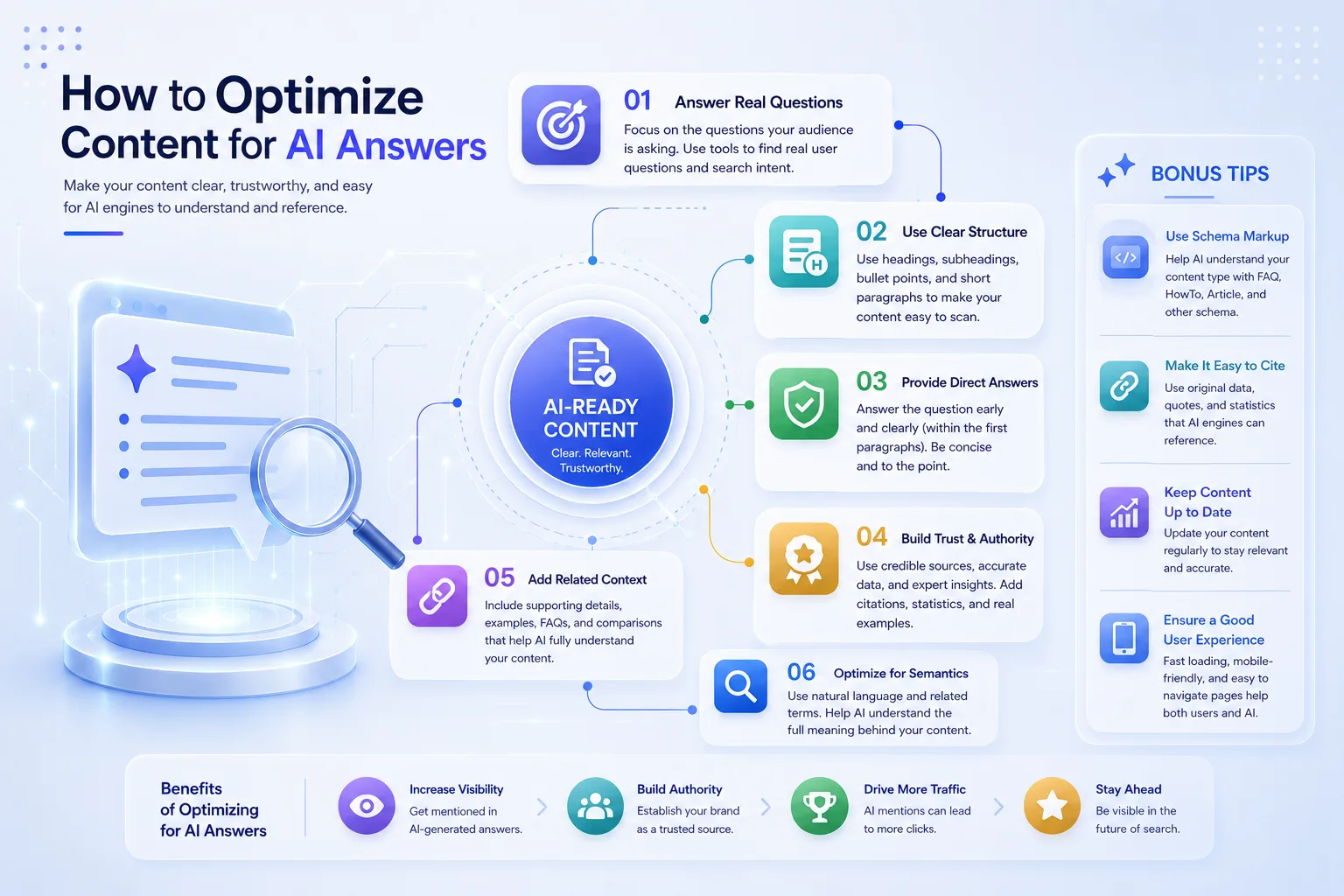
AI answer engine optimization starts with content clarity. If a human reader cannot quickly understand your page, an AI system may struggle too.
Use this workflow:
- Choose one clear search intent per page.
- Add a direct answer near the top.
- Use natural question-based headings.
- Include definitions, examples, and comparisons.
- Add a table when users need to compare options.
- Explain who each tool, product, or method is best for.
- Keep product information current.
- Add FAQ sections that match real user questions.
- Build internal links between related topics.
- Update content when tools, pricing, or features change.
- Monitor AI answer visibility with AEO tools.
- Improve pages that are not being cited or mentioned.
The goal is not to stuff keywords. The goal is to become the clearest and most useful source for a specific question.
AEO Content Examples
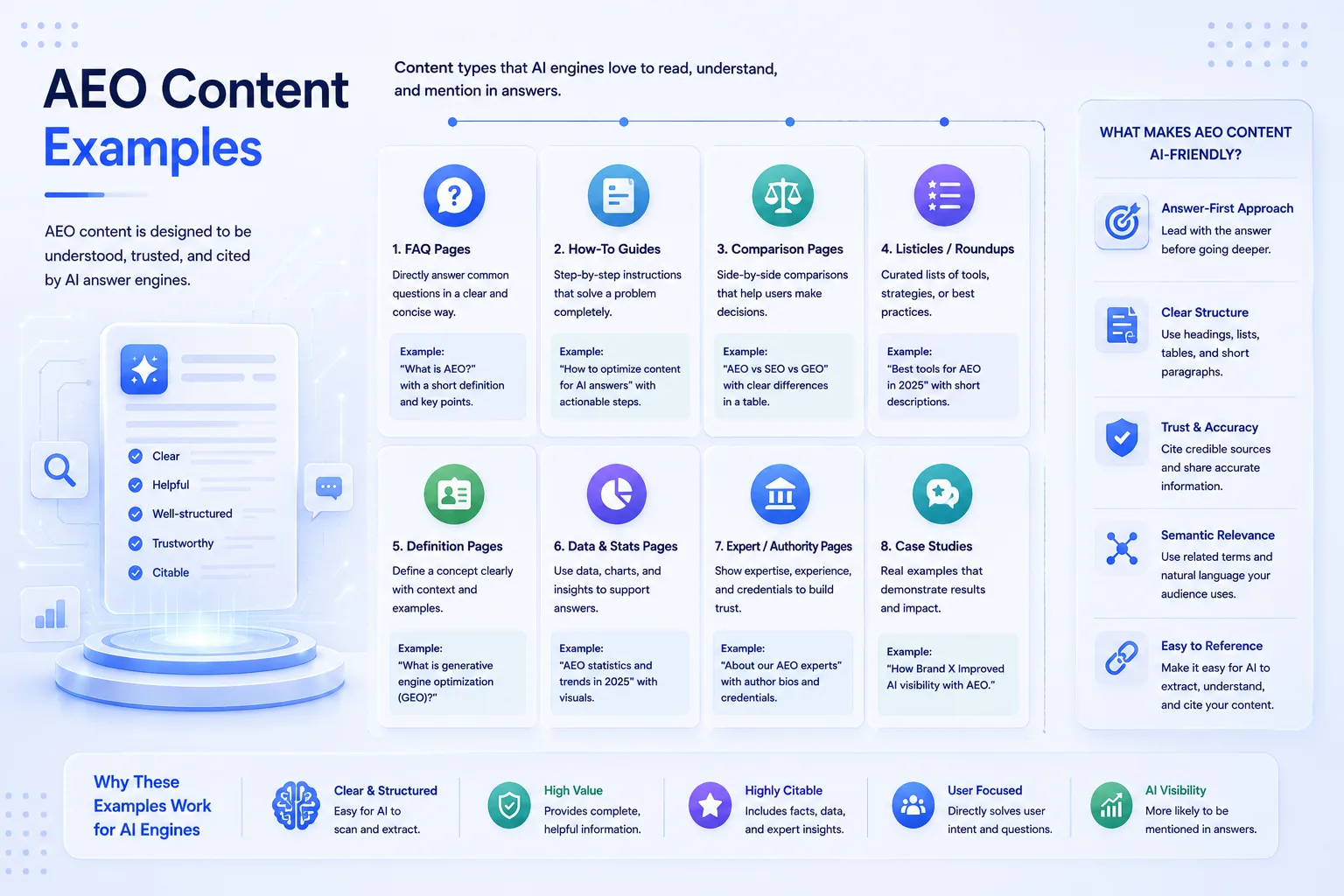
Here are examples of content formats that work well for AI answer engine optimization:
- “Best AI Tools for Small Businesses”
- “Krea AI Alternatives”
- “Veo 3.1 Review”
- “What Is Answer Engine Optimization?”
- “AI Product Photo Generator: Best Tools for Ecommerce”
- “ChatGPT vs Gemini for Students”
- “Best Free AI Tools for Teachers”
- “How to Choose an AI Customer Service Tool”
- “AI SEO vs AEO vs GEO”
These formats work because they answer questions, compare options, and give AI systems structured information to summarize.
Common AEO Mistakes
Avoid these mistakes when optimizing for AI answers:
- Writing vague pages without a clear answer
- Publishing thin listicles with no real comparison
- Ignoring brand consistency across pages
- Forgetting to update old tool names and pricing
- Overusing keywords instead of answering questions
- Skipping FAQ sections
- Hiding important details behind unclear wording
- Ignoring competitor mentions in AI answers
- Not monitoring whether AI tools cite your site
- Treating AEO as separate from SEO
AEO works best when it builds on strong SEO and helpful content.
How to Measure AEO Performance
AEO measurement is still developing, but teams can track several practical signals:
- Brand mentions in AI answers
- Citation frequency
- AI share of voice compared with competitors
- Prompt coverage
- Sentiment and accuracy of AI descriptions
- Which pages get cited
- Which competitors appear more often
- Traditional organic traffic to answer-focused pages
- Branded search lift after content campaigns
- Assisted conversions from AI-influenced discovery
Do not rely on one number. AEO is a visibility layer, so measurement should combine AI answer monitoring, SEO performance, brand tracking, and content quality review.
FAQ
What is AI answer engine optimization?
AI answer engine optimization is the process of improving how your brand, website, product, or content appears in AI-generated answers from tools like ChatGPT, Perplexity, Gemini, Claude, and Copilot.
Is AEO the same as SEO?
No. SEO focuses on ranking in traditional search results. AEO focuses on being included, cited, or recommended in direct answers. They overlap because good SEO content often supports AEO.
What is the difference between AEO and GEO?
AEO focuses on answer engines and direct answers. GEO focuses on generative AI search experiences. In practice, both involve optimizing content for AI-generated responses.
How do I optimize for AI answer engines?
Create clear, trustworthy, structured content that answers real questions. Use definitions, comparison tables, FAQs, examples, updated product information, and strong topical coverage.
Can AEO tools guarantee AI mentions?
No. AEO tools can track visibility, reveal gaps, and guide improvements, but they cannot guarantee that AI systems will mention or cite your brand.
Is AEO useful for small businesses?
Yes. Small businesses can benefit by answering local, product, service, and comparison questions clearly. Even simple FAQ and service pages can support AEO.
What type of content is best for AEO?
Comparison pages, best tools lists, alternatives articles, review pages, FAQ guides, how-to tutorials, and definition pages are useful for AEO because they match common AI search questions.
Final Thoughts
AI answer engine optimization is becoming a necessary layer of modern search strategy. Traditional SEO still matters, but users are increasingly asking AI tools for direct answers and recommendations.
To improve visibility, create content that is clear, structured, current, and easy to cite. Build topical authority around your category. Track how AI systems mention your brand. Then update pages based on what you learn.
The brands that win in AI search will not only publish more content. They will publish clearer, more useful, more trustworthy answers.
Related
AI Phone Guide 2026: Best AI Assistant and AI Agent Tools

How to Use Perplexity: A Complete Beginner’s Guide to Pro Search, Files and Comet (2026)
8 Best AI Mind Map Tools in 2026 for Smarter Brainstorming

Best AI SOP Generators to Create Standard Operating Procedures Faster
15 Best Free Ebook Sites to Download and Read Books Legally in 2026
AI Manga Generator: Best Tools to Create Manga-Style Art and Stories