Generate Stained-Glass Designs from Written Ideas
Light filtering through a stained-glass window, breaking into fragments of color across a stone floor, carries a specific kind of visual magic that’s been part…
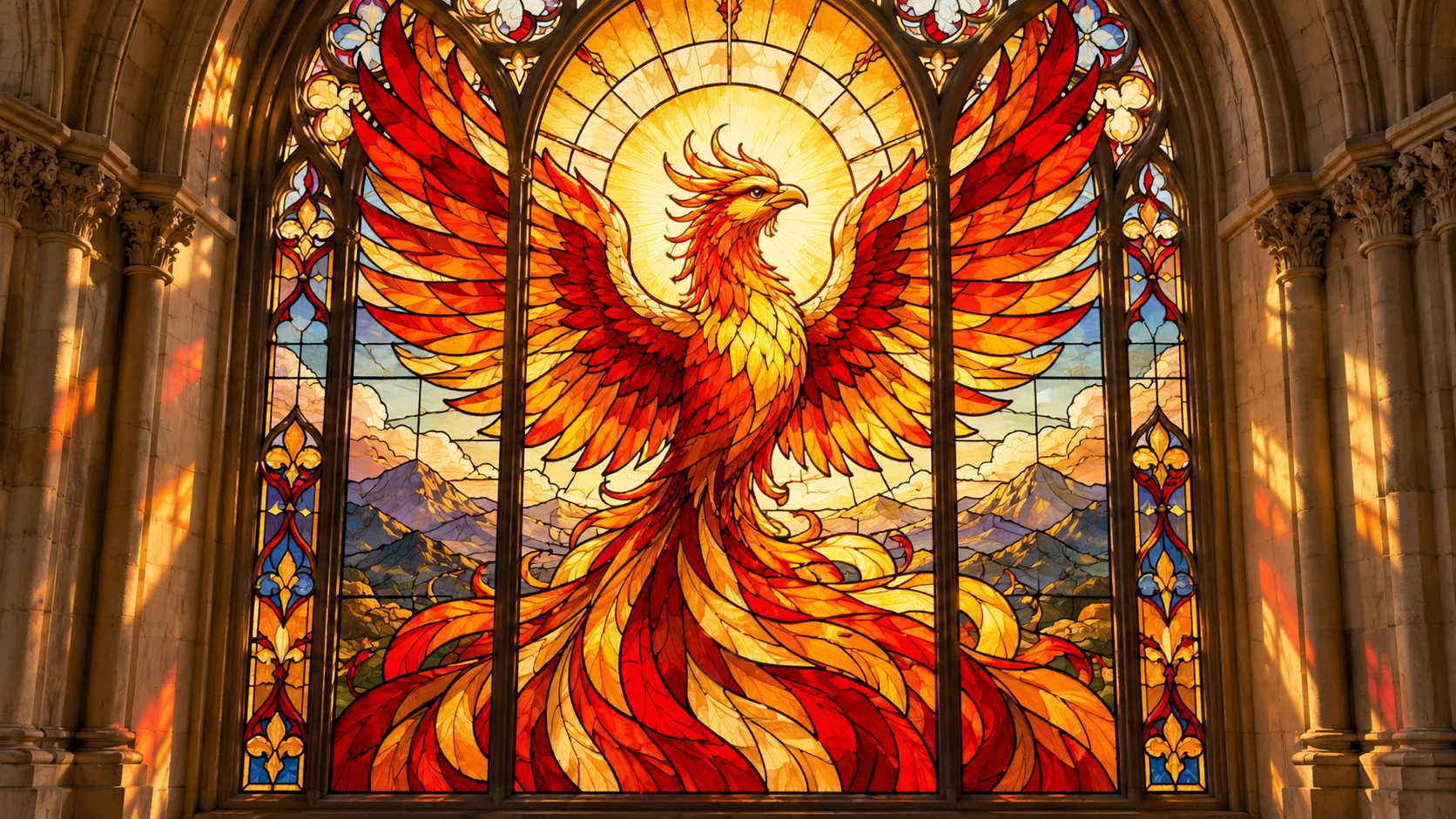

Light filtering through a stained-glass window, breaking into fragments of color across a stone floor, carries a specific kind of visual magic that’s been part of architecture and art for centuries. Designing an original stained-glass concept traditionally required specialized illustration training suited to the medium’s unique constraints: bold outlines, segmented color fields, glowing translucency. An advanced AI picture generator makes exploring this distinctive art form genuinely accessible.
Dreamina, with its advanced image generation capabilities, handles the specific visual language of stained glass with real authenticity. Here’s how to design a piece that actually captures that glowing, leaded-glass quality.
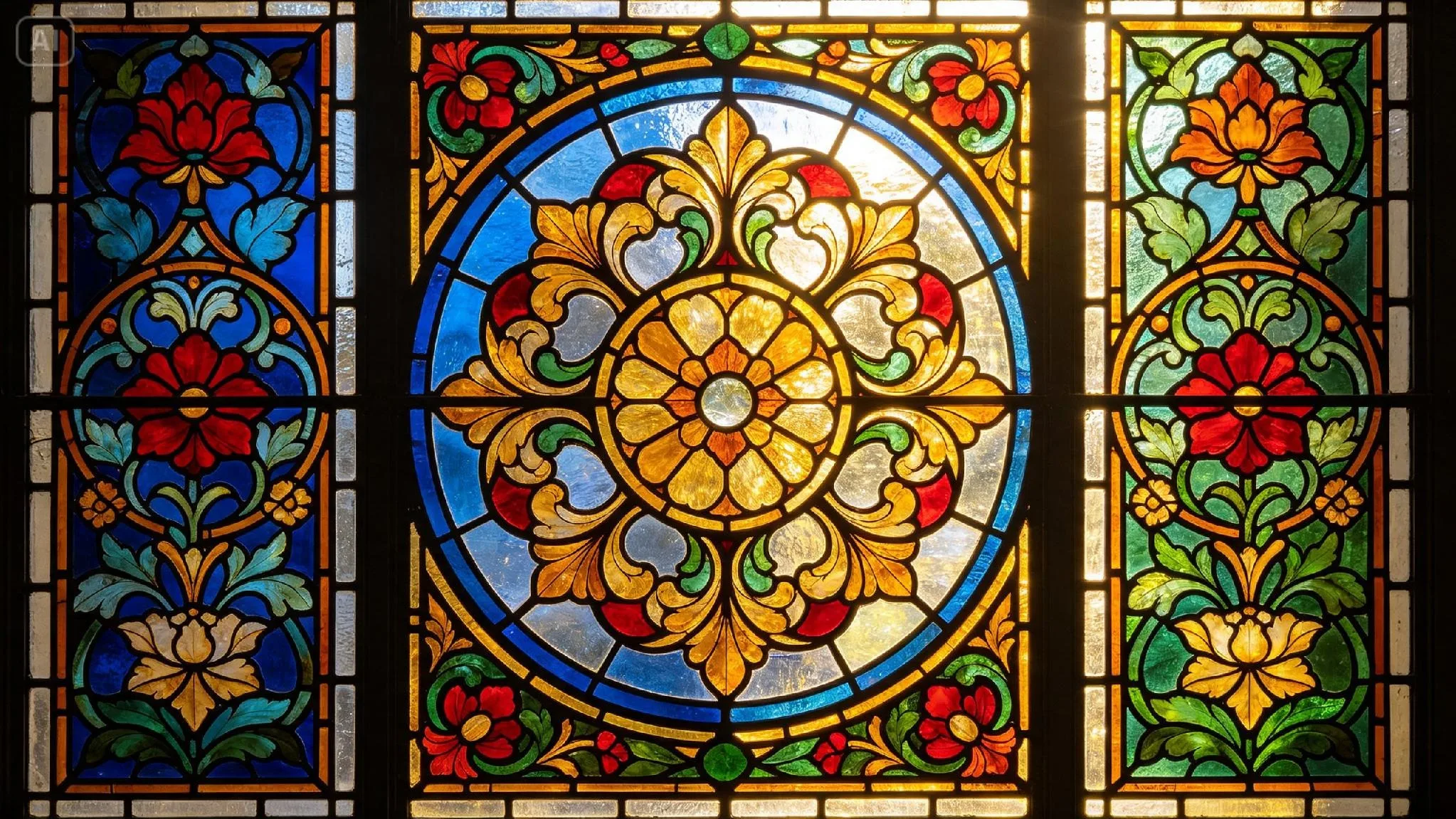
Understanding what makes stained glass its own visual language
Stained glass isn’t simply a colorful illustration, it’s defined by specific structural constraints, bold black leading separating distinct color fields, simplified shapes that work within those segmented sections, and a sense of light passing through rather than reflecting off the surface.
Designing with these constraints in mind, rather than a generic painting style, is what makes the result read as authentic stained glass.
Choosing subject matter that suits the medium
Certain subjects translate into stained glass more naturally than others, owing to the medium’s reliance on bold shapes and simplified detail:
- Symbolic and religious imagery with a long stained-glass tradition
- Nature motifs, birds, flowers, trees, with clear simplified silhouettes
- Geometric and abstract patterns suited to segmented color fields
- Heraldic and emblematic designs built around strong central shapes
Designing the leading as part of the composition
The black leading isn’t just a border, it’s a core design element that defines where one color field ends and another begins. Planning these lines deliberately, following the natural contours of your subject, gives a design genuine structural logic rather than looking like a flat illustration with black lines randomly added on top.
Your 3-step glasswork build with Dreamina
Step 1: Write a text prompt
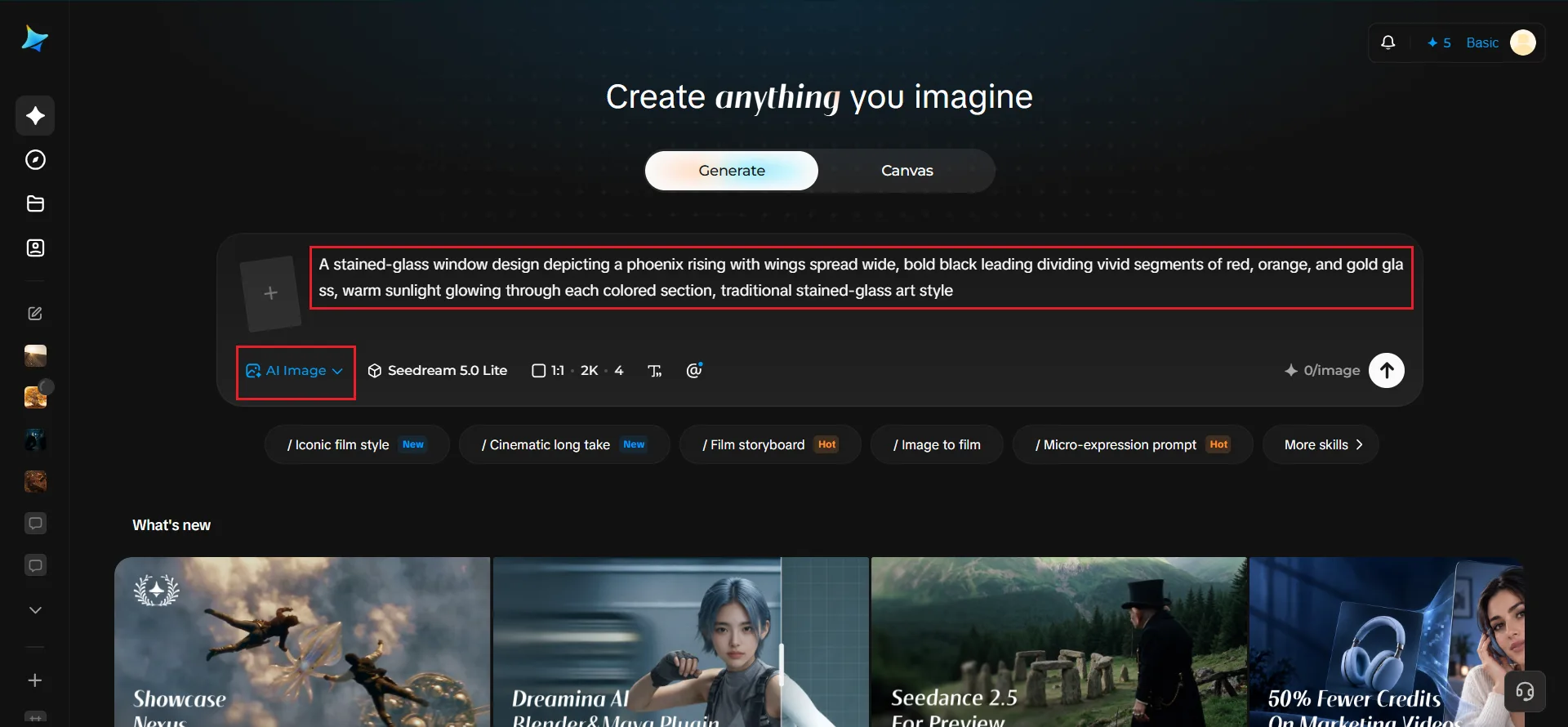
Navigate to Dreamina and write a detailed text prompt describing your chosen subject broken into segmented color fields separated by bold black leading, specifying the glowing, translucent quality of light passing through glass.
For instance: A stained-glass window design depicting a phoenix rising with wings spread wide, bold black leading dividing vivid segments of red, orange, and gold glass, warm sunlight glowing through each colored section, traditional stained-glass art style.
Describing the leading and segmented color structure explicitly is what pushes the result toward authentic stained-glass design rather than a generic colorful illustration.
Step 2: Adjust parameters and generate
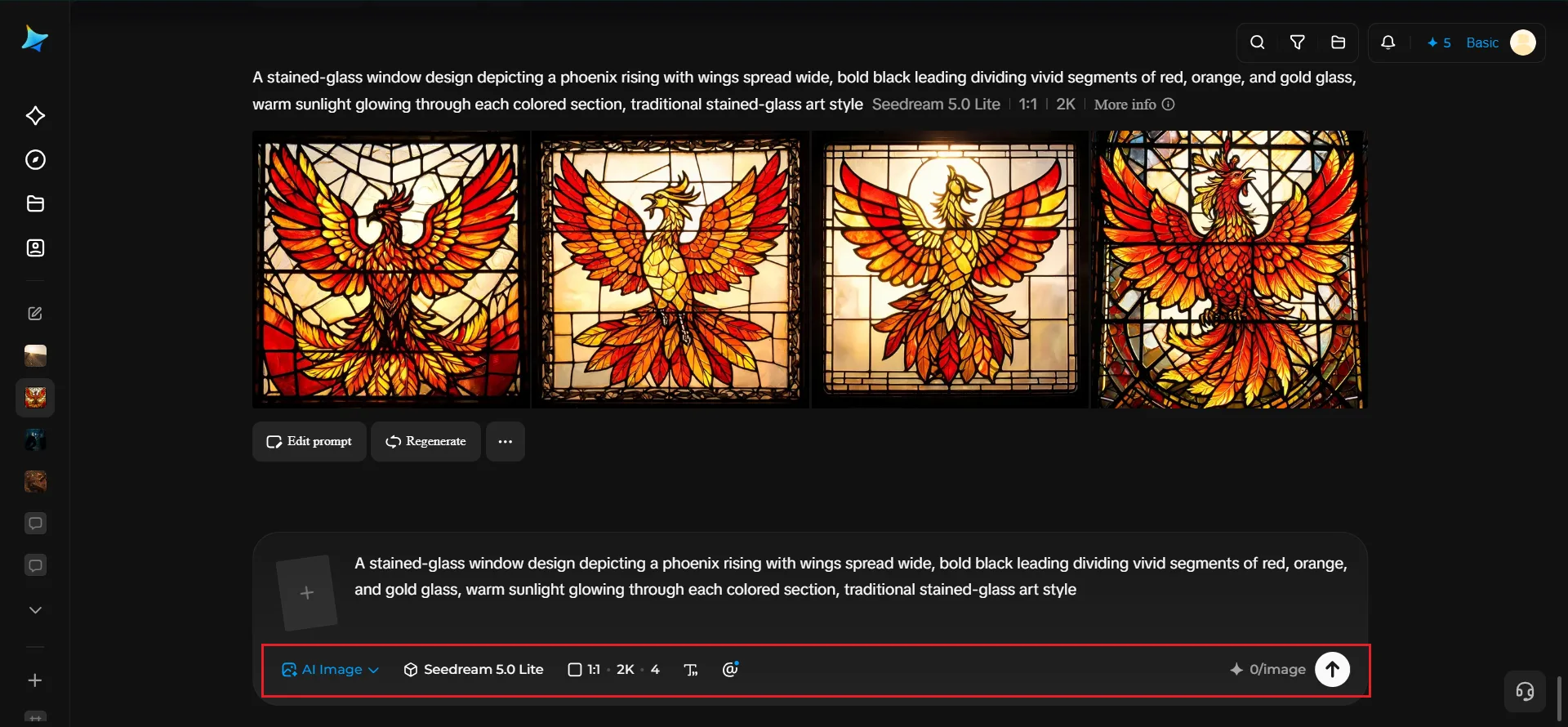
Before generating, set your parameters. Choose your model: Image 5.0 Pro by Seedream 5.0 Pro handles bold graphic linework and vivid segmented color with real precision. Then select your aspect ratio, image size, and resolution, using a tall portrait ratio for a window-style composition and 2K resolution to keep the lines crisp and clean. Click Dreamina’s generate icon to produce your design.
Step 3: Customize and download
Once your design generates, refine it using Dreamina’s AI customization tools — inpaint to sharpen specific leading lines or color segment boundaries, expand to extend the composition for a larger window shape, remove to simplify any overly busy area, and retouch to strengthen the glowing light quality throughout. When it feels authentically stained glass, click the Download icon to save it.
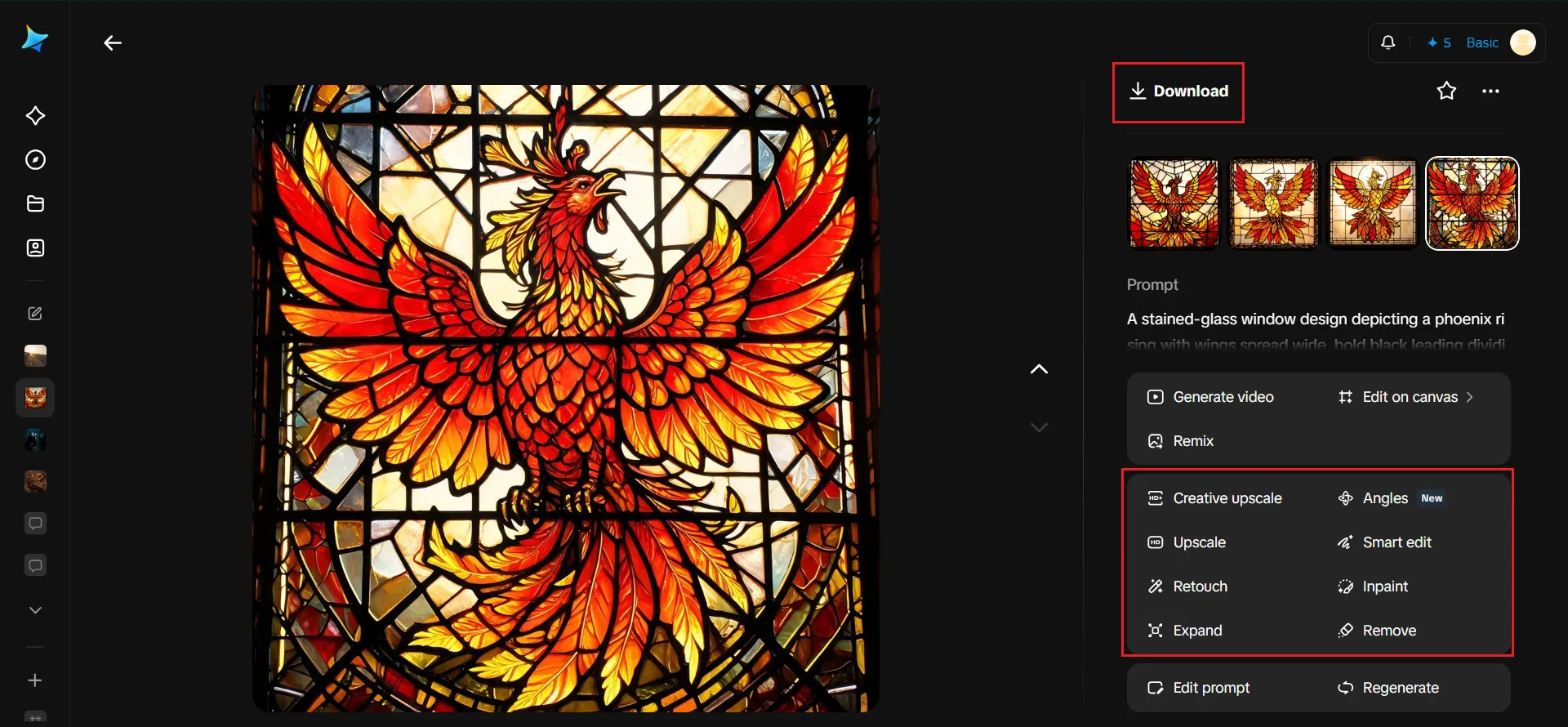
What Dreamina’s models offer for this graphic art form
Given its status as Dreamina’s most advanced model, Seedream 5.0 Pro brings real strength to stained-glass design specifically through its multi-layer visual control, which separates individual color segments and the leading structure into distinct components, making it genuinely practical to adjust one section’s color without disturbing the surrounding design. Its pinpoint precision editing tools also allow fine correction of leading lines that need to follow a subject’s contours more accurately.
For quicker exploration of several compositional layouts before committing to final leading placement, Nano Banana offers a faster, lighter alternative, while GPT Image 2 provides a distinct stylistic take worth comparing when a design calls for a different interpretive approach to the medium.
Choosing a color story that suits the intended setting
The color palette of a stained-glass design should reflect where it’s imagined being installed. Warm ambers and reds suit a cozy, traditional setting. Cool blues and greens suit a more serene, contemplative space. Bold jewel tones suit a dramatic, formal architectural context.
Adapting a design across different window shapes
Stained glass windows come in a huge range of physical shapes, arched, circular, rectangular, and a design’s composition often needs adjusting to fit these specific architectural constraints. Considering your intended window shape from the very start of the design process avoids awkward cropping or rework later.
Where stained-glass concept work gets practical use
This kind of specialized artistic design serves several genuine applications:
- Concept art for actual custom stained-glass commissions
- Digital art prints capturing the medium’s aesthetic without physical glass
- Church, institutional, and residential window design proposals
- Illustration portfolios demonstrating range across artistic mediums
Simplifying detail for the medium’s constraints
Real stained glass can’t render fine, painterly detail the way a canvas can, since each piece of colored glass is a distinct physical segment. Deliberately simplifying facial features, folds in fabric, or background elements into bolder, cleaner shapes keeps a design honest to what could genuinely be fabricated in glass, rather than describing something impossibly intricate.
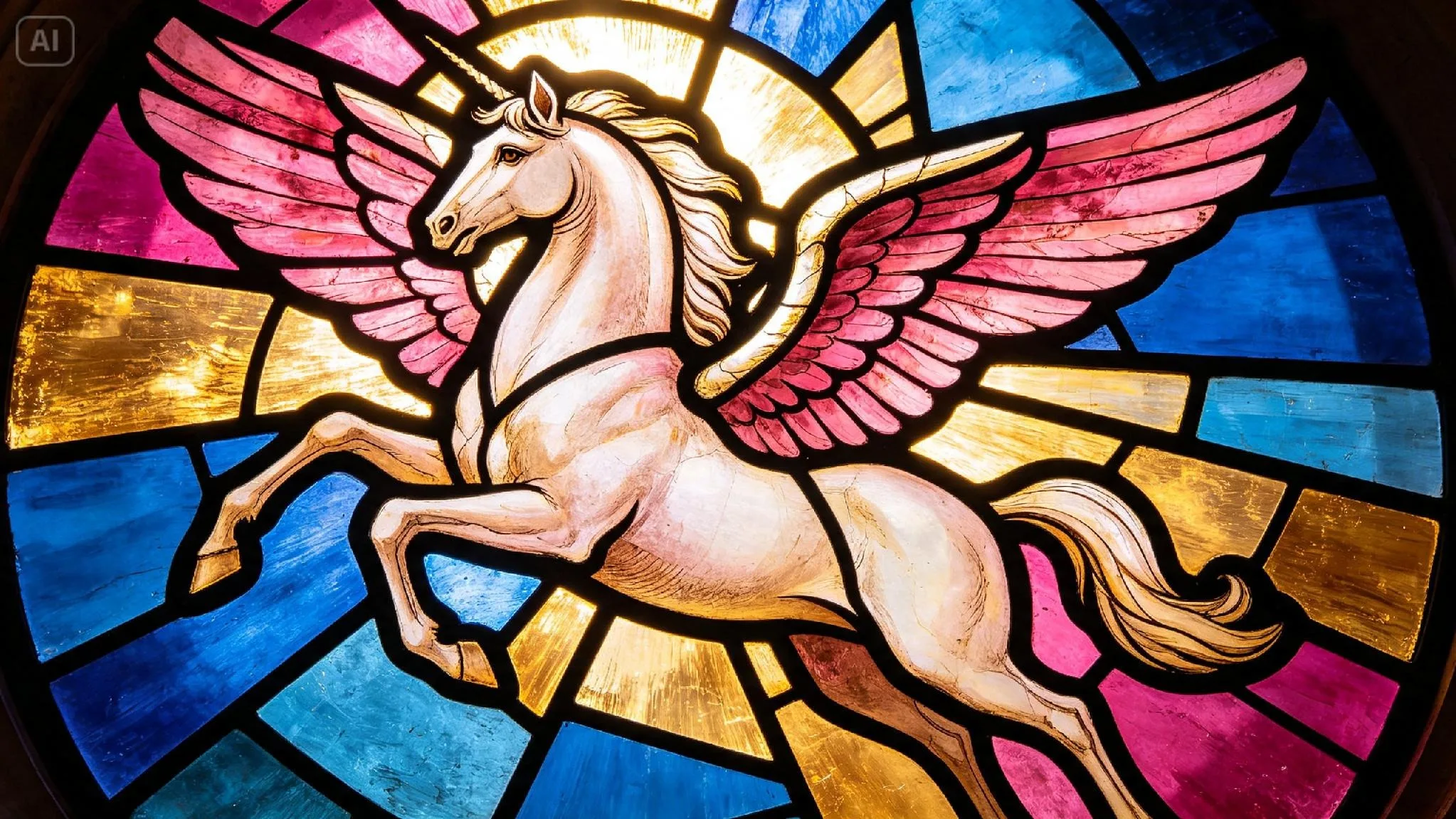
Considering how the design changes with light direction
Real stained glass looks completely different depending on the time of day and direction of sunlight passing through it. Thinking about whether your design is meant to glow with warm afternoon light or cooler morning light adds a layer of practical realism worth reflecting in your color and brightness choices.
Final thoughts
That specific glow of light passing through segmented, leaded glass carries centuries of artistic tradition, and exploring an original design within that tradition is now genuinely achievable using an image generator.
With Dreamina and its advanced image generation capabilities, led by the graphic precision of AI algorithms, stained glass’s distinctive visual language comes through with real authenticity.
Design your lead with real intention, choose a color story that fits the space, and let Dreamina help your concept glow the way real glass would.
Latest Reviews
MiniMax M3.1 Flash Review: Coding, API Cost, Open Weights and Limits

Best Antivirus Software in 2026: 5 Reliable Choices for Malware Protection
FLUX 3 Review: Image, Klein, Local Hardware and Real Editing Limits
Best 5 Password Managers in 2026

Krea 3 Review: Editing Quality, Ultra, Real Costs and Open-Weight Status
Kling 4.0 Review: 30-Second AI Video, Pricing, Keyframes and NSFW Limits