
Table of Contents
- What Is an AI Chatbot Builder?
- Why Use an AI Chatbot Builder?
- Quick Comparison
- 1. Botpress
- 2. Chatbase
- 3. Voiceflow
- 4. Intercom Fin
- 5. Zendesk AI
- 6. Tidio
- 7. Manychat
- 8. Landbot
- 9. HubSpot Chatbot Builder
- 10. CustomGPT
- How to Choose the Right AI Chatbot Builder
- AI Chatbot Builder Prompt Examples
- Mistakes to Avoid
- FAQ
What Is an AI Chatbot Builder?
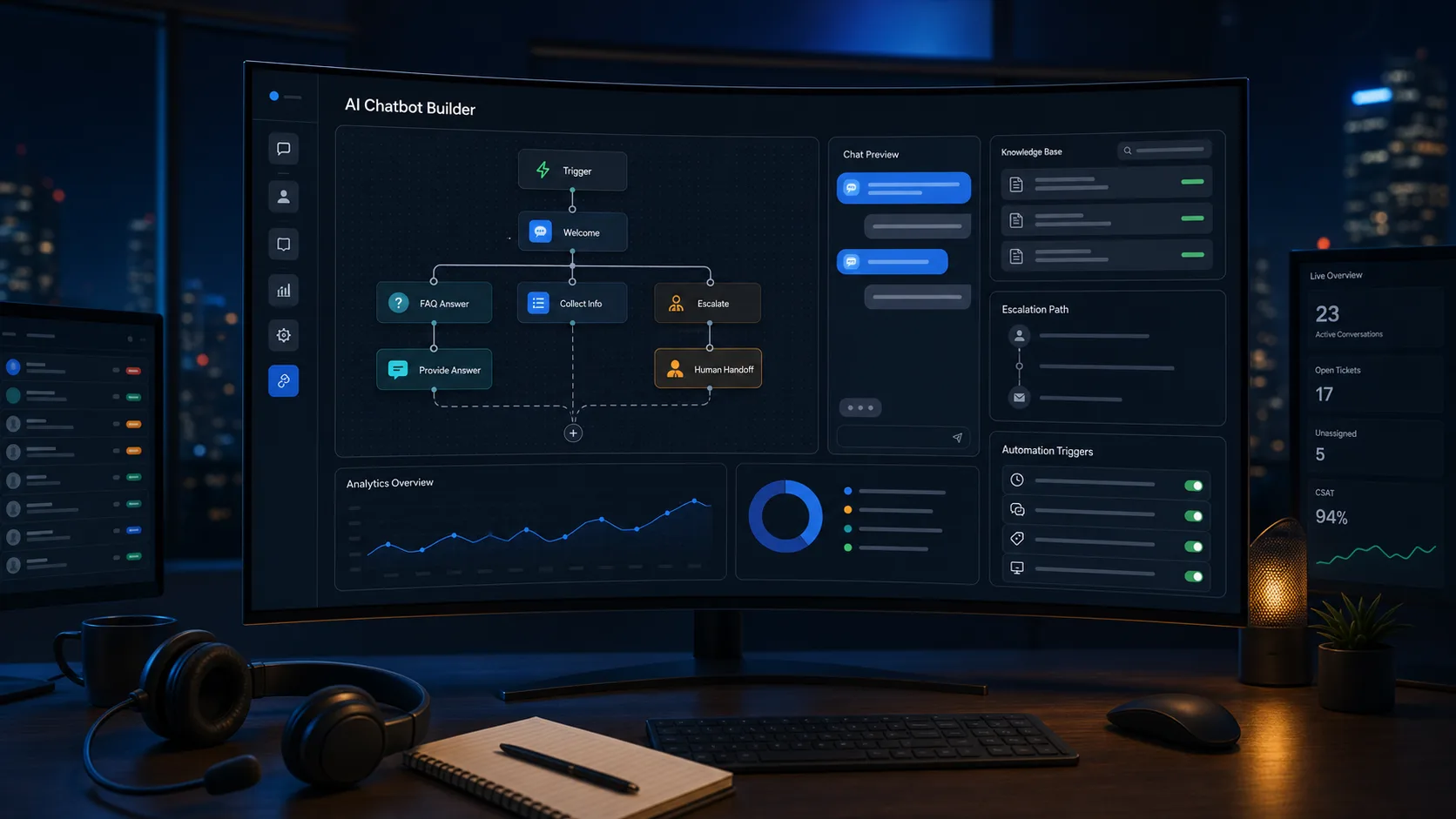
An AI chatbot builder is a tool that helps you create a chatbot for your website, app, help center, sales funnel, or internal workflow. Instead of manually writing every response, you can connect the bot to a knowledge base, documents, website pages, FAQs, product information, or support articles.
Modern AI chatbot builders can answer customer questions, qualify leads, route conversations, create support tickets, recommend products, collect contact details, and hand off to a human agent when needed. Some tools are designed for no-code users, while others support advanced conversation design, APIs, and developer workflows.
The best AI chatbot builder depends on your use case. A small business website needs something different from a SaaS support team, ecommerce store, agency, or enterprise help desk.
Why Use an AI Chatbot Builder?
Customers often ask the same questions repeatedly: pricing, shipping, refunds, login issues, booking details, product features, appointment availability, and troubleshooting steps. An AI chatbot can answer many of these questions instantly, which saves time for both customers and support teams.
An AI chatbot builder can help you:
- Add 24/7 support to a website
- Answer FAQs automatically
- Train a chatbot on help center content
- Collect leads and contact details
- Route complex questions to human agents
- Reduce repetitive support tickets
- Improve response speed
- Support sales and onboarding workflows
- Create internal assistants for teams
The goal is not to replace every human conversation. The goal is to handle repeatable questions well and make human support more focused.
Quick Comparison
| Tool | Best For | Main Strength | Possible Limitation |
|---|---|---|---|
| Botpress | Custom AI agents and chatbots | Visual builder, AI agents, integrations, developer flexibility | More advanced than basic chatbot tools |
| Chatbase | Website knowledge base chatbots | Fast setup from documents and website content | Less focused on complex enterprise help desk workflows |
| Voiceflow | Conversational AI design | Conversation flows, prototyping, team collaboration | Requires planning for complex bots |
| Intercom Fin | SaaS customer support | AI support agent connected to help center and inbox | Best for teams using Intercom |
| Zendesk AI | Enterprise support teams | Help desk automation, tickets, and agent workflows | Best inside Zendesk ecosystem |
| Tidio | Ecommerce and small business chat | Live chat, AI support, and sales automation | Less flexible than advanced bot platforms |
| Manychat | Social and messaging automation | Instagram, Messenger, WhatsApp, and marketing flows | More marketing-focused than support-focused |
| Landbot | No-code conversation flows | Visual chatbot builder and lead capture | Less focused on deep AI agent development |
| HubSpot Chatbot Builder | CRM-connected chatbots | Lead capture and CRM workflows | Best if you already use HubSpot |
| CustomGPT | Knowledge base chatbots | Custom GPT-style chatbot from business content | Best for Q&A and knowledge retrieval |
1. Botpress
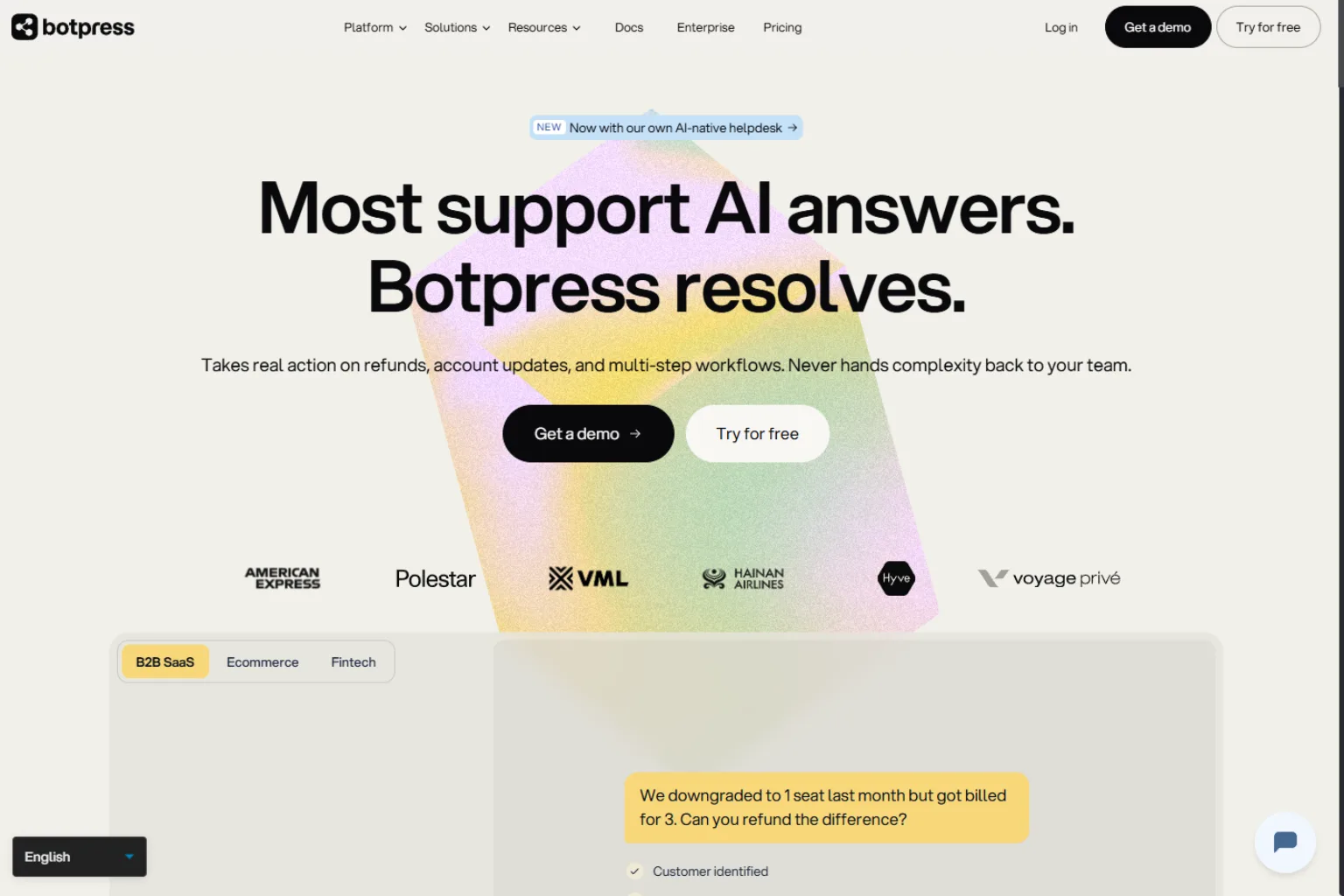
Botpress is one of the strongest AI chatbot builders for users who want more than a simple FAQ widget. It supports AI agents, visual conversation design, integrations, knowledge bases, and more advanced automation.
It is useful for teams that want to build custom chatbots for support, sales, internal workflows, or product experiences. Botpress is flexible enough for technical users while still offering visual tools for planning conversation flows.
Botpress is best for:
- Custom AI agents
- Advanced chatbot workflows
- Website chatbots
- Integrations and APIs
- Support automation
- Teams that need flexibility
Choose Botpress if you want a powerful AI chatbot builder that can grow beyond basic website FAQ chat.
2. Chatbase
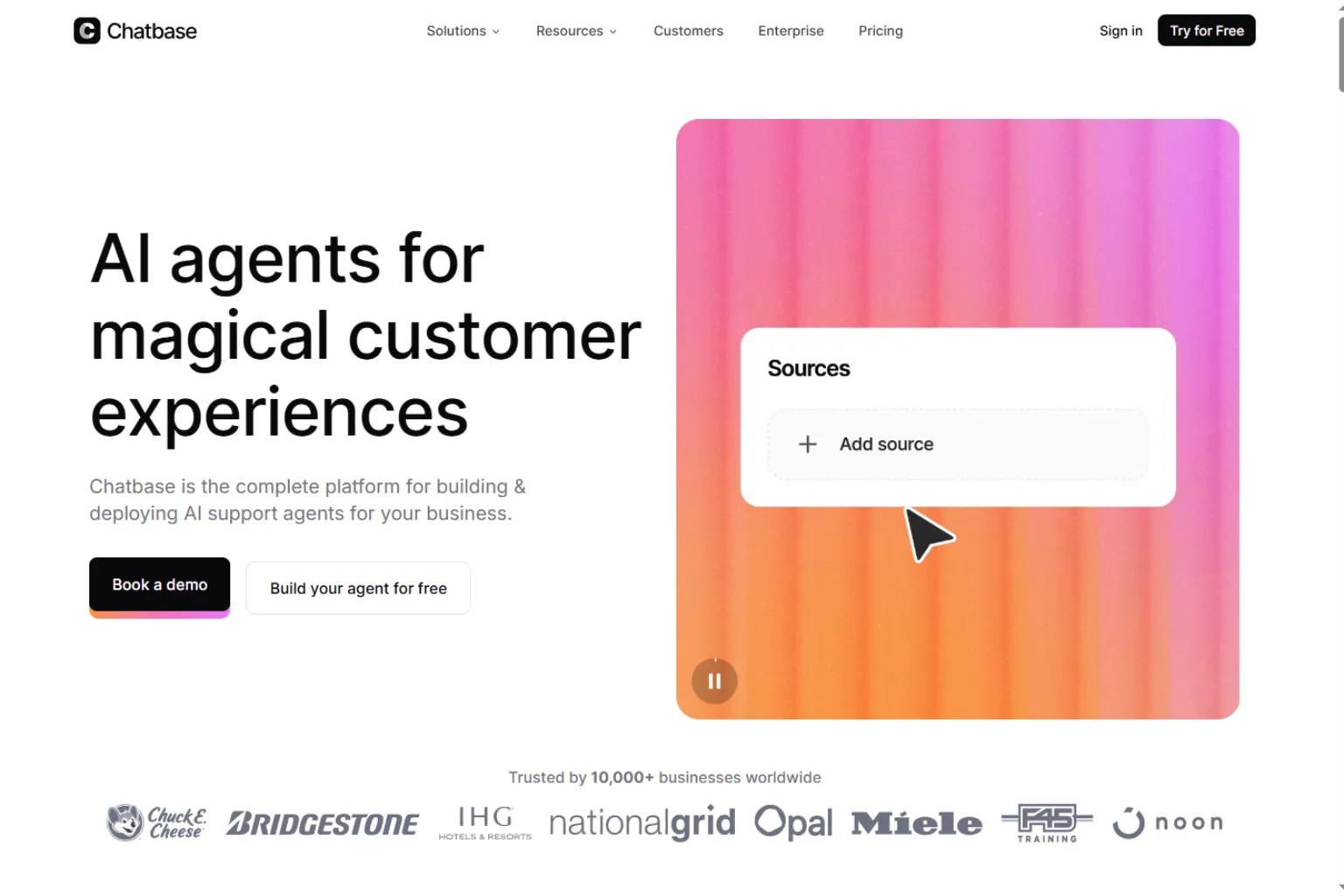
Chatbase is popular for creating AI chatbots from website content, documents, FAQs, and knowledge bases. It is a good choice for businesses that want to launch a chatbot quickly without building complex flows from scratch.
You can train a chatbot on your content and add it to your site to answer visitor questions. This makes it useful for SaaS companies, agencies, creators, schools, and small businesses.
Chatbase is best for:
- Website knowledge base bots
- FAQ automation
- Document-trained chatbots
- Quick setup
- Small business support
- Lead capture
Choose Chatbase if you want a fast AI chatbot for website Q&A.
3. Voiceflow
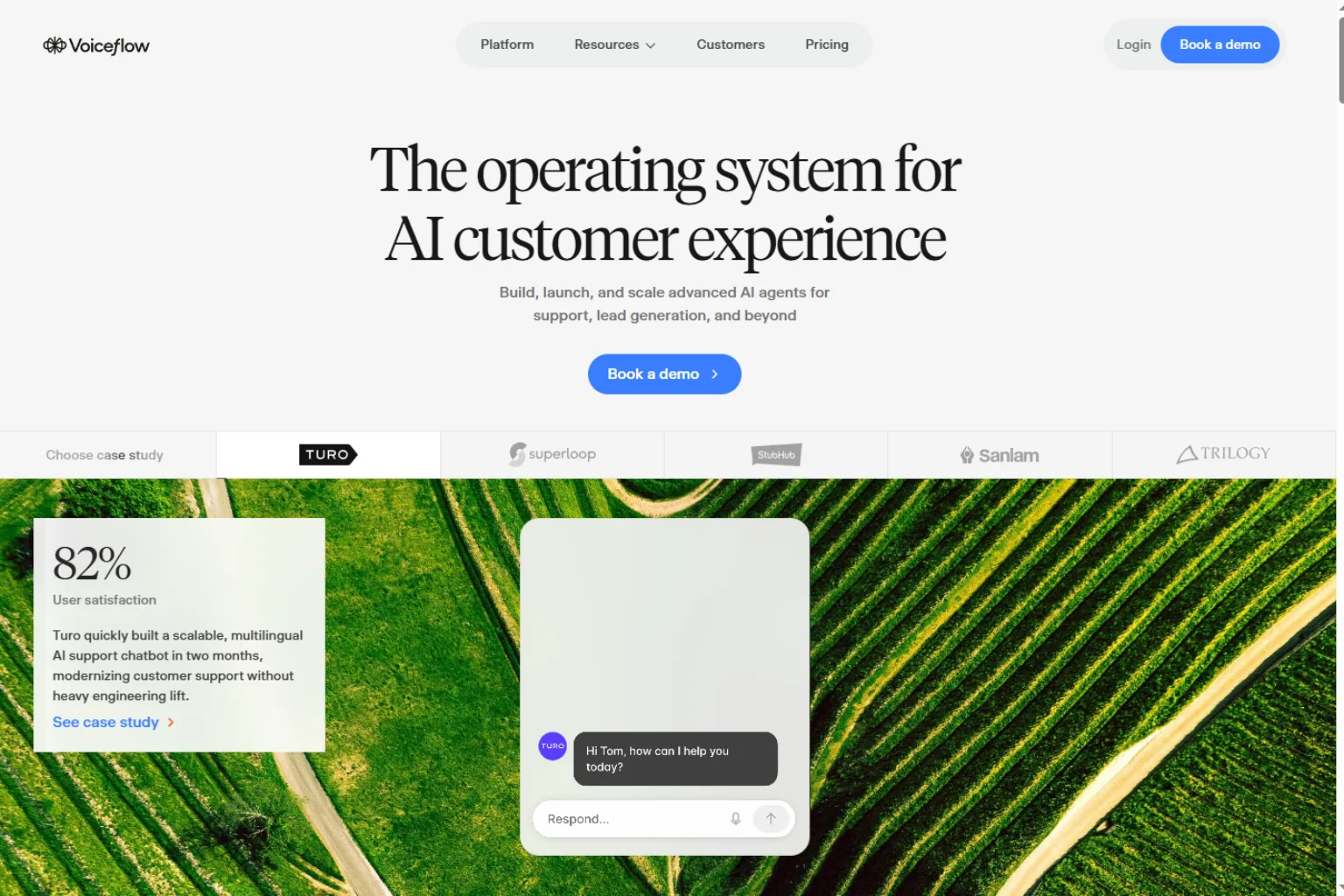
Voiceflow is a strong conversational AI platform for designing, prototyping, and launching chatbots and voice assistants. It is useful for teams that care about conversation structure, user journeys, and collaborative design.
Instead of only uploading a knowledge base, Voiceflow helps teams map how a conversation should work. This is useful for more complex bots, product assistants, and guided workflows.
Voiceflow is best for:
- Conversation design
- Chatbot prototyping
- Team collaboration
- Product assistants
- Multi-step flows
- Advanced conversation logic
Choose Voiceflow if your chatbot needs carefully designed conversation paths rather than only simple Q&A.
4. Intercom Fin
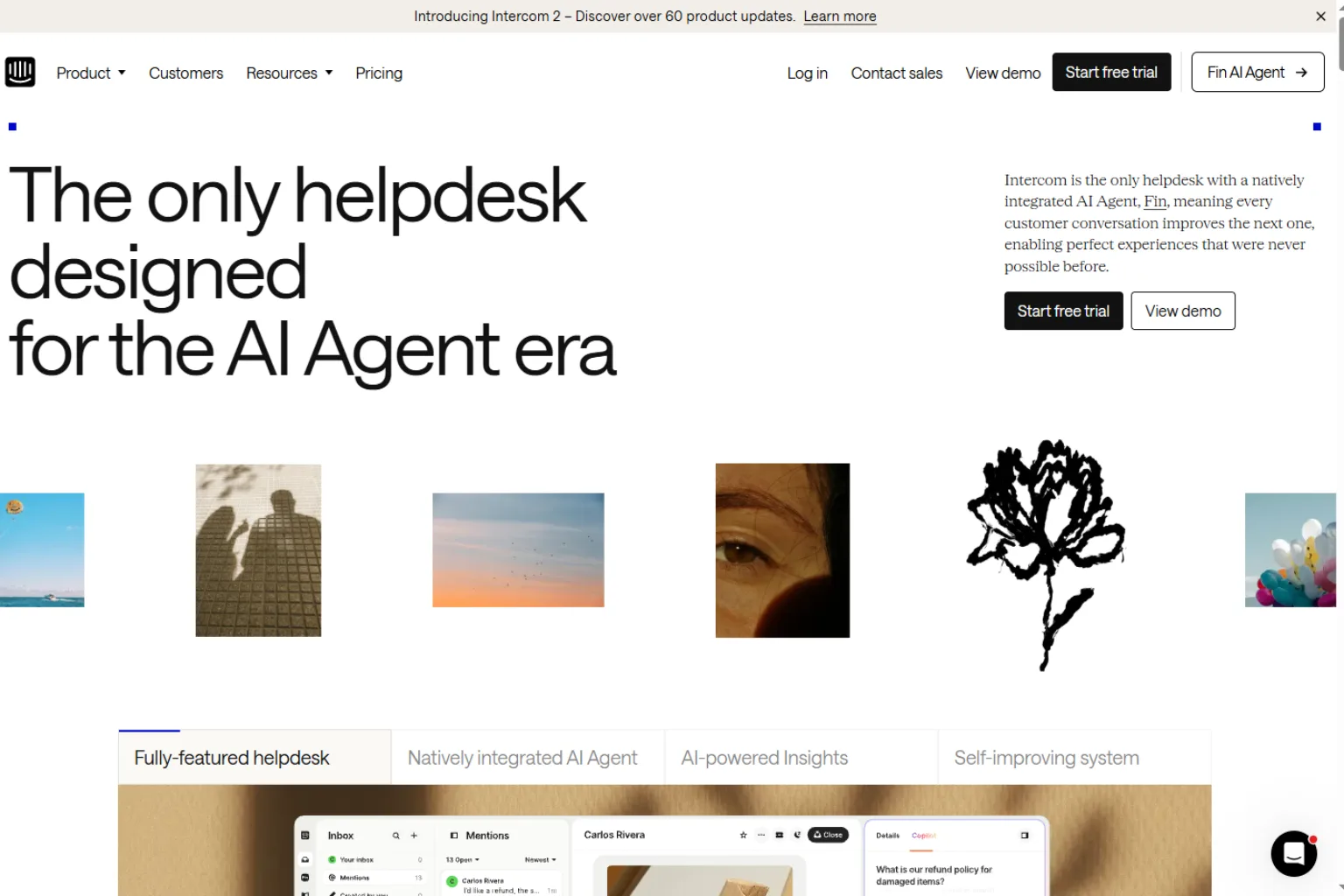
Intercom Fin is an AI customer support agent built for teams using Intercom. It can answer customer questions from help center content and work inside the broader Intercom inbox and support workflow.
This makes it especially useful for SaaS companies and digital businesses that already use Intercom for live chat, customer support, and support operations.
Intercom Fin is best for:
- SaaS support teams
- Help center automation
- Customer support chat
- Human handoff
- Support inbox workflows
- Teams already using Intercom
Choose Intercom Fin if your support team already runs on Intercom and wants AI support automation.
5. Zendesk AI
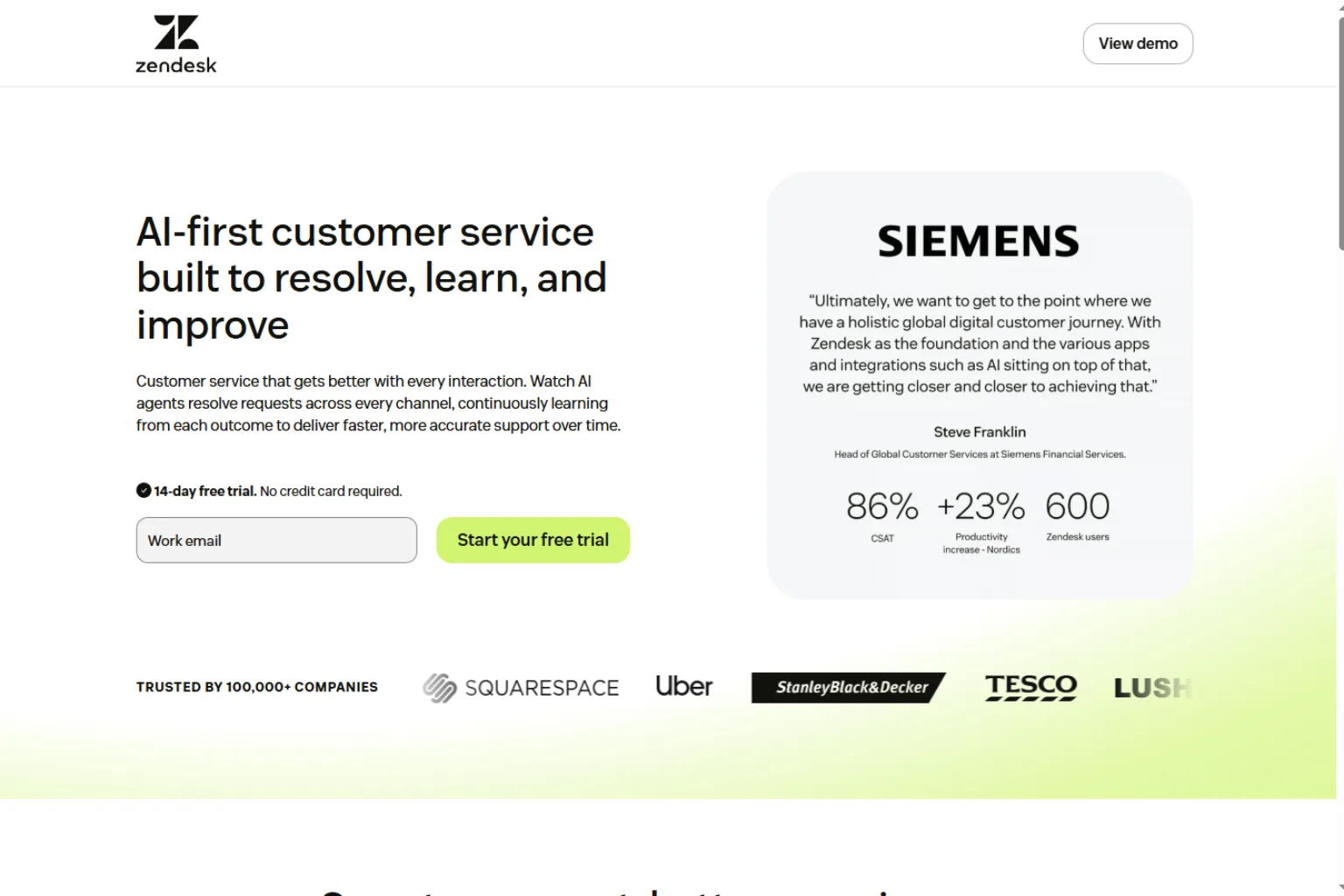
Zendesk AI is a strong option for support teams that already use Zendesk for tickets, help centers, and customer service operations. It can help automate responses, assist agents, route tickets, and improve support workflows.
It is better suited for established support teams than for someone who only needs a simple chatbot widget. Its value comes from being connected to the help desk.
Zendesk AI is best for:
- Enterprise support teams
- Ticket automation
- Help center workflows
- Agent assistance
- Customer service operations
- Teams already using Zendesk
Choose Zendesk AI if you want chatbot automation inside a serious support system.
6. Tidio
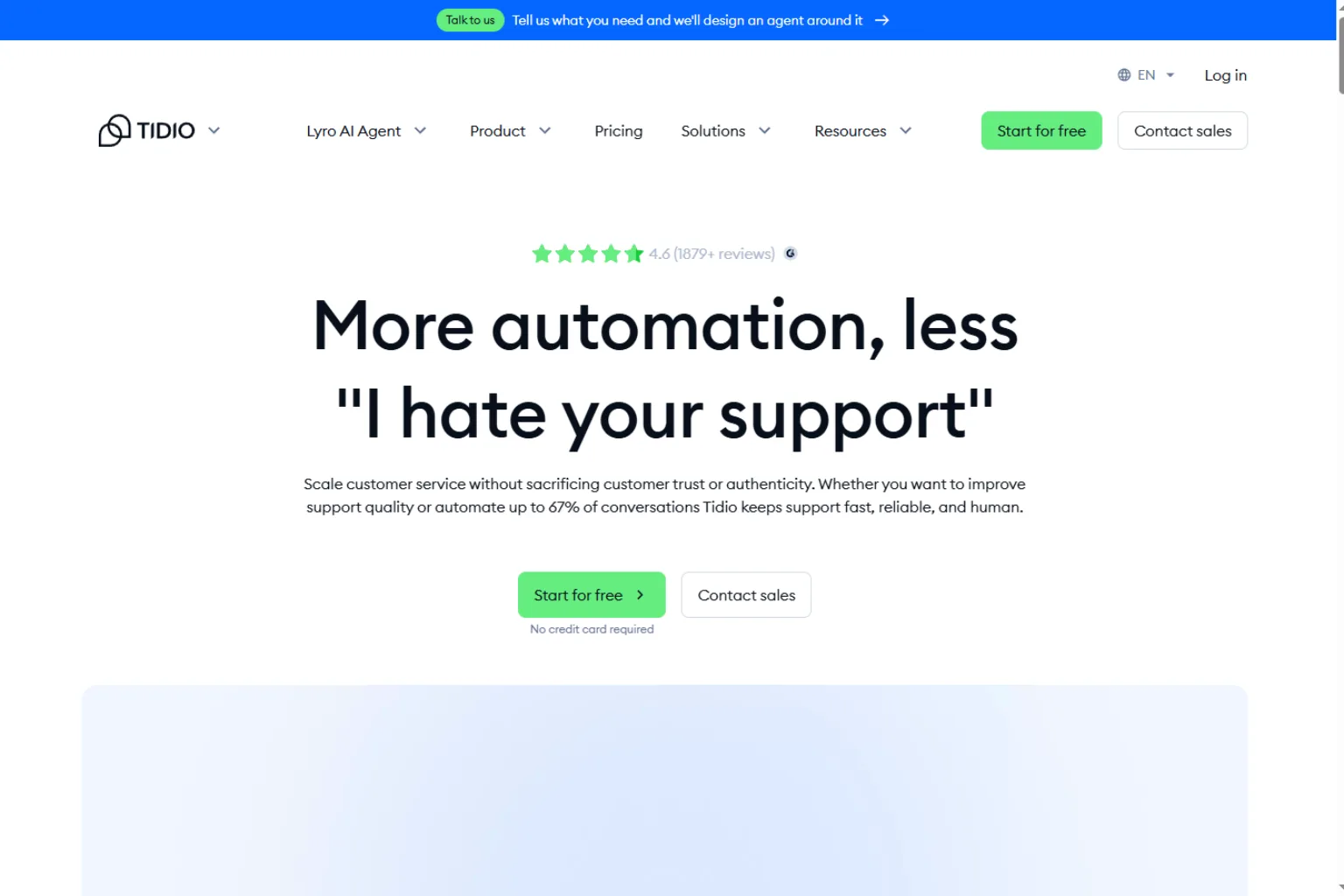
Tidio is a practical AI chatbot builder for small businesses and ecommerce stores. It combines live chat, chatbots, AI support, and sales automation in a friendly interface.
It is useful for answering common customer questions, recommending products, collecting leads, and supporting online shoppers. For ecommerce teams, this can reduce repetitive questions and improve conversion.
Tidio is best for:
- Ecommerce stores
- Small business websites
- Live chat plus AI
- Sales automation
- Visitor engagement
- Simple support workflows
Choose Tidio if you want an approachable chatbot builder for a small business or online store.
7. Manychat
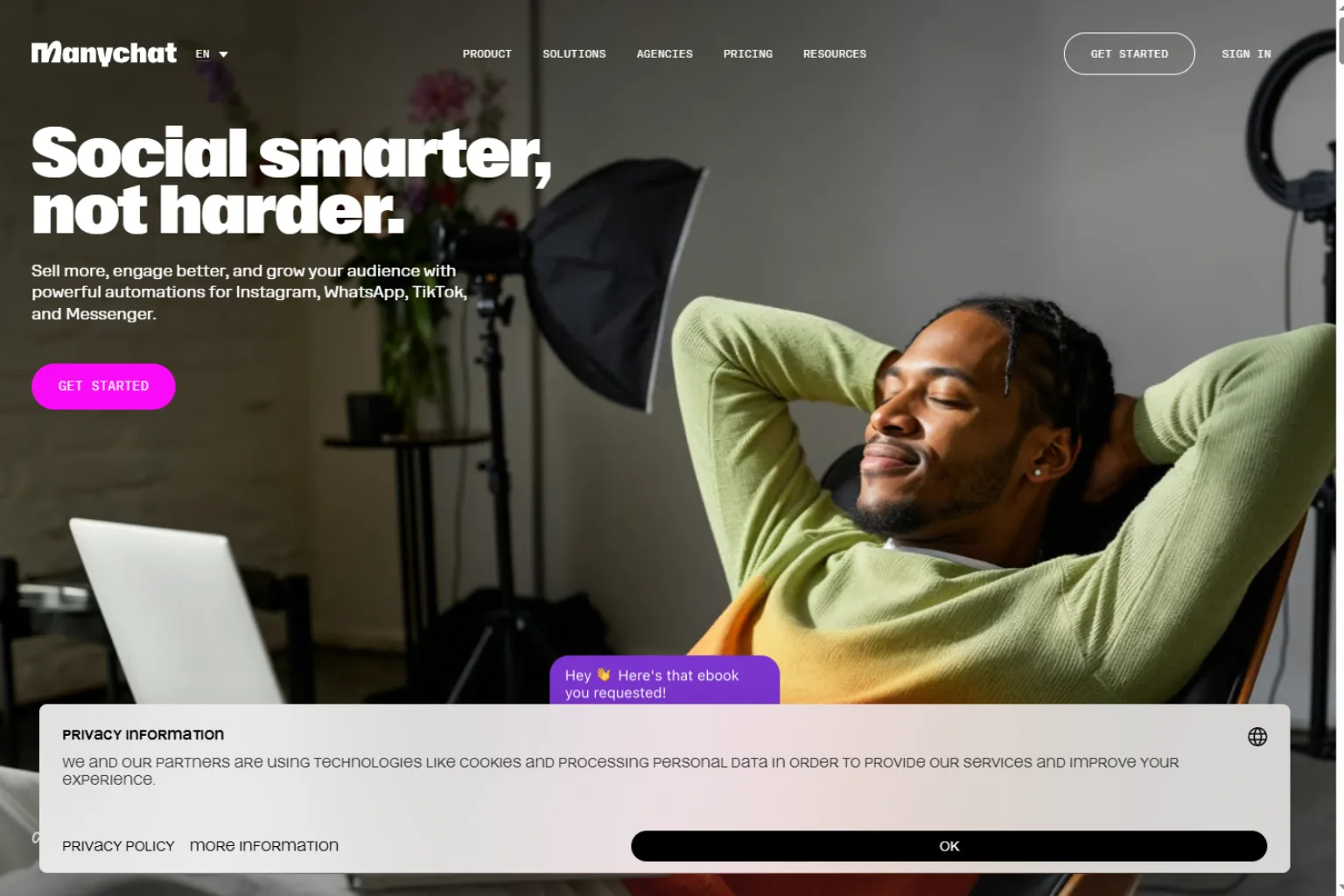
Manychat is a strong option for marketing-focused chat automation, especially across Instagram, Messenger, WhatsApp, and other messaging channels. It is less about help desk support and more about audience engagement, lead generation, campaigns, and social commerce.
If your chatbot needs to work where your audience already messages you, Manychat can be very useful.
Manychat is best for:
- Instagram automation
- Messenger and WhatsApp flows
- Lead generation
- Social commerce
- Marketing campaigns
- Creator and small business workflows
Choose Manychat if your chatbot strategy is tied to social messaging and marketing automation.
8. Landbot
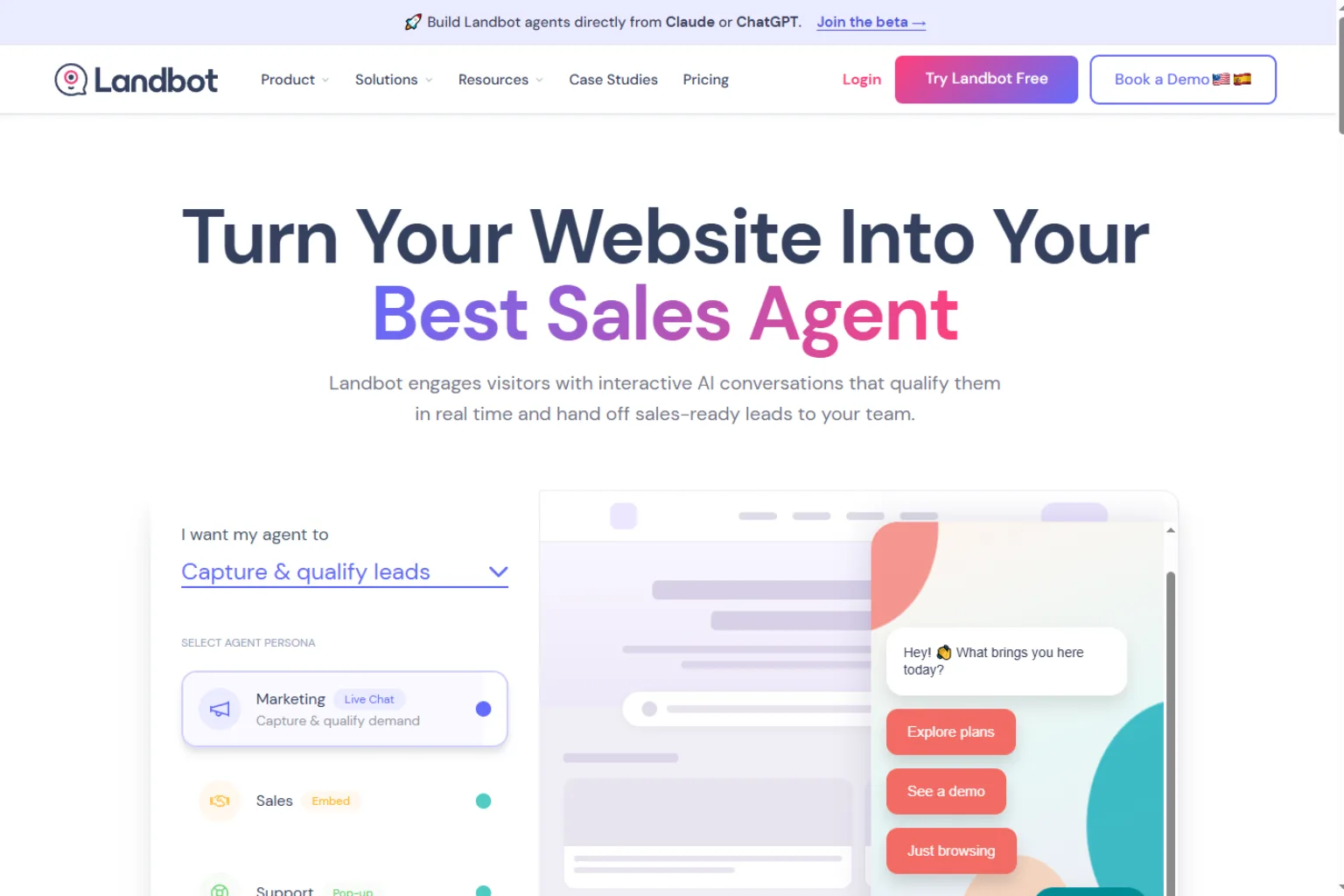
Landbot is a no-code chatbot builder for creating conversational forms, lead capture flows, onboarding experiences, and website chat interactions. Its visual builder makes it easy to design structured conversations.
Landbot is useful for marketers, agencies, educators, and businesses that want interactive flows without building a fully custom AI agent.
Landbot is best for:
- No-code chatbot flows
- Lead capture
- Conversational forms
- Website engagement
- Surveys and onboarding
- Marketing funnels
Choose Landbot if you want a visual chatbot builder for structured conversations.
9. HubSpot Chatbot Builder
HubSpot’s chatbot builder is useful for businesses that already use HubSpot CRM. It can help qualify leads, book meetings, route visitors, and connect chat conversations to customer records.
Its biggest strength is CRM connection. If your sales and marketing team already uses HubSpot, a chatbot inside that system can be easier to manage than a separate tool.
HubSpot Chatbot Builder is best for:
- Lead qualification
- CRM-connected chat
- Sales routing
- Meeting booking
- Marketing automation
- HubSpot users
Choose HubSpot if your chatbot’s main job is supporting sales and CRM workflows.
10. CustomGPT
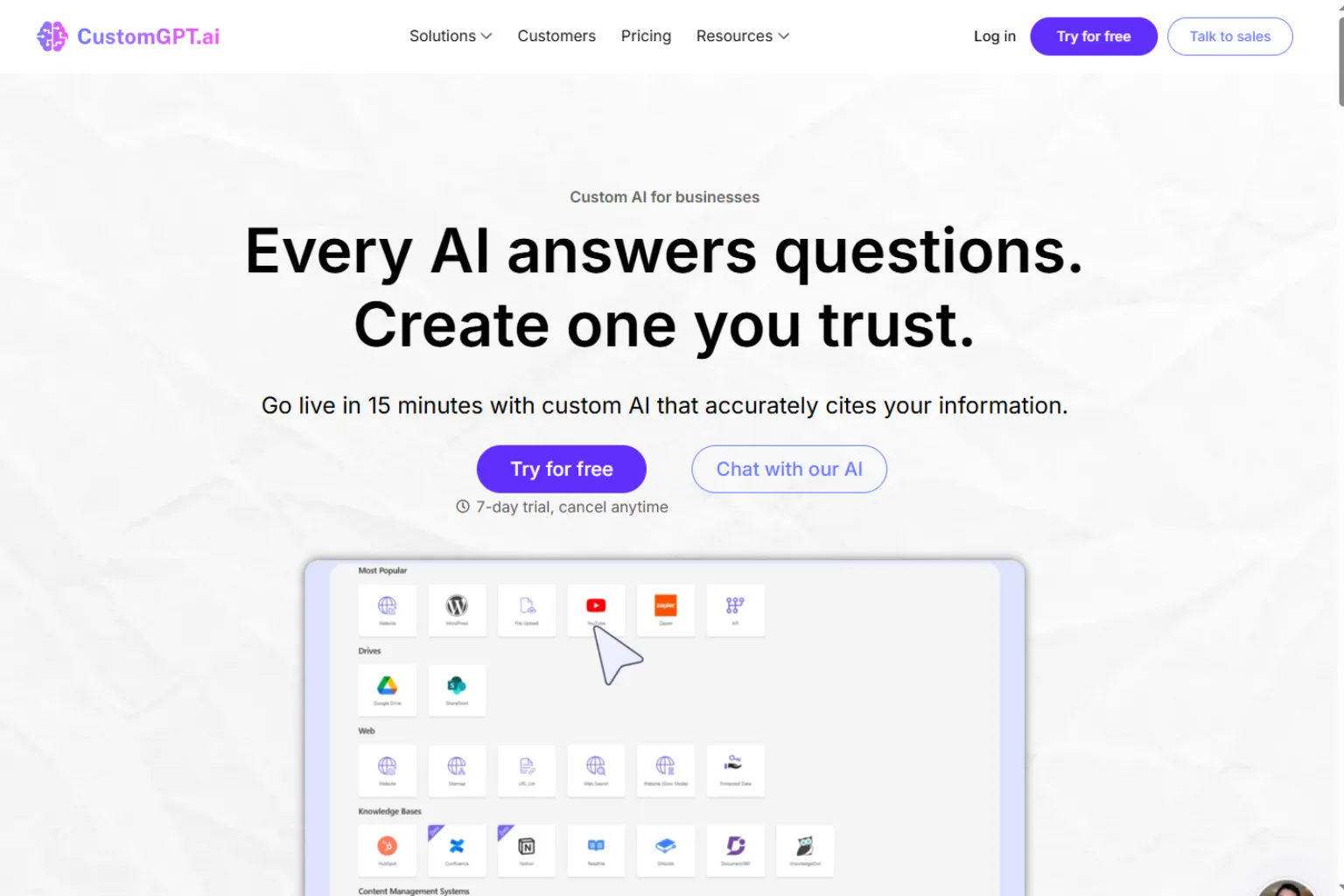
CustomGPT is useful for creating a chatbot trained on your own business content. It is a good fit for knowledge base search, internal documentation, customer support Q&A, and content-based assistants.
If your main need is a chatbot that answers questions accurately from specific documents or pages, CustomGPT is worth considering.
CustomGPT is best for:
- Knowledge base chatbots
- Document-trained assistants
- Internal Q&A
- Customer support content
- Website help bots
- Business documentation
Choose CustomGPT if content-based answers are more important than complex multi-step conversation flows.
How to Choose the Right AI Chatbot Builder
The best AI chatbot builder depends on your business goal.
Choose Botpress if you need custom AI agents and advanced workflows. Choose Chatbase or CustomGPT if you want a fast knowledge base chatbot. Choose Voiceflow if conversation design matters. Choose Intercom Fin or Zendesk AI if you already use those support platforms. Choose Tidio for ecommerce and small business support. Choose Manychat for social messaging automation. Choose Landbot for no-code flows. Choose HubSpot for CRM-connected lead generation.
Before choosing, ask:
- Will the chatbot live on a website, app, help center, or messaging channel?
- Do I need support automation, lead generation, sales routing, or internal Q&A?
- Will the bot use a knowledge base?
- Does it need human handoff?
- Do I need CRM or help desk integration?
- How important are analytics and conversation history?
- Do I need no-code setup or developer customization?
- What customer data will the bot collect?
AI Chatbot Builder Prompt Examples
If you are setting up a custom AI chatbot, your instructions should be specific. A strong system prompt can define role, tone, answer rules, escalation, and boundaries.
You are a helpful support assistant for a SaaS company. Answer only from the approved knowledge base. If the answer is not available, ask for the user's email and offer to create a support ticket.You are a friendly ecommerce shopping assistant. Help customers compare products, explain shipping and return policies, and recommend items based on their needs. Do not invent discounts or stock status.You are a lead qualification chatbot for a B2B agency. Ask about company size, budget range, timeline, and project goal. If the lead is qualified, offer to book a call.You are an internal HR assistant. Answer employee questions using the uploaded policy documents. If a question is legal, medical, or highly sensitive, tell the user to contact HR directly.Mistakes to Avoid
An AI chatbot can improve response speed, but a poorly designed bot can frustrate users. Avoid these common mistakes:
- Launching without testing real questions
- Letting the bot answer outside approved content
- Hiding human support behind the bot
- Forgetting escalation paths
- Training on outdated help articles
- Collecting sensitive data without a clear reason
- Using a robotic tone that does not match your brand
- Ignoring analytics and failed answers
- Not updating the bot after product changes
The best chatbot is not the one that talks the most. It is the one that solves the right problems clearly.
FAQ
What is the best AI chatbot builder?
The best AI chatbot builder depends on your goal. Botpress is strong for custom agents, Chatbase and CustomGPT are good for knowledge base bots, Voiceflow is strong for conversation design, Intercom Fin and Zendesk AI are strong for support teams, and Tidio is useful for small businesses and ecommerce.
Can I build an AI chatbot without coding?
Yes. Many AI chatbot builders offer no-code setup, visual flows, document upload, website crawling, and simple embed options. Advanced customization may still require technical help.
What is the best AI chatbot for a website?
Chatbase, Botpress, Tidio, Landbot, CustomGPT, Intercom, Zendesk, and HubSpot can all work for websites. The best choice depends on whether you need support, lead capture, ecommerce, or knowledge base Q&A.
Can an AI chatbot answer from my documents?
Yes. Many AI chatbot builders can use documents, help center articles, FAQs, website pages, or knowledge bases as sources. Always test the bot to make sure it does not invent answers.
Is there a free AI chatbot builder?
Some tools offer free plans, trials, or limited usage. Free plans are good for testing, but business use often requires paid features such as higher message limits, branding removal, integrations, or team access.
Can AI chatbots replace customer support agents?
AI chatbots can handle repetitive questions and basic workflows, but they should not replace every support interaction. Complex, sensitive, or emotional issues still need human agents.
What should I check before launching an AI chatbot?
Check answer accuracy, escalation rules, privacy settings, human handoff, analytics, mobile display, brand tone, and whether the chatbot uses up-to-date content.
Final Thoughts
An AI chatbot builder can help businesses answer questions faster, reduce repetitive tickets, collect leads, and support customers around the clock. The best tool depends on where the chatbot will live and what job it needs to do.
Use Botpress for advanced agents, Chatbase or CustomGPT for knowledge base bots, Voiceflow for conversation design, Intercom or Zendesk for support teams, Tidio for ecommerce, Manychat for social messaging, Landbot for no-code flows, and HubSpot for CRM-connected sales workflows.
A good chatbot should not just sound smart. It should be accurate, useful, easy to escalate, and aligned with your business goals.
Related
AI Recipe Generator: Create Meal Ideas from Ingredients, Diets, and Cravings

Best AI Diagram Generators for Workflows, Ideas, and Visual Planning
Best AI Lesson Plan Generators for Teachers
Best AI Health Apps in 2026: 5 Tools for Sleep, Wellness and Daily Support
Best AI Voice Changers for Gaming, Content Creation, and Voiceovers
Best AI Ad Generators to Create High-Converting Ads Faster